Michael Landis in Smithsonian:
 The central story of The Little Mermaid is, of course, 16-year-old Ariel’s identity crisis. She feels constrained by her patriarchal mer-society and senses she doesn’t belong. She yearns for another world, apart from her own, where she can be free from the limits of her rigid culture and conservative family. Her body is under the water, but her heart and mind are on land with people. She leads a double life. She is, essentially, “in the closet” (as symbolized by her “cavern”—or closet—of human artifacts, where the character-building song “Part of Your World” takes place). When Ariel ventures to tell her friends and family about her secret identity, they chastise her and tell her she must conform. She must meet her father’s expectations, sing on demand, perform for the public and give up all hopes of a different life. Her father, King Triton, even has her followed by a court official. In her misery, Ariel flees to the sea witch Ursula, the only strong female in the entire film and thus Ariel’s only female role model. At this point, the movie becomes truly subversive cinema.
Conceived by Ashman, Ursula is based on the famous cross-dressing performer Divine, who was associated with the openly gay filmmaker John Waters. As scholar Laura Sells explained in a 1995 anthology of essays, Ursula’s “Poor Unfortunate Souls” song is essentially a drag show instructing the naive mermaid on how to attract Prince Eric (who is conspicuously uninterested in Ariel and most content at sea with his all-male crew and manservant Grimsby). “In Ursula’s drag scene,” Sells wrote, “Ariel learns that gender is performance; Ursula doesn’t simply symbolize woman, she performs woman.” While teaching young Ariel how to “get your man,” Ursula applies makeup, exaggerates her hips and shoulders, and accessorizes (her eel companions, Flotsam and Jetsam, are gender neutral)—all standard tropes of drag. “And don’t underestimate the importance of body language!,” sings Ursula with delicious sarcasm. The overall lesson: Being a woman in a man’s world is all about putting on a show. You are in control; you control the show. Sells added, “Ariel learns gender, not as a natural category, but as a performed construct.” It’s a powerful message for young girls, one deeply threatening to the King Tritons (and Ronald Reagans) of the world.
More here.

 There are no birth, baptism or early records enabling a reconstruction of Julia Pastrana’s formative years, but she was probably born in 1834 in the Sierra Madre region of Mexico. She suffered from two rare congenital disorders that meant her face and body were covered in dark hair and her gums were so overgrown it looked as if she had a second set of teeth.
 In 2009, Sagri’s use of the loop suggested specific referents very much at hand. In part, it seemed a commentary on the art world’s difficulty in accommodating performance. A convention of video art was transposed to a living, breathing performer, as if to mockingly anticipate the work’s reuptake as documentation in the white cube. At the same time, while it seemed to wryly allude to the postmillennial art world’s romance with the ’70s, and to stage a dark burlesque of labor conditions, the loop was a clear attempt to reckon with digital technology’s pervasive influence at that historical moment. This was the dawn of popularized streaming video: YouTube launched in 2005; Netflix and PornHub began streaming in 2007. Hence the foregrounding in Do Jaguar of the iPod as the device on which the audio component of the piece is stored; hence not only the loop but also the glitch, an accidental mini-loop or inadvertent fast-forward, as a choreographic riff on postindustrial labor and the erratic recursions of immaterial gig economics. Artists such as Ryan Trecartin and Lizzie Fitch were mining this same vein in video work, but Sagri was a key adapter of these concerns to live modes.
 Every age
 Socrates famously railed against the evils of writing. The sage warned that it would “introduce forgetfulness into the soul of those who learn it: they will not practice using their memory because they will put their trust in writing.” He got a few things wrong. For one, people nurture Socrates’ memory because of all of the books written about him. But he also was off the mark in his musings about a forgetfulness of the soul. If anything, it appears that just the opposite holds: a study of hundreds of illiterate people living at the northern end of an island considered to be a world media capital roundly contradicts the father of Western philosophy. Evaluations of the elderly in the environs of Manhattan’s Washington Heights (the neighborhood immortalized by a
 After breakfast one morning in August, the mathematician
  This impeachment is so confusing. Both sides are making contradictory claims and it’s almost impossible to know who to trust.
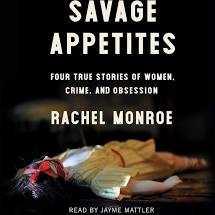 Savage Appetites, Rachel Monroe’s probing, recursive study, per the subtitle, of “women, crime, and obsession,” attempts to explain to themselves and the rest of us those women running in place while fixed on a master broadcast of ritual female destruction. A magazine writer known for her laser-cut dissections of cresting cultural phenomena, Monroe brings a rare form of joy to her reporting: Her best pieces combine a focused effort to nail down a good story and a more expansive instinct toward unraveling, questioning, showing her work. Writing about social-media hucksters, dating-app con men, and new-old wellness elixirs, she exhibits a gift—perhaps prized even more by editors than it is among journalists—for the precise interval at which a sort-of thing is ready to become a full-on thing, to be caught mid-microcurrent, skillfully examined, and released into the slightly wider waterways that now pass for the mainstream.
 László Krasznahorkai is a Hungarian writer born in 1954. His first novel,
 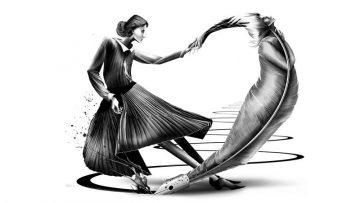 In her 1931 essay “Professions for Women”, Woolf recalled that thrill of transforming from “a girl in a bedroom with a pen in her hand” to “a professional woman”, her opinions solicited and rewarded by wages she could spend, once rent and bills were covered, on “an extravagant little table” or a “long coveted & resisted coal scuttle” (money, she wrote in A Room of One’s Own, “dignifies what is frivolous if unpaid for”). But the sense of independence afforded by this work was not purely, or even primarily, financial. When she first sat down to write a damning review of a book by a respected gentleman, Woolf was haunted by a phantom voice urging her not to criticize but to charm and flatter, to speak in the language traditionally deemed womanly. She named this spectre the “Angel in the House”, after Coventry Patmore’s poem about the cloying, self-sacrificing ideal of Victorian womanhood; her imagined admonishment – “Never let anybody guess that you have a mind of your own” – nearly “plucked the heart out of my writing”. Conquering the urge to submit to that voice, Woolf concluded, was a prerequisite not only for writing, but for freedom in all aspects of life. The TLS’s affirmation helped Woolf to unmake assumptions of how women should think and behave, and find a new language in which to express herself, ignoring the insistent reminder that there were things “which it was unfitting for her as a woman to say”. Soon after her first reviews were published, seeking respite from dull commissions (“a nondescript book like this which really suggests nothing good or bad, is damned hard work”), she began on the novel that would become her debut, The Voyage Out. Virginia Woolf was launched.
 SAN FRANCISCO — Last fall, Google unveiled a breakthrough artificial intelligence technology called BERT that changed the way scientists build
 Winter is changing its character. Since the beginning of the 21st century, glaciers have been melting at record speed. In Central Asia, they’ve lost approximately one quarter of their volume over the past 50 years. An ice grotto in Switzerland that is creeping down the slope as the Rhône Glacier advances is now covered with white blankets every summer to help preserve it. When a glacier ceases to flow and begins to melt, glaciologists use the term dead-ice, and when dead-ice melts completely, it leaves behind an uneven terrain full of potholes. Depending on their shape and location, these are known as donuts, puckered lips, or kettles. The highest ski resort in the world used to be on the glacier at the summit of Mount Chacaltaya in Bolivia. The glacier, 17,785 feet above sea level, disappeared years ago, and scientists have calculated that glaciers will continue to melt even if humans somehow manage to reduce the amount of greenhouse gases entering the atmosphere.
 Maxwell’s Demon is a famous thought experiment in which a mischievous imp uses knowledge of the velocities of gas molecules in a box to decrease the entropy of the gas, which could then be used to do useful work such as pushing a piston. This is a classic example of converting information (what the gas molecules are doing) into work. But of course that kind of phenomenon is much more widespread — it happens any time a company or organization hires someone in order to take advantage of their know-how. César Hidalgo has become an expert in this relationship between information and work, both at the level of physics and how it bubbles up into economies and societies. Looking at the world through the lens of information brings new insights into how we learn things, how economies are structured, and how novel uses of data will transform how we live.
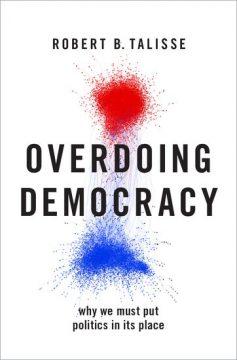 In prose both sophisticated and accessible to the lay reader, Robert B. Talisse’s Overdoing Democracy sets forth the case for a national reckoning on how our addiction to politics is undermining the purposes for which democracy was conceived.
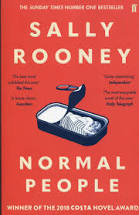 November 22nd, 2019 is the bicentenary of the birth of George Eliot (Mary Ann Evans, 1819-80). Eliot was the last in an extraordinary sequence of women novelists in nineteenth century England that included Jane Austen, the Brontë sisters and Elizabeth Gaskell. Her novel Middlemarch (1871-72) is generally considered to be the culminating achievement of the Victorian realist tradition. In transposing the ethical capital of Christianity to the secular world, she retained a fervent belief in the redemption offered by the expansion of human knowledge and a co-ordinate growth in sympathetic feeling. Most of her heroines yearn for education and a sense of social purpose as well as for love and marriage. How do such ambitions look in the globalised, information-saturated present, where many young women have far greater opportunities for specialised education? Can we still imagine that the novel could contribute to the redemption of the world? Sally Rooney’s allusions to Eliot, as well as to Austen, in her two best-selling campus-based novels, Conversations with Friends (2017) and Normal People (2018), offer an unexpected Irish millennial salute to this humanist line of ameliorative fiction by English women.