Anya Ventura in The Baffler:
 IN 1971, AFTER THE UNITED STATES had declared a War on Poverty but before the Wars on Drugs and Terrorism, Richard Nixon declared a War on Cancer: a battle against the bad cells that attack our bodies. Three months earlier, Lewis F. Powell, a lawyer on the board of Philip Morris and future Supreme Court justice, had written a confidential memo with lasting consequences that urged corporations to become more aggressively involved in politics in order to advance their own interests. In metaphoric terms, then, cancer was an apt disease of the times: a problem of unchecked growth, deadly and yet slow to materialize. Its elevated status was cemented over the following decades, as cancer became an economic, bodily, ecological, and spiritual question threaded through every facet of American life. It was against this backdrop, in 1975, that a merchant banker named Richard Stephenson bought up a community hospital in Zion, Illinois, a pious town along the western shore of Lake Michigan, just south of the Wisconsin state line. Eventually ballooning into a network of hospitals christened the Cancer Treatment Centers of America, it became a business catering to the most desperate—one of a boom industry’s most grotesque manifestations that in 2013 was valued roughly at $1.36 billion.
According to the company’s lore, a story I would hear recounted many times during my visits to Zion, Stephenson rebranded the Zion-Benton hospital in 1988 following the death of his mother from bladder cancer. In 1990, he acquired a second hospital in Tulsa, Oklahoma—the former City of Faith hospital that had been constructed in 1978 by Oral Roberts after he received a vision from a nine-hundred-foot-tall Jesus. In addition to Tulsa and the flagship hospital in Zion, the CTCA would go on to open more treatment centers near Philadelphia, Atlanta, and Phoenix. Their treatment model became known as the “Mother Standard” and sought to treat the whole person: mind, body, and spirit. In addition to traditional medicine—chemotherapy, radiation—the CTCA offers patients acupuncture, chiropractics, nutritional advice, naturopathy, and spiritual support. They also promote expensive, cutting-edge treatments like immunotherapy. “It’s really unbelievable how one doctor can tell me I have two months to live, and then I go the Cancer Treatment Centers of America, and they save my life,” says a woman featured in one of the CTCA’s many television advertisements, whose intertitle informs us that “You have no expiration date.” According to its slogan at the time, CTCA is “winning the fight against cancer, every day.”
When it’s not likened to a “fight,” cancer is often framed as a “journey,” a soul-fortifying pilgrimage through dangerous geography. In the opening passage of Illness as Metaphor, Susan Sontag dubbed it “the kingdom of the sick.” Christopher Hitchens called it “Tumortown;” Barbara Ehrenreich, “Cancerland.” But at the CTCA, patients are first welcomed in their journey by a concierge at what’s called “First Connections”; at the Zion hospital, a moss-colored oil portrait of Stephenson beams down from the front desk.
More here.


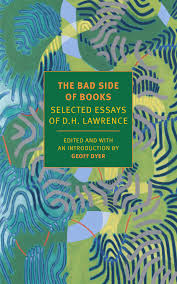 Lawrence was a mystic, consumed with a vision of each person’s soul as utterly foreign to all others, and yet capable of finding a form of human connection that is so vast that it can contain, as he writes in The Rainbow, “bonds and constraints and labours” and still be “complete liberty.” There is no writer more keenly interested in how men and women relate to one another, or in relatedness as such: the tension between the self—inviolate, contained, individual, isolate—and the couple. He imagined the task of art is the same as the task of life—to be in true relationship to one’s surroundings, in a dynamic flow. He believed the novel was a worthwhile form because in it every part is related to every other. He was a mystic seeking absolute truth, which now seems passé, and precious. His voice is as heady and vague as it is pure and urgent, and even his “worst pages,” as his contemporary Catherine Carswell wrote, “dance with life that could be mistaken for no other man’s.”
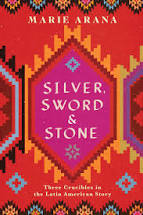 “Latin America doesn’t matter,” President Nixon told his advisors in 1973. “People don’t give a shit about the place.” Secretary of State Henry Kissinger agreed, saying “what happens in the south has no importance.” That same year, Arana writes, “Kissinger received concrete evidence of the massacres,” but “stated that ‘however unpleasant’ these circumstances might be, the overall situation was beneficial to the United States.” As he told the Argentine foreign minister as the killing was happening, “We want you to succeed.”
 On 15 June 2017, scientists at a respected biological institute in Germany were thrown into crisis by an alarming announcement. An investigation into the Leibniz Institute on Aging had found that its director, cell biologist Karl Lenhard Rudolph, had
 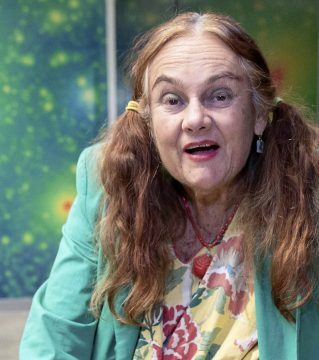 Beginning in 1991,
 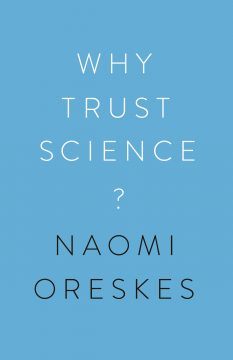 Why ask “Why trust science?” When many people worry about the safety of genetically modified food, parents resist the advice of pediatricians to vaccinate their children against common childhood diseases, religious people still say they take the earth to be fewer than 10,000 years old, and the president of the United States declares climate change to be a hoax perpetrated by the Chinese, public trust in scientific research would seem to be in dire straits. The time is ripe for reassurance. Even to pose the question indicates that something has gone wrong.
 In December 2005, in his fourth month as president of Iran, Mahmoud Ahmadinejad called the Holocaust a myth. This was during an interview with Al-Alam, an Arabic-language channel broadcast from Tehran. The interview wasn’t an outlier. A year earlier, under new leadership, Islamic Republic of Iran Broadcasting, the state-owned TV network that operates Al-Alam, broadcast a number of programs that described the Holocaust as a “made-up story,” a fiction or a myth. IRIB has always been hostile to what it calls the “Zionist Regime,” but prior to 2004 there had been no orchestrated campaign to cast the Holocaust as a lie.
 TS: Lines from Valerie Solanas’s play Up Your Ass open each chapter of Females. How did this choice help determine the book’s structure?
 THE MOST PLEASANT WAY
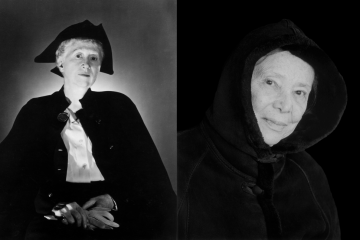 If you place their bodies of work end to end chronologically,
  Israel’s champions owe us an explanation. First, they insist that Israel is and always must be a Jewish state, by which most of them mean not religiously Jewish but of the “Jewish People” everywhere, including Jews who are citizens of other states and not looking for a new country. To be Jewish, according to the prevailing view, it is enough to have a Jewish mother (or to have been converted by an approved Orthodox rabbi). Belief in one supreme creator of the universe, in the Torah as the word of God, and in Jewish ritual need have nothing whatever to do with Jewishness. (We ignore here the many problems with
  There are some crimes that are almost impossible to forget. For me, they include the death in 1999 of Kendra Webdale, an aspiring young journalist who was pushed in front of a New York subway train by a 29-year-old man with schizophrenia who had stopped taking his medication. That same year, two mentally ill teenage boys massacred 12 students and one teacher at Columbine High School in Colorado. Thirteen years later, a seriously emotionally disturbed 20-year-old man murdered 20 young children and six adults at Sandy Hook Elementary School in Connecticut. This year, a homeless 24-year-old man bludgeoned four men to death while they slept on the streets of my city. Although New York is now far safer than when I was a child in the 1940s and ’50s who walked to and from school unescorted, like most big cities, it still harbors untold numbers of men and women with known or undiagnosed severe mental illness that can and should be treated before yet another personal or societal tragedy occurs.
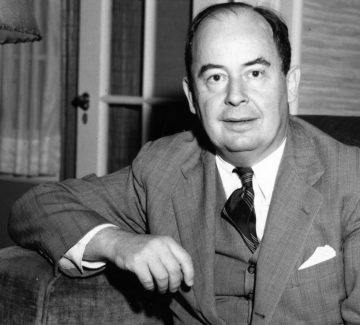 It is indeed supremely difficult to effectively refute the claim that John von Neumann is likely the most intelligent person who has ever lived. By the time of his death in 1957 at the modest age of 53, the Hungarian polymath had not only revolutionized several subfields of mathematics and physics but also made foundational contributions to pure economics and statistics and taken key parts in the invention of the atomic bomb, nuclear energy and digital computing.
 After the 2008 election, the New Yorker’s Ryan Lizza reported that Obama had told his incoming political director, Patrick Gaspard, “I think that I’m a better speechwriter than my speechwriters. I know more about policies on any particular issue than my policy directors. And I’ll tell you right now that I’m going to think I’m a better political director than my political director.”