
Alex Merto in The Atlantic:
 Not long ago, I stopped by the Morgan Library, in Manhattan, to pay a visit to the Gutenberg Bible on display within a cube of glass in the Morgan’s towering East Room. Gutenberg Bibles are among the rarest of printed books—about 50 copies are scattered around the world. At the time of their production, in Mainz in the 1450s, Gutenberg Bibles were of course the most common printed books—they were among the only ones. If a Gutenberg Bible were to come on the market today, it would sell for as much as $35 million, according to some estimates. But who knows? Sheikhs and oligarchs might launch a bidding war. The Morgan has three Gutenbergs. The copy on display was bought by J. P. Morgan in 1911 at Sotheby’s, which was acting for the family of a Wiltshire banker, who had bought it from the British bookseller Bernard Quaritch, who had bought it from the family of a Middlesex brewer, who had bought it from a member of the aristocratic Sykes family, who in 1824 had sold off his brother’s famed library in order to buy hunting dogs. The Sykes copy can be traced to a Scottish monk, antiquarian, and spy who lived in Germany in the late 18th century, and it is probably the copy that was lodged for centuries in the Augustinian monastery at Rebdorf.
I know all of this because of a remarkable (and hefty) recent study titled Editio Princeps—the book that prompted my visit to the Morgan. The author, Eric White, the curator of rare books at Princeton, has composed meticulous biographies of each of the complete Gutenberg Bibles that have come down to us. Many have led picaresque lives. Harvard’s copy was briefly stolen, in 1969, by a troubled young man who smashed its glass encasement, took the book, climbed out a window, and knocked himself unconscious when he fell to the ground; charges were dismissed on grounds of mental illness, and the thief went on to become an adult-film star. White tells the story of Johannes Gutenberg himself—how the goldsmith and maker of religious mementos for the pilgrimage trade combined the idea of metallic movable type (his true innovation, though it had antecedents) with a wooden press (like the kind used for making wine) to produce a printed page. The practice of copying books by hand did not immediately disappear, but the new technology spread fast. Venice, with its dense cluster of print shops, played the role of Silicon Valley. The printing press would soon upend the social order in ways that no one had anticipated and that few today give much thought to.
The comparison of the printing industry in Venice to the tech industry in Silicon Valley is not Eric White’s. It was made in 2005, by a historian of the printed word named Elizabeth Eisenstein, in the afterword to The Printing Revolution in Early Modern Europe, an abridged edition of her monumental The Printing Press as an Agent of Change. Eisenstein’s original two-volume study was published in 1979, before personal computers and the internet began to work their will, but she was well aware of subsequent developments.
More here.
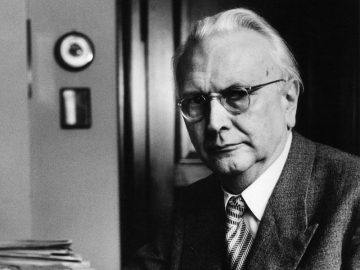 It’s an idea that has been influential for more than 200 years: around the middle of the first millennium
 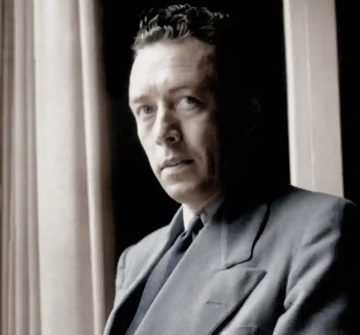 Sixty years after the French Nobel laureate
  Although abstract in character, mathematics has concrete origins: the greatest advances have been inspired by the natural world. Recently, a new result in linear algebra was discovered by three physicists trying to understand the behaviour of neutrinos.
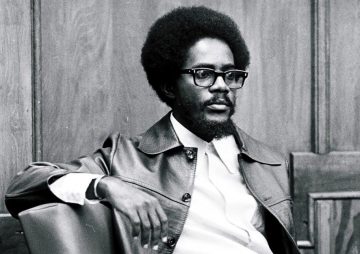 On October 15, 1968, the government of Jamaica banned a 26-year-old history professor from reentering the island nation. Walter Rodney, a lecturer at the University of the West Indies, was returning from the Black Writers’ Congress in Montreal. While abroad, he had spoken out against the Jamaican government’s economic policies, police brutality against black Jamaicans, and exclusion of US Black Power leaders.
 Southwestern Eggrolls – $9.95
 Ian McEwan
 Associate Professor Roger Pocock, from the Monash Biomedicine Discovery Institute (BDI), and colleagues from the University of Cambridge led by Professor David Rubinsztein, found that microRNAs are important in controlling
 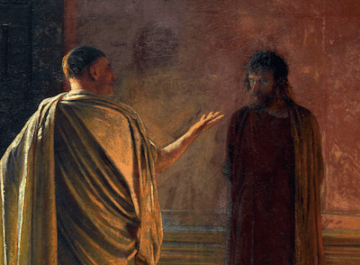 Steven Shapin in the LA Review of Books:
 Patrick Blanchfield in Bookforum:
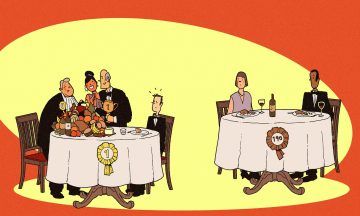 Quinn Slobodian in The Guardian:
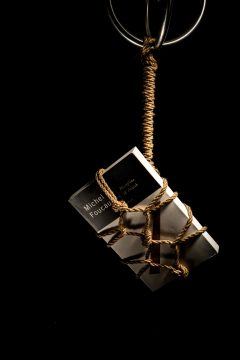 Mistress Snow in The Chronicle Review:
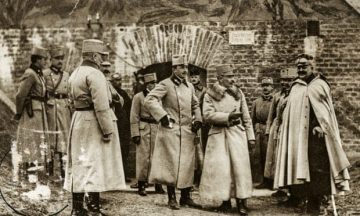 B
B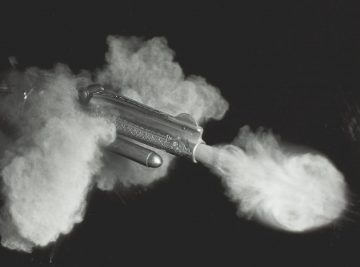 Reading The Dry Heart is like listening to a person confess in half-truths. The second time the narrator revisits killing Alberto, she describes how she prepared him a thermos of tea with milk and sugar before pulling his revolver out of his desk. The third time, she reveals that he was packing his bags for a trip; that she suspected he was not traveling alone; and that when she told him she would “rather know the truth, whatever it may be,” he replied by misquoting Dante’s Purgatorio: “She seeketh Truth, which is so dear / As knoweth he who life for her refuses.”
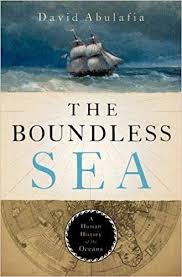 I
I