
Hannah B. Higgins in The MIT Press Reader:
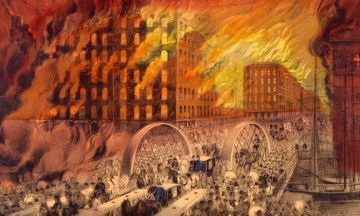 Called shikaakwa by the Miami-Illinois tribe for the skunky smell of the wild-onion that grew on the banks of Lake Michigan, “Chicago” is a French transcription of the earlier name for the area. Founded in 1833, with an initial population of 350, before the fire, it is said, Chicago’s streets curved around the Lake Michigan waterfront and followed the course of the Chicago River and a network of cattle paths lain over Native American migration routes. In contrast to the organic form of the city associated with the early settlers, modern Chicago would be organized as a grid, with address numbers (beginning in 1909) that could tell any pedestrian where they were in relationship to the central point (0,0) of State and Madison streets. According to plan, the modules of this new grid, great skyscrapers, grew up from the rubble like gigantic, up-stretched skeletons of cast iron and, later, steel. The grid, “a framework of spaced parallel bars” according to the Oxford American Dictionary, appears here as the image of an emerging modernity.
More here.
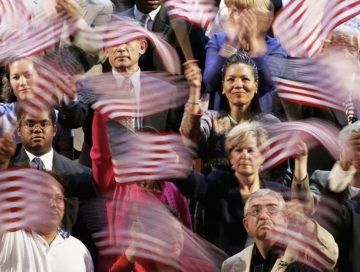 Democracy is hard work. If it is to function well, citizens must do a lot of thinking and talking about politics. But democracy is demanding in another way as well. It requires us to maintain a peculiar moral posture toward our fellow citizens. We must acknowledge that they’re our equals and thus entitled to an equal say, even when their views are severely misguided. It seems a lot to ask.
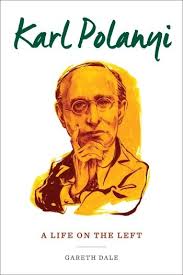 To search for Polanyi’s intellectual and political roots means coming into contact with a bewilderingly febrile left-wing intellectual milieu that appears to have little bearing on our present. However promising the current moment may seem with a self-described “democratic socialist” coming tantalizingly close to winning the Democratic Party’s presidential nomination, Gareth Dale’s new biography offers us a bracing reminder of a far richer world of socialist activity that once existed in much of the West. Debates over early-20th-century Hungarian socialism; the strategic plans of “Red Vienna”; the reformist 1961 platform of the Soviet Communist Party: These questions obsessed Polanyi and his contemporaries to a degree that seems almost inconceivable now and certainly residing in a sobering distance to our own immediate lives. Polanyi’s political activism and intellectual work were implicated in the widest questions debated on the left. The son of wealthy Hungarian Jews, he emerged as part of the “Great Generation” of Hungarian artists and intellectuals in Budapest at around the turn of the 20th century. John von Neumann, the mathematician, and Béla Bartók, the composer, were his contemporaries; so were the sociologist Karl Mannheim and the Marxist theoretician and literary critic György Lukács. Polanyi’s brother, Michael, became a philosopher of science, who for many years was better known than Karl.
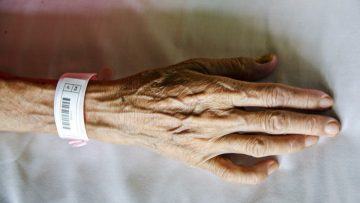
 Over the past decade, Americans have debated the best way to fix our broken healthcare system, one that allows
 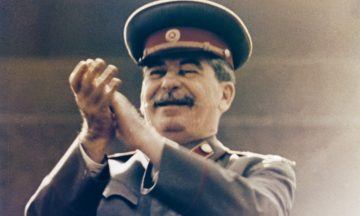 Boris Orman, who worked at a bakery, provides a typical example. In mid-1937, even as the whirlwind of Stalin’s purges surged across the country, Orman shared the following anekdot (joke) with a colleague over tea in the bakery cafeteria:
 One of the most famous vehicles in literature is coming to the Smithsonian’s
  When I was a Jewish kid growing up in suburban Los Angeles, we thought being Jewish meant supporting Israel.
 This work attending to the fullness of creation has revealed astounding complexity. As we walk through the forest, we notice plants and animals around us, but often we literally miss the forest’s interconnections for the trees. The greatest part of its biodiversity lies below ground, where thousands upon thousands of species of worms, arthropods, and insects live, each hosting a different bacterial community in its gut. We used to think of soil as a test tube full of chemicals, but now know that it’s a complex biological network; we are only beginning to understand its thousands of parts. These are “trophic” networks: who eats what and whom. The complexity goes far beyond predator and prey. Everything from a fallen evergreen needle to a tree is consumed, and the droppings of the consumers are consumed by yet other species through cycles upon cycles.
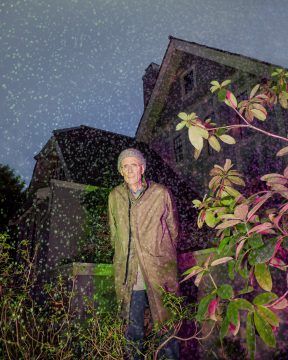 Most science fiction takes place in a world in which “the future” has definitively arrived; the locomotive filmed by the Lumière brothers has finally burst through the screen. But in “Neuromancer” there was only a continuous arrival—an ongoing, alarming present. “Things aren’t different. Things are things,” an A.I. reports, after achieving a new level of consciousness. “You can’t let the little pricks generation-gap you,” one protagonist tells another, after an unnerving encounter with a teen-ager. In its uncertain sense of temporality—are we living in the future, or not?—“Neuromancer” was science fiction for the modern age. The novel’s influence has increased with time, establishing Gibson as an authority on the world to come.
 People engage in moral talk all the time. When they make moral claims in public, one common response is to dismiss them as virtue signallers. Twitter is full of these accusations: the actress Jameela Jamil is a ‘pathetic virtue-signalling twerp’, according to the journalist Piers Morgan; climate activists are virtue signallers, according to the conservative Manhattan Institute for Policy Research; vegetarianism is virtue signalling, according to the author Bjorn Lomborg (as these examples illustrate, the accusation seems more common from the Right than the Left). Accusing someone of virtue signalling is to accuse them of a kind of hypocrisy. The accused person claims to be deeply concerned about some moral issue but their main concern is – so the argument goes – with themselves. They’re not really concerned with changing minds, let alone with changing the world, but with displaying themselves in the best light possible. As the journalist James Bartholomew (who claimed in 2015 to have invented the phrase, but didn’t) puts it in The Spectator, virtue signalling is driven by ‘vanity and self-aggrandisement’, not concern with others.
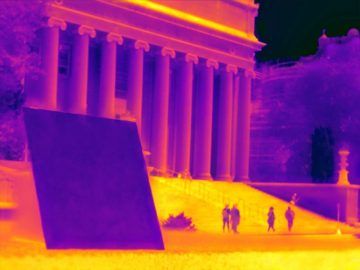 When businessman Howard Bisla was tasked with saving a local shop from financial ruin, one of his first concerns was energy efficiency. In June 2018, he approached his local electricity provider in Sacramento, California, about upgrading the lights. The provider had another idea. It offered to install an experimental cooling system: panels that could stay colder than their surroundings, even under the blazing hot sun, without consuming energy. The aluminium-backed panels now sit on the shop’s roof, their mirrored surfaces coated with a thin cooling film and angled to the sky. They cool liquid in pipes underneath that run into the shop, and, together with new lights, have reduced electricity bills by around 15%. “Even on a hot day, they’re not hot,” Bisla says.
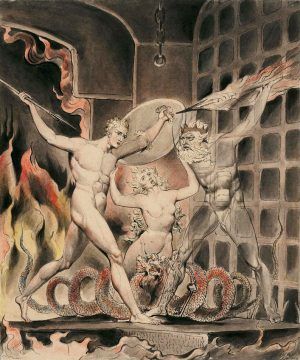 ‘A poem is not a lecture; a story is not an argument. The way poems and stories work on our minds is not by logic, but by their capacity to enchant, to excite, to move, to inspire.’ So writes Philip Pullman in his
 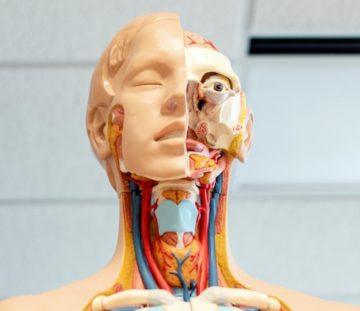 I am not altogether incurious, but one entity about which I have over the years felt little curiosity is my own body. Until recently, I could not have told you the function of my, or anyone else’s, pancreas, spleen, or gallbladder. I’d just as soon not have known that I have kidneys, and was less than certain of their exact whereabouts, apart from knowing that they reside somewhere in the region of my lower back. As for my entrails, the yards of intestines winding through my body, the less I knew about them the better, though I have always liked the sound of the word “duodenum.” About the cells and chromosomes, the hormones and microbes crawling and swimming about in my body, let us not speak.