Ross Douthat in The New York Times:
 This column tries to keep its cool, but last week I briefly surrendered to crisis and existential dread, to the sense that an entire world is dissolving underneath our feet — institutions crumbling, authorities corrupted, faith in the whole experiment evaporating. How did I enter this apocalyptic mood? Not by reading about Trump’s Washington or the Middle East, but by downloading a package of essays from The Chronicle of Higher Education on the academic world that helped educate me — the humanities and especially the study of literature, whose apparently-terminal condition makes the condition of the American Republic look like ruddy health. The package’s title is a single word, “Endgame,” and its opening text reads like the crawl for a disaster movie. “The academic study of literature is no longer on the verge of field collapse. It’s in the midst of it.” Jobs are disappearing, subfields are evaporating, enrollment has tanked, and amid the wreckage the custodians of humanism are “befuddled and without purpose.”
The Chronicle essays cover administrative and political battles, the transformed hiring process, the rebellions of graduate students, and the golfing-under-a-volcano aspects of the Modern Language Association conference. But the central essays are the ones that deal with the existential questions, the ways that humanism tries — and lately fails — to justify itself. In the most interesting one, the University of Melbourne’s Simon During portrays the decline of the humanities as a new form of secularization, an echo of past crises of established Christian faith. Once consecrated in place of Christianity, he suggests, high culture is now experiencing its own crisis of belief: Like revelation and tradition before it, “the value of a canon … can no longer be assumed,” leaving the humane pursuits as an option for eccentrics rather than something essential for an educated life. During’s essay is very shrewd, and anyone who has considered secularization in a religious context will recognize truths in the parallels it draws. But at the same time they will also recognize the genre to which it belongs: a statement of regretful unbelief that tries to preserve faith in a more attenuated form (maybe “our canon does not bear any absolute truth and beauty,” but we don’t want to live with an “empty heritage” or “disown and waste the pasts that have formed us”) and to make it useful to some other cause, like the wider left-wing struggle against neoliberalism.
And if there’s any lesson that the decline of Christianity holds for the painful death of the English department, it’s that if you aspire to keep your faith alive even in a reduced, non-hegemonic form, you need more than attenuated belief and socially-useful applications. A thousand different forces are killing student interest in the humanities and cultural interest in high culture, and both preservation or recovery depend on more than just a belief in truth and beauty, a belief that “the best that has been thought and said” is not an empty phrase. But they depend at least on that belief, at least on the ideas that certain books and arts and forms are superior, transcendent, at least on the belief that students should learn to value these texts and forms before attempting their critical dissection.
More here.

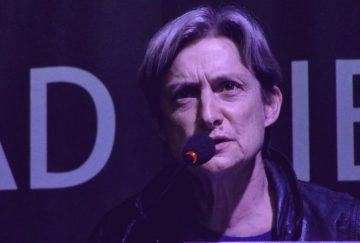 Judith Butler is arguably the most influential critical theorist of our era. Her early books, such as Gender Trouble (1990) and Bodies That Matter (1993), anticipated a profound social and intellectual upheaval around sex, sexuality, gender norms, and power. Like many readers of my generation, I was introduced to Butler’s work just as these changes began to accelerate, and her ideas became part of mainstream discourse. In recent years, Butler has turned her insights about norms and exceptions, the psychic life of power, and the politics of resistance toward political ethics. In December Butler and I discussed her latest book, The Force of Nonviolence, which explores “nonviolence” as a project capable not simply of disclosing structural and repressive forms of violence, but also of productively channeling the tensions of social life away from retribution and resentment toward a radical and redemptive notion of equality.
 In the title essay of her new collection, Rachel Cusk describes something she calls being sent to “Coventry.” This, as it is for many English families, is her family’s term for putting someone beyond the pale, for thrusting an offender out into silence. Her parents “send her to Coventry” when she does something they dislike, when she has slighted them or failed them in some way. “Sometimes,” Cusk writes,
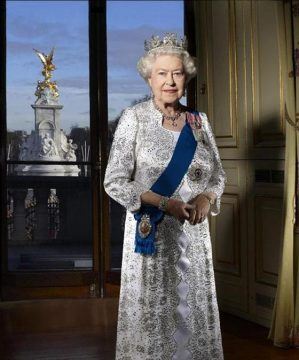 In part, the distaste for thinking critically about the monarchy stems from an unlikely source. In the 1960s and 70s, social history and women’s history pioneered a “history from below,” ushering in not only a disciplinary but also an ethical imperative, one that quickly spread to neighboring fields both inside and outside the academy. A balancing swing has begun in recent years—Clarissa Campbell Orr, a historian of queenship, proclaimed in 2002 that “much is to be gained for women’s history and feminist history by looking at women at the social apex, including their roles, representations and symbolic importance for other men and women”—though studies of the elite, and especially of the monarchy (the ultra-elite), can still be regarded with considerable suspicion.
 And, indeed, Gibson stopped setting his novels mainly in the far future around the turn of the millennium. He changed mode. “Since Pattern Recognition I’ve been writing novels of the recent past. They’ve tended to be published in the year after they actually take place. After the publication of All Tomorrow’s Parties [1999] I had a feeling that my game was sagging a bit. Not that there’s anything particularly wrong with that book – but I felt that I was losing a sense of how weird the real world around me was. Because I was busy writing novels and whatever, and I’d sort of glance out of the window at the day’s reality and I’d go: ‘Whoah! That was really strange.’ Then I’d look back down at my page and realise that that was stranger than my page, and I began to feel … uneasy.”
 Social perception bias
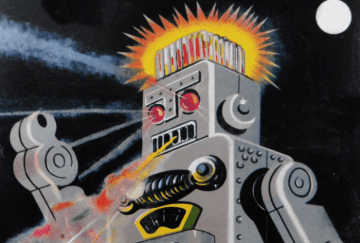 A great deal of recent public debate about artificial intelligence has been driven by apocalyptic visions of the future. Humanity, we are told, is engaged in an existential struggle against its own creation. Such worries are fueled in large part by tech industry leaders and futurists, who anticipate systems so sophisticated that they can perform general tasks and operate autonomously, without human control. Stephen Hawking, Elon Musk, and Bill Gates have all publicly
  I didn’t know it
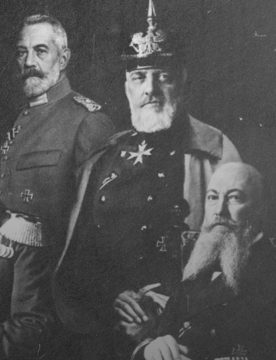 The great French historian and resistance martyr, Marc Bloch, is supposed to have said that history was like a knife: You can cut bread with it, but you could also kill. This is even more true of historical derivatives like analogies; they can provide either illumination or poisonous polemic. The first requirement for an acceptable historical analogy is plausibility; the two situations compared must have striking similarities, and the image of the historic antecedent must be as clearly understood as possible. This becomes an unlikely presupposition when the analogy is proposed by partisans working in an age of stunning historical ignorance. Nowadays, politicians and partisans use analogies instead of arguments, convenient shorthand for their defenses of dubious policies.
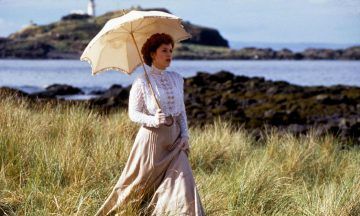 On its surface, The House of Mirth reads like a 19th-century novel. Although the 20th century’s defining technologies had all been invented by the time it was published in 1905, they had yet to substantially alter even the affluent world of the novel’s protagonist, Lily Bart. Cars were exotic playthings; telephones hadn’t supplanted visiting cards; electric light was a harsher alternative to candles. The first world war was inconceivable. And there is, too, a lingering 19th-century feel to Wharton’s disembodied approach to human physicality – especially striking in a novel whose central conundrum is sexual: Lily, a pedigreed virgin without fortune, craves the sensual pleasures of life among the very rich but cannot bring herself to marry a wealthy man, her only means of securing those pleasures for life.
 Australia is in the grip of its worst wildfire season on record. The human death toll stands at 27, and some 2,000 homes have been destroyed across more than 10 million hectares of land — an area larger than Portugal. An estimated 1 billion wild mammals, birds and reptiles have perished. Michael Clarke, an ecologist at La Trobe University in Bundoora, Melbourne, has been studying the effect of fires on native ecosystems — and how they recover — ever since a fire tore through his field site 15 years ago. Clarke spoke to Nature about how animals fare in the wake of wildfires, and why this season’s fires could prove particularly devastating.
 Last month at the San Francisco Museum of Modern Art I saw “2001: A Space Odyssey” on the big screen for my 47th time. The fact that this masterpiece remains on nearly every relevant list of “top ten films” and is shown and discussed over a half-century after its 1968 release is a testament to the cultural achievement of its director Stanley Kubrick, writer Arthur C. Clarke, and their team of expert filmmakers.
 Computers can now drive cars, beat world champions at board games like chess and Go, and even write prose. The revolution in artificial intelligence stems in large part from the power of one particular kind of artificial neural network, whose design is inspired by the connected layers of neurons in the mammalian visual cortex. These “convolutional neural networks” (CNNs) have proved surprisingly adept at learning patterns in two-dimensional data — especially in computer vision tasks like recognizing handwritten words and objects in digital images.