
A talk by Mario J. Rizzo, introduction by Mark Blyth:
Category: Recommended Reading
Liking Bad Movies
Phil Christman at The Hedgehog Review:
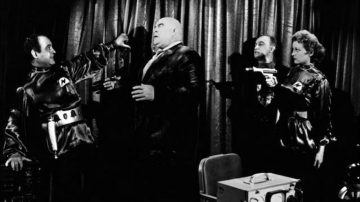 We bad-movie watchers have our own anticriteria, the sorts of badness we prefer. Some of us use the term “bad movies” to mean, simply, films that emerge from a supposedly lowbrow genre, or films that are stylized in the manner we tend to label “camp.” (Road House from 1989 is this kind of bad movie, and is very good at being one.) Some of us prefer movies that are exploitative and tacky but, in a Nietzschean way, supposedly more alive than respectable ones. Renata Adler referred to the cult around such movies as “the angry trash claimers,”1 a term by which she probably intended to indict Pauline Kael, whose “Trash, Art, and the Movies” could serve as a manifesto for this sort of criticism.2 The rock critic Lester Bangs, in an endearing essay about Ray Dennis Steckler’s delirious 1963 horror film The Incredibly Strange Creatures Who Stopped Living and Became Mixed-Up Zombies, practices Angry Trash Reclamation, arguing that the film’s apparent innocence of good taste gives it a kind of “lunar purity.”
more here.
Russia’s Dr. Seuss
Anthony Madrid at the Paris Review:
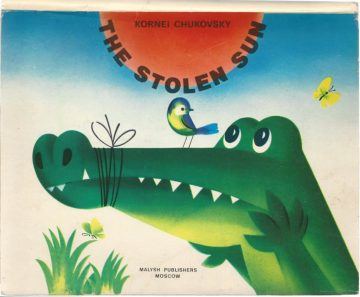 Russia had a Dr. Seuss. Same deal as ours, except his hot decade wasn’t the fifties; it was the twenties. There’s a lot to be said here.
Name: Kornei Chukovsky. Dates: 1882 to 1969. Number of supremo-supremo classic children’s books to his credit: ten or twelve. His stuff is a lot like Green Eggs and Ham: about that long; rhymes bouncing around like popcorn; no real point in sight. (Of course, like with everything else, you can carry whatever point you like into his books and then pretend you found it there. It’s like cops planting weed in people’s cars.)
Chukovsky’s backstory is pleasant. He was a young father; his son was sick. I think he had dysentery, I’m not sure. Somehow, everyone thought the family doctor was the only one would could be consulted, so Chukovsky wound up on a train in the middle of the night with that poor kid, age like four or something, sick and moaning.
more here.
Female Poets in the Persian Language
Joobin Bekhrad at the TLS:
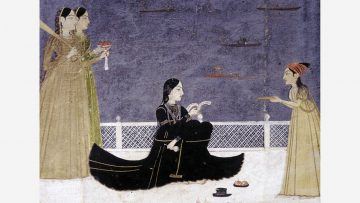
The Persian language does not recognize gender, but it is hard to deny that history has favoured male Persian-language poets over their female counterparts. Since the revival of the language in the tenth century after its suppression by the Arabs, men have dominated the corpus of Persian literature; so much so, in fact, that a lay reader or enthusiast would be justified in questioning whether Khayyam, Sa’di and Hafez, among many others, even had contemporaries of the opposite sex. While it is true that, with the exception of a handful of twentieth-century poets, female Persian-language poets can at best be said to have written verse in the shadows of men, they have indeed existed – as this revelatory new compendium vividly shows.
Translated by Dick Davis, a renowned scholar of Persian literature and a poet in his own right, The Mirror of My Heart examines the work of over eighty female Persian-language poets from the past thousand years.
more here.
Thursday Poem
The Man in the Glass
When you get what you want in your struggle for pelf
And the world makes you king for a day
Just go to the mirror and look at yourself
And see what that man has to say.
For it isn’t your father, or mother, or wife
Whose judgment upon you must pass
The fellow whose verdict counts most in your life
Is the one staring back from the glass.
He’s the fellow to please – never mind all the rest
For he’s with you, clear to the end
And you’ve passed your most difficult, dangerous test
If the man in the glass is your friend.
Some people may call you a straight-shooting chum,
And call you a wonderful guy,
But the man in the glass says you’re only a bum
If you can’t look him straight in the eye.
You may fool the whole world down the pathway of life
And get pats on the back as you pass
But your final reward will be heartache and strife
If you’ve cheated the man in the glass.
by Peter Dale Wimbrow
__________________________________
Pelf: money or wealth, especially when regarded with contempt or acquired by reprehensible means
The hunt for a healthy microbiome
Michael Eisenstein in Nature:
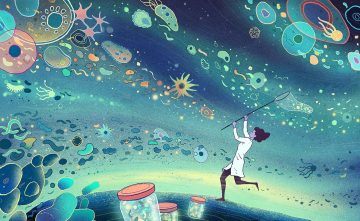 What does a healthy forest look like? A seemingly thriving, verdant wilderness can conceal signs of pollution, disease or invasive species. Only an ecologist can spot problems that could jeopardize the long-term well-being of the entire ecosystem. Microbiome researchers grapple with the same problem. Disruptions to the community of microbes living in the human gut can contribute to the risk and severity of a host of medical conditions. Accordingly, many scientists have become accomplished bacterial naturalists, labouring to catalogue the startling diversity of these commensal communities. Some 500–1,000 bacterial species reside in each person’s intestinal tract, alongside an undetermined number of viruses, fungi and other microbes. Rapid advances in DNA sequencing technology have accelerated the identification of these bacteria, allowing researchers to create ‘field guides’ to the species in the human gut. “We’re starting to get a feeling of who the players are,” says Jeroen Raes, a bioinformatician at VIB, a life-sciences institute in Ghent, Belgium. “But there is still considerable ‘dark matter’.”
Currently, these field guides are of limited use in distinguishing a healthy microbiome from an unhealthy one. Part of the problem is the potentially vast differences between the microbiomes of apparently healthy people. These differences arise through a complex combination of environmental, genetic and lifestyle factors. This means that relatively subtle differences can have a disproportionate role in determining whether an individual is relatively healthy or at increased risk of developing disorders such as diabetes.
More here.
Henry Louis Gates Talks Reconstruction To Alt-Right, Trump And Voter Suppression
Gwendolyn Glenn in WFAE Radio:
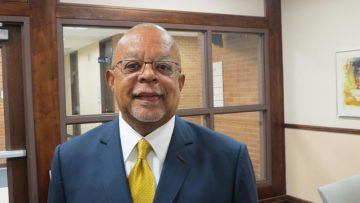 Henry Louis Gates, a renowned and award-winning filmmaker, author of two dozen books, a professor and director of African American studies at Harvard University, has written about race in America. He explores the Civil War, Reconstruction to Jim Crow, the civil rights movement and the state of race relations today. Gates spoke at UNC Charlotte Tuesday for the school’s 2019 Chancellor Speaker Series and at the uptown campus to school donors and city leaders. WFAE’s “All Things Considered” host, Gwendolyn Glenn, caught up with him to talk about race, voting, economics and other issues.
Gwendolyn Glenn: Let’s talk about the message that you want to leave people with. You’ll be talking with students, faculty from UNC Charlotte and also a lot of city leaders here in Charlotte. What’s the message you want to leave today?
Henry Louis Gates: It’s very important for people to understand the history of Reconstruction, the period following the Civil War and its rollback because it is a precursor to the period that we’re experiencing today. Between 1870 and 1877, 2,000 black men were elected to public office, including Chris Rock’s great-great-grandfather, who was elected to the House of Delegates in South Carolina. But within a few years, poof — all that disappeared.
Glenn: And I was going to ask you about that because you talk about that in your book and I think in an interview I heard you compare that roll back after Reconstruction to Jim Crow and on to what’s happening now with the Trump administration and that rollback.
Gates: Reconstruction was 12 years of unprecedented black freedom followed by an alt-right rollback. And we’re living through a period of eight years of a beautiful, brilliant, black family in the White House. A brilliant black president followed by an alt-right rollback. So the lesson of Reconstruction is that rights that we think are permanent, the right to vote, birthright citizenship, and the right of a woman to determine the fate of her own body. We think that these are inviolable. But they’re not they’re subject to the interpretation of the courts and sometimes the executive orders and that is the crisis that we’re facing today. So what happened in Reconstruction can happen again. The most important way, the most devastating way that Reconstruction was rolled back was through voter suppression.
More here. (Note: Throughout February, at least one post will honor The Black History Month. This year’s theme is “African Americans and the Vote.” Readers are encouraged to send in their suggestions)
Wednesday, February 19, 2020
Reading Sade in the Age of Epstein
Mitchell Abidor in the New York Review of Books:
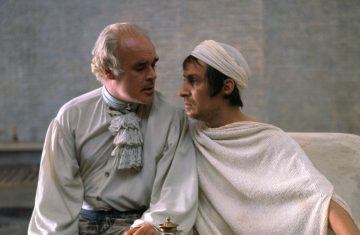
The recent publication of two works by the Marquis de Sade enables us to see that sadism is not just “the impulse to cruel and violent treatment of the opposite sex, and the coloring of the idea of such acts with lustful feelings,” as Richard von Krafft-Ebing defined it in his 1886 Psychopathia Sexualis. Sadism, as it is depicted by Sade, is also, and perhaps primarily, the creation of a world in which the powerful and wealthy are able to lure the poor and powerless, hold them captive, and reduce their bodies and selfhoods to nothing.
In this, as some clear-sighted post–World War II writers have noted, Sade’s writing was, inter alia, a harbinger of fascism. Theodor Adorno and Max Horkheimer, for example, wrote that Sade “prefigures the organization, devoid of any substantial goals, which was to encompass the whole of life” under the totalitarianism that drove them from Germany. Reading Sade in the age of #MeToo and Jeffrey Epstein is an uncanny experience, for his novels are also a blueprint for the world of the sexual predators of today.
This winter brings the first complete English translation of Sade’s vast epistolary novel, Aline and Valcour, in a lavish, three-volume edition from Contra Mundum. The translation, by Jocelyne Geneviève Barque and John Galbraith Simmons, is a masterful one, allowing Sade’s prose to flow, neither assuming the language and rhythms of the eighteenth century nor interpolating anachronisms from English today.
More here.
Sean Carroll’s Mindscape Podcast: Suresh Naidu on Capitalism, Monopsony, and Inequality
Sean Carroll in Preposterous Universe:
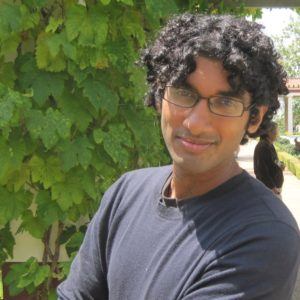 Nations generally want their economies to be rich, robust, and growing. But it’s also important to person to ensure that wealth doesn’t flow only to a few people, but rather that as many people as possible can enjoy the benefits of a healthy economy. As is well known, the best way to balance these interests is a contentious subject. On one side we might find free-market fundamentalists who want to let supply and demand set prices and keep government interference to a minimum, while on the other we might find enthusiasts for very strong government control over all aspects of the economy. Suresh Naidu is an economist who has delved deeply into how economic performance affects and is affected by other notable social factors, from democracy to revolution to slavery. We talk about these, as well as how concentrations of economic power in just a few hands — monopoly and its cousin, monopsony — can distort the best intentions of the free market.
More here.
The Graveyard Talks Back: Arundhati Roy on Fiction in the Time of Fake News
Arundhati Roy in Lit Hub:
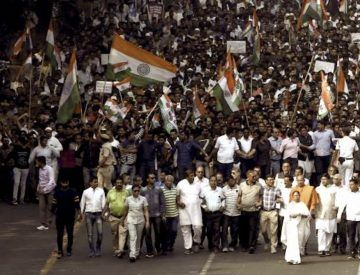 Graveyards in India are, for the most part, Muslim graveyards, because Christians make up a miniscule part of the population, and, as you know, Hindus and most other communities cremate their dead. The Muslim graveyard, the kabristan, has always loomed large in the imagination and rhetoric of Hindu nationalists. “Mussalman ka ek hi sthan, kabristan ya Pakistan!”—Only one place for the Mussalman, the graveyard or Pakistan—is among the more frequent war cries of the murderous, sword-wielding militias and vigilante mobs that have overrun India’s streets.
As the Hindu right has taken almost complete control of the state, as well as non-state apparatuses, the increasingly blatant social and economic boycott of Muslims has pushed them further down the societal ladder and made them even more unwelcome in “secular” public spaces and housing colonies. For reasons of safety as well as necessity, in urban areas many Muslims, including the elite, are retreating into enclaves that are often hatefully referred to as “mini-Pakistans.” Now in life, as in death, segregation is becoming the rule.
More here.
Is the two-party system good for democracy? A Debate: Yascha Mounk & Norman Ornstein vs. Lee Drutman & Katherine Gehl
The Bilingual Brain – the science of learning
Patrick McGuinness in The Guardian:
 A third of the way through this absorbing and engagingly written book, Albert Costa describes a family meal: “The father speaks Spanish with his wife and his son, but uses Catalan with his daughter. The daughter in turn speaks Catalan with her father but Spanish with the rest of the family, including the grandmother, who only speaks Spanish though she understands Catalan.” It’s what Costa calls “orderly mixing”, and, depending on which restaurants you visit, a common enough situation: everyone is bilingual here, but the language used changes according to who it is directed at. Given that everyone at the table understands both languages, would it not be easier and less confusing if everyone just chose one language and stuck to it? That sounds logical, but the bilingual mind doesn’t work that way. If you do not believe it, Costa suggests “having a conversation with a friend in the language you do not usually use and see how far you get”.
Not far, he observes. And Costa should know – not just because he was an expert in language acquisition (he died last year), but because the family he is describing is his own. One of the reasons this book makes sense of its complex material – from basic code-switching tests to the latest technology in brain imaging and transcranial magnetic stimulation – is that Costa is such a charming and witty guide. This is a rigorous book about complex science, and much of it could have been intractably technical or riddled with statistics. But Costa has a winningly informal style, a deadpan wit, and mixes laboratory findings of cognitive neuropsychology with examples from everyday life, TV programmes, sports and politics. In one set of cognitive tests, he shows how people are more risk-averse in their second language, and more gung-ho in their first. Costa suggests the practical applicablity of such research by advising us to visit casinos where people speak a language we are less comfortable in – it substantially reduces the likelihood of our going home shirtless and barefoot.
More here.
Ruby Bridges First Day of School Changed History
Betti Halsell in LA Sentinal:
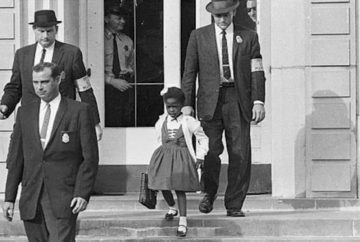 The footprints of a child are small but on November 14, 1960, six-year-old Ruby Bridges walked with purpose as she became the first African American student to integrate an elementary school in the South. This venture leads to the advancement of the Civil Rights Movement and created a pathway for further integration across the southern parts of the U.S.
Before Ruby could crawl, the monumental court ruling in Brown V. Board of Education case (1954) had transpired in favor of ending segregation in public schools. There was resistance along the southern lines. Although the Supreme Court deemed segregation in public schooling was unconstitutional, integration was not being practiced in the South. In 1959, Ruby Bridges started her educational journey at a segregated kindergarten in New Orleans. A year later, the federal court ordered Louisiana to desegregate its public institutions of education. The school district created an entrance exam, to test if African American students were capable to withstand the same level of academics as their White counterparts. Along with five other Black students, Ruby passed the test.
Like all concerned parents, Abon and Lucille Bridges were apprehensive about the act of moving their small child into an all-White school. With the spirit of aggression and lack of understanding in the air, little Ruby’s safety was of utmost importance. Her well-being was the main reason for the hesitance in Abon’s mind. It was Ruby’s mother who favored the move to take place on the premise that her child will receive an education and opportunities that were once denied to her before.
The decision was made, but there was plenty of red tape from the school district that yielded the steps towards change. At last, early Monday morning, Ruby, alongside her mother, took her first steps into victory over segregation. This was no ordinary first day of school; they were met with great adversity. Mobs of people chanted and shouted at Ruby and her mother. The only things between the rage of the people and the young girl were barricades clearing the pathway and the cops that escorted her in and surrounded the building. After Ruby entered William Frantz Elementary School, mothers of the other children barged in and ripped their children out from their classes; over 500 children walked out that day. For the first year, it was just a class of one. Ruby alone was taught by the only teacher willing, Mrs. Barbara Henry. Ruby had perfect attendance that year.
More here. (Note: Throughout February, at least one post will honor The Black History Month. This year’s theme is “African Americans and the Vote.” Readers are encouraged to send in their suggestions)
Wednesday Poem
“To sin by silence, when we should protest, makes cowards out of men.” —Ella Wheeler Wilcox
On The Fifth Day
On the fifth day
the scientists who studied the rivers
were forbidden to speak
or to study the rivers.
The scientists who studied the air
were told not to speak of the air,
and the ones who worked for the farmers
were silenced,
and the ones who worked for the bees.
Someone, from deep in the Badlands,
began posting facts.
The facts were told not to speak
and were taken away.
The facts, surprised to be taken, were silent.
Now it was only the rivers
that spoke of the rivers,
and only the wind that spoke of its bees,
while the unpausing factual buds of the fruit trees
continued to move toward their fruit.
The silence spoke loudly of silence,
and the rivers kept speaking,
of rivers, of boulders and air.
In gravity, earless and tongueless,
the untested rivers kept speaking.
Bus drivers, shelf stockers,
code writers, machinists, accountants,
lab techs, cellists kept speaking.
They spoke, the fifth day,
of silence.
by Jane Hirshfield
Written for the 2017 March for Science in Washington, D.C., protesting the anti-fact, anti-truth, anti-science political climate of the current American administration.
Tuesday, February 18, 2020
The affective roots of culture and cognition
Stephen T. Asma and Rami Gabriel in The Brains Blog:
 When Darwin wrote the Origin of Species, he famously closed the book with the provocative promise that “light will be thrown on the origin of man and his history.”[1] In his Descent of Man and his Expression of Emotions in Man and Animals, Darwin began to throw some of that promised light –especially regarding the emotional and cognitive similarities (homologies) of mammals.[2] But shortly after this beacon, all went dark again. The rise of positivism in the early twentieth-century, paired with the turn toward genetics, and the ascent of behaviorism effectively lowered the curtain on biological speculations about the evolution of the mind.
When researchers finally turned again to the mind in the mid-twentieth century, it was the computer that both sparked the cognitive sciences revolution and served as its exclusive investigative tool. Yet, for all the successes of artificial intelligence (and they are impressive), our understanding of biological minds seems to have gotten lost in the shuffle. While algorithmic digital computation produces problem-solving machines, such problem solving lacks the obvious motivational or conative goads and other affective triggers observed in real sentient animals. In fact, artificial intelligence and artificial life research seem to have lost interest, unapologetically, in the biological creature.
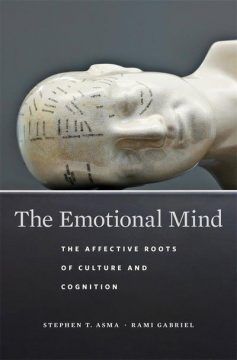
In our new book The Emotional Mind: The Affective Roots of Culture and Cognition (Harvard University Press, 2019), we argue that emotional systems are central to understanding the evolution of the human mind (as well as those of our primate cousins). Following the pioneering affective science of researchers like Jaak Panksepp, Antonio Damasio, and Fran de Waal, we bring together insights and data from philosophy, biology and psychology to shape a new research program –an alternative approach to the algorithmic assumptions of cognitive science and the post hoc stories of some evolutionary psychology.
More here.
What are the safest sources of energy?
Hannah Ritchie in Our World in Data:
The increasing availability of cheap energy has been integral to the progress we’ve seen over the past few centuries. Energy access is one of the fundamental driving forces of development. The United Nations says that “energy is central to nearly every major challenge and opportunity the world faces today.”
But energy production has downsides as well as benefits. There are three main categories:
- Air pollution: An estimated five million people die prematurely every year as a result of air pollution; fossil fuels and biomass burning are responsible for most of those deaths.
- Accidents: As well as deaths caused by the byproducts of energy production, people die in accidents in supply chains, whether in the mining of coal, uranium or rare metals; oil and gas extraction; the transport of raw materials and infrastructure; construction; or their deployment.
- Greenhouse gas emissions: Perhaps the most widely discussed downside is the greenhouse gases emitted by energy production, which are a key driver of climate change.
All energy sources have negative effects. But they differ enormously in the size of those effects. That difference can be easily summed up: by all metrics, fossil fuels are the dirtiest and most dangerous, while nuclear and modern renewable energy sources are vastly safer and cleaner.
More here.
Market economics has driven universities into crisis
Owen Jones in The Guardian:
 The trebling of tuition fees would unleash a new golden age for English universities, or so we were told. They would become financially sustainable, competitive, liberated from stifling bureaucracy and responsive to the needs of students. And yet, nearly a decade later, higher education is in crisis.
Tuition fees have formed part of a full-frontal assault on the living standards of a generation battered by a housing crisis, stagnating wages and slashed services. And with 83% of student loans forecast to never be paid back in full, the promises of financial sustainability are a nonsense. Both frontrunners for the Labour leadership have committed to maintaining the party’s totemic commitment to abolishing this punitive attack on aspiration, recognising that university education is a social good. But the issue goes much, much wider – and has profound implications for the future of our society.
More here.
Sean Carroll: A Brief History of Quantum Mechanics
Beholding The Ascent of Phoebe Waller-Bridge
Rachel Syme at Bookforum:
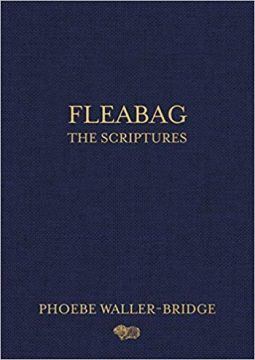 The title of Fleabag: The Scriptures (Ballantine Books, $28) is a cheeky play on words: It refers to the shooting scripts for the television comedy Fleabag, which are reproduced here in full, and it also refers to the fact that the second (and, if creator Phoebe Waller-Bridge is to be believed, final) season of the show, which debuted on Amazon Prime in May 2019, is about the main character’s romantic attachment to an unattainable Catholic priest. But it also acknowledges that Waller-Bridge’s words—printed out on creamy paper stock, bound inside a smooth navy-blue cover, and embossed with gold serif letters like a Gideon Bible—have become a new kind of religious text, albeit one that preaches primarily to secular women living in major metropolitan areas. And there is some truth to this visual provocation: If anyone had a truly blessed year, it was Phoebe Waller-Bridge. A picture of her lounging at the Chateau Marmont after she swept the Emmy Awards in September, with a vodka gimlet in one manicured hand and a cigarette in the other, went viral overnight. Women set it as their phone lock screens and desktop backgrounds; they meditated on it like a rosary. It’s so victorious, so insouciant. Here was a woman not ground to a pulp by anger at the news cycle, but wringing the juice out of life. She appears to be luxuriating, a hard-earned repose after several years of grinding out scripts. And on the seventh day, Phoebe Waller-Bridge rested.
more here.
John Berger’s Life Between Aesthetics and Politics
Bruce Robbins at The Nation:
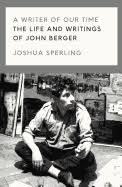 By the middle of the ’70s, Berger was publicly triumphant. Yet it was at this very moment that he chose to retreat from public life and move to a mountain village above Geneva. Sperling does not say—perhaps no one knows—how much that move owed to the breakup of his marriage to Bostock and his new relationship with Bancroft. (Sperling is frustratingly tight-lipped about Berger’s romantic life.) But we do learn a lot about his new existence. “Many of his older neighbors continued to live by agrarian methods more or less unbroken for centuries,” Sperling tells us, and “Berger started to work alongside them. They became his teachers.” Recalling these years, Berger observed, “It was like my university. I learnt to tap a scythe, and I learnt a whole constellation of sense and value about life.” Sperling lists the activities Berger participated in—ones involving hay, cows, trees, weeds, apples, and plenty of manure—and notes that “Berger found in the working life of Quincy not only a home but an anchor: a community.”
more here.