
Jill Lepore in The New Yorker:
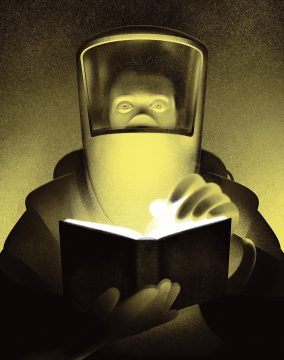 When the plague came to London in 1665, Londoners lost their wits. They consulted astrologers, quacks, the Bible. They searched their bodies for signs, tokens of the disease: lumps, blisters, black spots. They begged for prophecies; they paid for predictions; they prayed; they yowled. They closed their eyes; they covered their ears. They wept in the street. They read alarming almanacs: “Certain it is, books frighted them terribly.” The government, keen to contain the panic, attempted “to suppress the Printing of such Books as terrify’d the People,” according to Daniel Defoe, in “A Journal of the Plague Year,” a history that he wrote in tandem with an advice manual called “Due Preparations for the Plague,” in 1722, a year when people feared that the disease might leap across the English Channel again, after having journeyed from the Middle East to Marseille and points north on a merchant ship. Defoe hoped that his books would be useful “both to us and to posterity, though we should be spared from that portion of this bitter cup.” That bitter cup has come out of its cupboard.
In 1665, the skittish fled to the country, and alike the wise, and those who tarried had reason for remorse: by the time they decided to leave, “there was hardly a Horse to be bought or hired in the whole City,” Defoe recounted, and, in the event, the gates had been shut, and all were trapped. Everyone behaved badly, though the rich behaved the worst: having failed to heed warnings to provision, they sent their poor servants out for supplies. “This Necessity of going out of our Houses to buy Provisions, was in a great Measure the Ruin of the whole City,” Defoe wrote. One in five Londoners died, notwithstanding the precautions taken by merchants. The butcher refused to hand the cook a cut of meat; she had to take it off the hook herself. And he wouldn’t touch her money; she had to drop her coins into a bucket of vinegar. Bear that in mind when you run out of Purell.
“Sorrow and sadness sat upon every Face,” Defoe wrote. The government’s stricture on the publication of terrifying books proved pointless, there being plenty of terror to be read on the streets. You could read the weekly bills of mortality, or count the bodies as they piled up in the lanes. You could read the orders published by the mayor: “If any Person shall have visited any Man known to be infected of the Plague, or entered willingly into any known infected House, being not allowed: The House wherein he inhabiteth shall be shut up.” And you could read the signs on the doors of those infected houses, guarded by watchmen, each door marked by a foot-long red cross, above which was to be printed, in letters big enough to be read at a distance, “Lord, Have Mercy Upon Us.”
More here.
 When I became an attending physician at New York–Presbyterian’s Weill Cornell Hospital last summer, after graduating from a residency at Brigham and Women’s Hospital in Boston, I became a hospitalist: a doctor of general internal medicine who takes care of patients for the duration of their inpatient hospital care. Besides my own writing and research, I also teach medical students and residents in a variety of courses and electives. But for me, as for roughly a million other doctors in the United States, that regular routine is changing very suddenly. Part of the challenge we’re facing with Covid-19 is that even knowing this is an event of shocking magnitude, we are not yet able to measure or foresee exactly how fast the disease’s progress through the world’s population will be.
 LARRY BRILLIANT SAYS
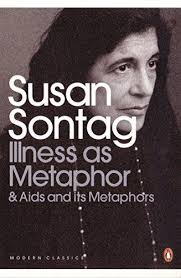 Punitive notions of disease have a long history, and such notions are particularly active with cancer. There is the “fight” or “crusade” against cancer; cancer is the “killer” disease; people who have cancer are “cancer victims.” Ostensibly, the illness is the culprit. But it is also the cancer patient who is made culpable. Widely believed psychological theories of disease assign to the ill the ultimate responsibility both for falling ill and for getting well. And conventions of treating cancer as no mere disease but a demonic enemy make cancer not just a lethal disease but a shameful one. Leprosy in its heyday aroused a similarly disproportionate sense of horror. In the Middle Ages the leper was a social text in which corruption was made visible; an exemplum, an emblem of decay. Nothing is more punitive than to give a disease a meaning—that meaning being invariably a moralistic one. Any important disease, whose physical etiology is not understood, and for which treatment is ineffectual, tends to be awash in significance. First, the subjects of deepest dread (corruption, decay, pollution, anomie, weakness) are identified with the disease. The disease itself becomes a metaphor. Then, in the name of the disease (that is, using it as a metaphor), that horror is imposed on other things. The disease becomes adjectival. Something is said to be disease-like, meaning that it is disgusting or ugly. In French, a crumbling stone façade is still “lépreuse.”
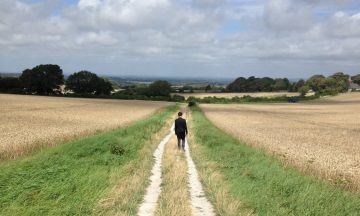 Solitude is not the same as loneliness. Lonely people feel the need for company, while solitary types seek to escape it. The neatest definition of loneliness, David Vincent writes in his superb new study, is “failed solitude”. Another difference between the two groups is that hermits, anglers, Trappist monks and Romantic poets choose to be alone, whereas nobody chooses to feel abandoned and bereft. Calling yourself “self-partnering”, meaning that you sit in the cinema (should they be open) holding your own hand, may be either a genuine desire for solitude or a way of rationalising the stigma of isolation. The greatest difference of all, however, is that solitude has rarely killed anyone, whereas loneliness can drive you to the grave. As the coronavirus rampages, some of us might now face a choice between physical infection and mental breakdown.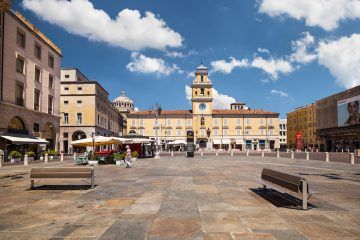
 Arthur Goldhammer reviews Branko Milanovic’s Capitalism Alone: The Future of the System that Rules the World over at Democracy:
 Anna Stansbury and Lawrence H. Summers (yes, that one!) over at Brookings:
 Nick Martin in TNR:
 Adam Tooze in the NYT:
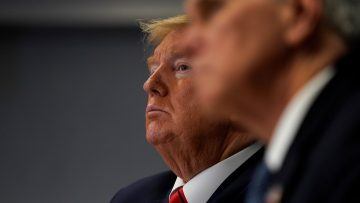 The president of the United States is a menace to public health.