
Mohammad Memarian in the Los Angeles Review of Books:
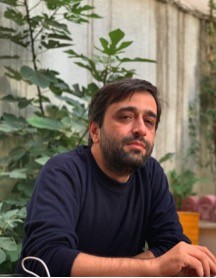 On Friday, March 20, I called my father to congratulate him on the Persian New Year. It felt gloomy, to put it mildly. We used to do it in person, shaking hands, hugging, and the three traditional kisses on the cheeks. As we are in self-quarantine, 300 miles away from each other, he acquired his very first smartphone just a week ago, rapidly catching up with technology to keep in touch with me. I watched him as he tried to turn on the selfie camera. He kept the phone so close that I could only see him with difficulty. But I could observe parts of him that usually go unnoticed: details of the wrinkles on his face, the tears he was struggling to hold back, a bruise on his left cheek, speckles I hadn’t seen before. We talked for a while, five minutes maybe, the longest routine call we had in years, and then we retreated into solitude, each into his own. The whole episode reminded me of stories of families torn apart by immigration. We are now torn apart by another, equally invisible force.
This invisible force, otherwise known as COVID-19, intruded into our lives in pretty much the same way it did into the lives of countless other people elsewhere. Except, perhaps, the context. For us Iranians, the disease came as the culmination of a long streak of unfortunate events, which inflicted upon many here a deep sense of helplessness.
More here.
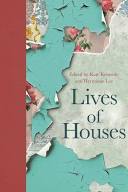 My favourite essay, Robert Douglas-Fairhurst’s ‘At Home with Tennyson’, is both a bravura work of close reading and a highly sensitive study of the poet’s loyalties, yearnings and fears about homes and homelessness. Tennyson, he demonstrates, was profoundly touched by the idea of home and ‘was equally good at evoking home when it existed only as an idea, as in “The Lotos-Eaters”, where so much of what the speaker broods over – “roam”, “foam”, “honeycomb” – has the word “home” flickering through it like a nagging but elusive memory’. Douglas-Fairhurst is yet another of the essayists here to be attracted by the word ‘nest’: Tennyson produces a ‘voice that is keen to create a nest of words for itself but also appears to be nervously eyeing up the lines of each stanza like a little set of prison bars’. This is criticism that draws quite close to the status of poetry.
 The biopharmaceutical industry will be able to make a Covid-19 vaccine— probably a few of them—using various existing vaccine technologies. But many people worry that Covid-19 will mutate and evade our vaccines, as the flu virus does each season. Covid-19 is fundamentally different from flu viruses, though, in ways that will allow our first-generation vaccines to hold up well. To the extent that Covid does mutate, it’s likely to do so much more slowly than the flu virus does, buying us time to create new and improved vaccines. Every virus has a genome composed of genetic material (either RNA or DNA) that encodes instructions for replicating the virus. When a virus infects a cell, it accesses machinery for making copies of its genomic instructions and follows those instructions to make viral proteins that assemble, with copies of the instructions, to form more viruses (which then pop out of the cell to infect new cells, either in the same host or in someone new). There is a critical difference between coronaviruses and flu. The novel coronavirus genome is made of one long strand of genetic code. This makes it an “unsegmented” virus—like a set of instructions that fit on a single page. The flu virus has eight genomic segments, so its code fits on eight “pages.” That’s not common for viruses, and it gives the flu a special ability. Because the major parts of the flu virus are described on separate pages (segments) of its genome, when two different flu viruses infect the same cell, they can swap pages.
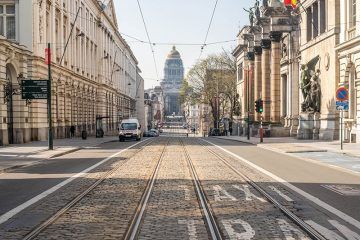 The coronavirus pandemic has brought chaos to lives and economies around the world. But efforts to curb the spread of the virus might mean that the planet itself is moving a little less. Researchers who study Earth’s movement are reporting a drop in seismic noise — the hum of vibrations in the planet’s crust — that could be the result of transport networks and other human activities being shut down. They say this could allow detectors to spot smaller earthquakes and boost efforts to monitor volcanic activity and other seismic events. A noise reduction of this magnitude is usually only experienced briefly around Christmas, says Thomas Lecocq, a seismologist the Royal Observatory of Belgium in Brussels, where the drop has been observed. Just as natural events such as earthquakes cause Earth’s crust to move, so do vibrations caused by moving vehicles and industrial machinery. And although the effects from individual sources might be small, together they produce background noise, which reduces seismologists’ ability to detect other signals occurring at the same frequency.
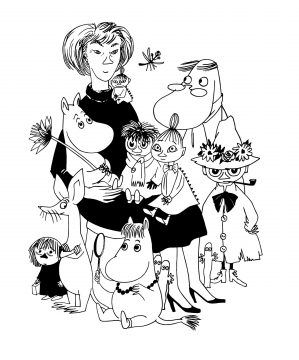 In the nineteen-fifties and sixties, one of the most famous cartoonists in the world was a lesbian artist who lived on a remote island off the coast of Finland. Tove Jansson had the status of a beloved cultural icon—adored by children, celebrated by adults. Before her death, in 2001, at the age of eighty-six, Jansson produced paintings, novels, children’s books, magazine covers, political cartoons, greeting cards, librettos, and much more. But most of Jansson’s fans arrived by way of the Moomins, a friendly species of her invention—rotund white creatures that look a little like upright hippos, and were the subject of nine best-selling books and a daily comic strip that ran for twenty years.
 It is perhaps partially owing to this plain style that Black Beauty is now classified as children’s literature. (But it is perhaps owing, too, to a modern day disdain for simple things like manual labor, animals, imagination, and kindness.) During the mid-Victorian era, children’s literature was a still-developing category of books. The fact is that Sewell was writing for men. And she was read by them, too, as one review attests: “Both men and boys read it with the greatest avidity, and many declare it to be ‘the best book in the world’.”
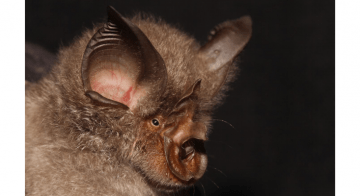 Long before the first reports of a new flu-like illness in China’s Hubei province, a bat—or perhaps a whole colony of them—was flying around the region carrying a new type of coronavirus. At the time, the virus was not yet dangerous to humans. Then, around the end of November, it underwent a slight additional mutation, evolving into the viral strain we now call SARS-CoV-2. With that flip of viral RNA, so began the COVID-19 pandemic. As in almost every outbreak, the mutations that set off this global crisis went undetected at first, even though the family of coronaviruses was already known to cause a variety of human diseases. “These viruses have long been understudied and have not been given the attention or funding they have deserved,” Craig Wilen, a virologist at Yale University, told me.
 Scientists agree that the main means by which the SARS-CoV-2 virus jumps from an infected person to its next host is
 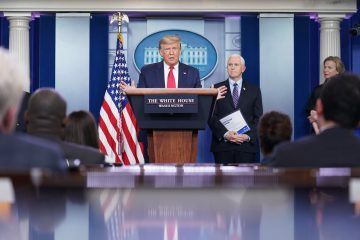 Of all the resources lacking in the Covid-19 pandemic, the one most desperately needed in the United States is a unified national strategy, as well as the confident, coherent and consistent leadership to see it carried out. The country cannot go from one mixed-message news briefing to the next, and from tweet to tweet, to define policy priorities. It needs a science-based plan that looks to the future rather than merely reacting to latest turn in the crisis.
 What direction does time point in? None, really, although some people might subconsciously put the past on the left and the future on the right, or the past behind themselves and the future in front, or many other possible orientations. What feels natural to you depends in large degree on the native language you speak, and how it talks about time. This is a clue to a more general phenomenon, how language shapes the way we think. Lera Boroditsky is one of the world’s experts on this phenomenon. She uses how different languages construe time and space (as well as other things) to help tease out the way our brains make sense of the world.
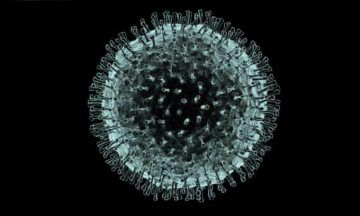 Defeating Covid-19 will call for more than vaccines; it will involve quarantines, social distancing, antivirals and other drugs, and healthcare for the sick. But the idea of a vaccine – the quintessential silver bullet – has come to bear an almost unreasonable allure. The coronavirus arrived at a ripe moment in genetic technology, when the advances of the past half-decade have made it possible for vaccine projects to explode off the blocks as soon as a virus is sequenced. These cutting-edge vaccines don’t use weakened forms of the germ to build our immunity, as all vaccines once did; rather, they contain short copies of parts of the germ’s genetic code – its DNA or RNA – which can produce fragments of the germ within our bodies.
 In response to the swiftly escalating COVID-19 epidemic, whole countries are