
Helen Hayward in TLS:

V. S. Naipaul’s work speaks eloquently to the contemporary world. His focus is on migration and displacement, and his abiding theme is “the great movement of peoples in the second half of the twentieth century”. Naipaul is ripe for reassessment now that work can be seen as a whole, following his death in 2018 – and time has only made his legacy clearer. Moreover, Naipaul is no longer around to stir up controversy with outrageous statements in interviews – a form of deliberate provocation that George Lamming likened to carnival masquerading.
Naipaul was born in 1932 in rural Trinidad; a scholarship enabled him to study in Oxford, and so his life followed the trajectory to which Sanjay Krishnan’s subtitle alludes. Krishnan constructs a narrative out of Naipaul’s oeuvre, making it the story of postcolonial societies undergoing the disorientating transition to modernity, with Naipaul’s own life providing the starting point: his subject is “the worlds I contained within myself”. Naipaul works through this modern disorientation, Krishnan contends, in order to consider how formerly subject peoples can hope to understand their predicament and reshape their lives.
At the beginning of his writing life, in the 1950s, reaching an understanding of such historical forces constituted an innovation, Krishnan suggests, and it involved trying to see the postcolonial world as a globalized whole. Yet Naipaul is more interested in self-examination than in ideas of resistance and of cultural hybridity celebrated by postcolonial critics – which is part of the reason he has excited controversy, if not opprobrium. Krishnan notes that Naipaul writes frankly about racist feelings in the context of the ethnic hostilities unleashed by decolonization, in his efforts to understand the forces that shaped him. The problem is that Naipaul’s expressions of outrage at postcolonial racism risk echoing the language of the racism he condemns. His critics denounce him for peddling damaging stereotypes about the formerly colonized and their inability to govern themselves, and Krishnan at times finds himself writing in the guise of Naipaul’s advocate, taking issue with these detractors, despite his claims not to seek to defend him.
More here.
 Some analysts are cynical about the apparent mismatch between spending and outcomes in what’s disparagingly called ‘the cancer industry’. How can cancer be the second leading cause of death globally, responsible for an estimated 9.6 million deaths in 2018, when a single institution (the US National Institutes of Health, NIH) spent US$24.4 billion on
  Last Thursday, Nobel-winning economist Paul Krugman issued a
  Artificial intelligence has made great strides of late, in areas as diverse as playing Go and recognizing pictures of dogs. We still seem to be a ways away from AI that is intelligent in the human sense, but it might not be too long before we have to start thinking seriously about the “motivations” and “purposes” of artificial agents. Stuart Russell is a longtime expert in AI, and he takes extremely seriously the worry that these motivations and purposes may be dramatically at odds with our own. In his book Human Compatible, Russell suggests that the secret is to give up on building our own goals into computers, and rather programming them to figure out our goals by actually observing how humans behave.
 The room is perhaps the fundamental element of any architecture. As a primitive hut, a simple shelter, a cave or a retreat, the room commands a unique and unrepeatable definition of a place. Making room means to clear a space for oneself: to identify a limit between inside and outside (room, from the proto-Indoeuropean root reue-“to open, space”). Like organs in a body, specific arrangements of rooms correspond to species of buildings with distinctive characteristics. Despite its concatenations, a room always preserves the possibility of autonomy, as a stand-alone entity. In the Western classical tradition—from Vitruvius to Alberti and Palladio—rooms are usually categorized according to forms accurately proportioned to their fulfilled functions.
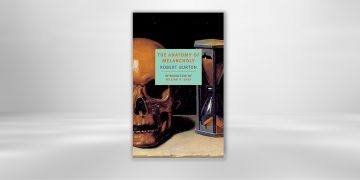 William Gass has written of the book’s “terminological greed,” a phrase that goes some way in preparing the reader for The Anatomy’s extraordinary surfeit. Burton the anatomist reaches us as a thoroughly modern figure, a gathering of vibrant and contradictory energies. He is a model of inconsistency, equally at home in sense and nonsense, science and superstition, asceticism and sensuality. He apologizes for the length of his digressions only to plunge into yet more. The resultant overgrowth of text is a sort of radiant miscellany; an accumulation of conjecture, proof, rumor, and heresy; endless lists of proper names, foods, herbs, symptoms, profligate et ceteras, disputations, and lengthy essays within essays. Though not itself a novel, Burton’s fabulous act of literary excess prefigures the encyclopedic postwar fictions of the twentieth century—Gravity’s Rainbow, J R, Underworld—in which poetics and technics came together to approximate the informational density of culture.
 Many countries are enduring the Hammer today: a heavy set of social distancing measures that have stopped the economy. Millions have lost their jobs, their income, their savings, their businesses, their freedom. The economic cost is brutal. Countries are desperate to know what they need to do to open up the economy again.
 The Club: no literary club has ever equaled the one founded in London in 1764 by Samuel Johnson, Sir Joshua Reynolds, Edmund Burke, Oliver Goldsmith, and a handful of others, and which came to include the very brightest intellectual, artistic and political stars of the late eighteenth and early nineteenth centuries. Leo Damrosch provided a close study of the Club, its members, and its doings during the first couple of decades of its long life (it still exists today), in a book I reviewed in The Hudson Review’s
  At 4:18 a.m. on February 1, 1997, a fire broke out in the Aisin Seiki company’s Factory No. 1, in Kariya, a hundred and sixty miles southwest of Tokyo. Soon, flames had engulfed the plant and incinerated the production line that made a part called a P-valve—a device used in vehicles to modulate brake pressure and prevent skidding. The valve was small and cheap—about the size of a fist, and roughly ten dollars apiece—but indispensable. The Aisin factory normally produced almost thirty-three thousand valves a day, and was, at the time, the exclusive supplier of the part for the Toyota Motor Corporation. Within hours, the magnitude of the loss was evident to Toyota. The company had adopted “just in time” (J.I.T.) production: parts, such as P-valves, were produced according to immediate needs—to precisely match the number of vehicles ready for assembly—rather than sitting around in stockpiles. But the fire had now put the whole enterprise at risk: with no inventory in the warehouse, there were only enough valves to last a single day. The production of all Toyota vehicles was about to grind to a halt. “Such is the fragility of JIT: a surprise event can paralyze entire networks and even industries,” the management scholars Toshihiro Nishiguchi and Alexandre Beaudet observed the following year, in a case study of the episode.
 Before 2015, few people would have thought of not finishing college as a public-health issue. That changed because of research done by Anne Case and Angus Deaton, economists at Princeton who are also married. For the past six years, they have been collaboratively researching an alarming long-term increase in what they call “deaths of despair” — suicides, drug overdoses, and alcoholism-related illnesses — among white non-Hispanic Americans without a bachelor’s degree in middle age.
 By the last week of January, Rob DeLeo knew it was going to get bad.
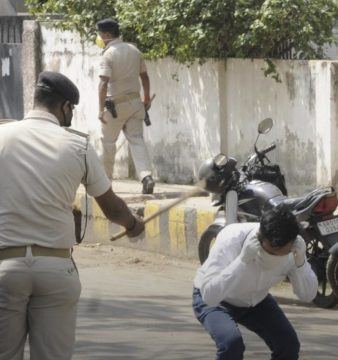 The Covid-19 lockdown on the largest population on earth with the shortest possible notice has completed five weeks. Overnight, a medical pandemic was made into an economic and humanitarian disaster of immense proportions. It is time we took stock.