
Barbara Graziosi at the TLS:
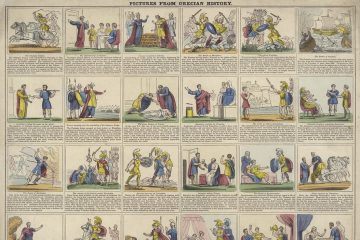
Children ask “why” – and so does Herodotus (484–25 BCE). The “father of history”, often strikes readers as a little childish, particularly in comparison with his younger contemporary Thucydides (460–395 BCE), whose History of the Peloponnesian War offers a disenchanted account of human conflict. But, even leaving aside that much-rehearsed comparison, there are features of Herodotus’ work that can make it sound naive. For one thing, he seems interested in everything – not just why the Greeks and the Persians “came to war with one another” (the avowed subject of his Histories), but also “why the people of Libya are the most healthy known to us”; “why the most timid animals are the most prolific”; “why the Nile floods in summer … contrary to the nature of all other rivers”; “why, concerning the bones strewn on the battlefield … the skulls of Persian casualties are so brittle they can be broken with a pebble, whereas Egyptian skulls are so tough they can hardly be cracked with a big stone”; or again why, on a particular night, “a pride of lions attacked only the camels, and none of the other beasts of burden or the men or the provisions”.
more here.
 Two incidents separated by twelve hours and twelve hundred miles have taken on the appearance of the control and the variable in a grotesque experiment about race in America. On Monday morning, in New York City’s Central Park, a white woman named Amy Cooper called 911 and told the dispatcher that an African-American man was threatening her. The man she was talking about, Christian Cooper, who is no relation, filmed the call on his phone. They were in the Ramble, a part of the park favored by bird-watchers, including Christian Cooper, and he had simply requested that she leash her dog—something that is required in the area. In the video, before making the call, Ms. Cooper warns Mr. Cooper that she is “going to tell them there’s an African-American man threatening my life.” Her needless inclusion of the race of the man she fears serves only to summon the ancient impulse to protect white womanhood from the threats posed by black men. For anyone with a long enough memory or a recent enough viewing of the series “
 As many countries emerge from lockdowns, researchers are poised to use genome sequencing to avoid an expected second wave of COVID-19 infections. Since the first whole-genome sequence of the new coronavirus, SARS-CoV-2, was
  The combined total of inflation and unemployment used to be known as the “misery index”: Jimmy Carter cited it when he was campaigning in 1976 against Gerald Ford for the presidency. But the index was even higher in 1980, dooming Carter’s re-election bid. Barack Obama reduced the misery index during his two terms of office; indeed of all the Presidents since 1945, only Harry Truman left office with a lower misery index. But that didn’t seem to make voters happy; although Hillary Clinton (Obama’s party successor) won the popular vote, Donald Trump took enough key states to be elected. Similarly in 2016, British inflation was low and unemployment had been falling for years, yet voter anger resulted in Britain voting to leave the EU.
 Julia Wellner and other crew members for this year’s Thwaites Glacier Offshore Research Project stepped onto the deck of the research vessel/icebreaker (RV/IB) Nathaniel B. Palmer in January, leaving from a crowded pier in Punta Arenas, Chile, and sailing to west coast of Antarctica.
 When in mid-March “
 Adam Horovitz was born in Manhattan, in 1966, and raised there by his mother, the artist Doris Keefe. His father, the playwright Israel Horovitz, left the family in 1969. New York in the seventies was wild and lawless, which suited a young person searching for a tribe. As a teen-ager, Horovitz played in a New York punk band called the Young and the Useless. There was no imaginable future in music for him. It was just a way to pass the time, an excuse to hang out and meet people who were into the same things as he was. The Young and the Useless would often play shows with another punk band called the Beastie Boys, which consisted at the time of Horovitz’s friends Adam Yauch, Michael Diamond, John Berry, and Kate Schellenbach. In 1982, as the Beastie Boys were moving from punk to hip-hop, Berry left the band, and Horovitz, who was sixteen, replaced him. A couple of years later, they asked Schellenbach to leave, as they pursued, in Horovitz’s words, a new “tough-rapper-guy identity.”
 Doctorow was named after Edgar Allan Poe, who in 1846 rented a farmhand’s shingled cottage in the Bronx for $100 a year. He moved in with his young wife, Virginia, and her mother, Maria Clemm, who was Poe’s aunt. Virginia had late-stage tuberculosis and the trio had picked the Bronx for its clean air; it was also judiciously removed from the literary squabbles that swirled around Poe, as well as from the sites of his heroic drinking binges. The homestead, in what is now Fordham, was thirteen miles from the centre of New York on the New York and Harlem Railroad. Trains departed three times a day from Williams Bridge to City Hall.
 One of the most vexing questions of the coronavirus pandemic has been how many people have actually been infected. We know that testing has been inadequate, and that many cases of the disease are mild or even asymptomatic, making them less likely to be detected. So how many cases have slipped under the radar? One way to find out the true prevalence of the disease is to test random samples of the population using a blood test that detects antibodies produced by the immune system against the virus. This is different from the swab tests that have been used worldwide throughout the pandemic, which detect the genetic material of the virus itself.
 Why do we categorize novels? Fantasy, Chick Lit, Crime, Romance, Literary, Gothic, Feminist… Is it the better to find what we want, on the carefully labelled shelves of our bookshops? So that the reading experience won’t, after all, be too novel.
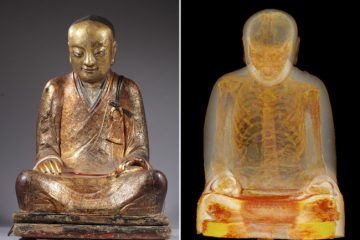 It’s not surprising that Southeast Asia is home to countless ancient Buddha statues, but when one of those statues contains a mummified monk, that is certainly a surprise.
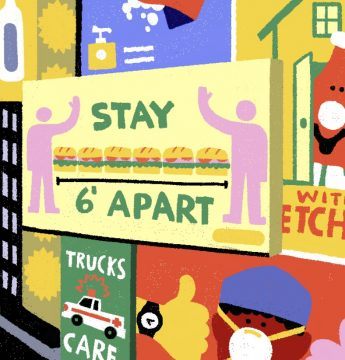 It’s jarring how easily the virus has been fused with branding and processed into the optimistic language of advertising. Every crisis begets its own corporate public service announcements — remember the
  For all his resistance to “anti-art,” Judd articulated most of his motives in the negative. Above all, he was opposed to “illusionism” and “rationalism,” which, in his view, were closely linked. “Three dimensions are real space,” he wrote in “Specific Objects.” “That gets rid of the problem of illusionism.” Why did Judd object to this “relic of European art” so strongly? Again, his argument was not avant-gardist—that abstraction had voided illusionism once and for all (it hadn’t, in any case). Rather, the problem was that illusionism was “anthropomorphic,” by which he meant not simply that it allowed for the representation of the human body, but that it assumed an a priori consciousness, whereby the subject always preceded the object. In short, like composition, illusionism was “rationalistic,” a vestige of an outmoded idealism in need of expunging. “There is little of any of this in the new three-dimensional work,” Judd insisted. “The order is not rationalistic. . . . [It] is simply order, like that of continuity, one thing after another.”