
Eduardo Baptista in MIL:
 Welcome to Cowardly Police News!” booms Zung Jung-ngai. Dressed in a crisp white shirt, black tie and bin bags that cover his neck and hands, Zung beams at his audience of prospective recruits to the Hong Kong Police Force. Want a job that guarantees good health? Where you can get “protective biohazard suits’’ quicker than front-line medics fighting coronavirus? Where you can obtain AR-15s, water cannons and gas masks? Zung looks into the camera: all you need to do, he says, is join the police.
Zung is not a real cop. Dressed in his plastic regalia, he is lampooning the city’s police force as “rubbish” in “Headliner”, Hong Kong’s leading satirical television programme. “Headliner” has been ridiculing Hong Kong’s political elite for the past 30 years. Now the elite seems to have lost its sense of humour and the show’s future is in jeopardy. After Hong Kong’s police chief complained to the city’s media regulator in February that “Headliner” was inaccurate and had denigrated the force, the watchdog duly warned the show against “insulting” the police. On May 19th Radio Television Hong Kong (RTHK), the territory’s official broadcaster which produces the programme, said it would suspend the show after the series ends in mid-June. Previously it was one of the most viewed of RTHK programmes on YouTube; now many of the current season’s episodes can no longer be watched.
More here.
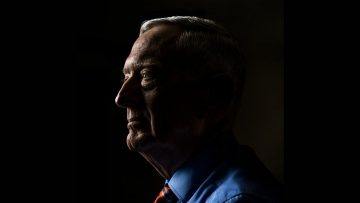 James Mattis, the esteemed Marine general who resigned as secretary of defense in December 2018 to protest Donald Trump’s Syria policy, has, ever since, kept studiously silent about Trump’s performance as president. But he has now broken his silence, writing an extraordinary broadside in which he denounces the president for dividing the nation, and accuses him of ordering the U.S. military to violate the constitutional rights of American citizens. “I have watched this week’s unfolding events, angry and appalled,” Mattis writes. “The words ‘Equal Justice Under Law’ are carved in the pediment of the United States Supreme Court. This is precisely what protesters are rightly demanding. It is a wholesome and unifying demand—one that all of us should be able to get behind. We must not be distracted by a small number of lawbreakers. The protests are defined by tens of thousands of people of conscience who are insisting that we live up to our values—our values as people and our values as a nation.” He goes on, “We must reject and hold accountable those in office who would make a mockery of our Constitution.”
 But musically, Fetch astonishes, the work of an artist absolutely confident in the experiment she’s conducting, her objective aligning happily with the listener’s pleasure. This is a true rarity, the artistic advancement that offers joy or surprise or comfort. (I thought of Mitchell’s The Hissing of Summer Lawns or Björk’s Vespertine or David Bowie’s Station to Station.) The album’s tactics—heavy beats, cut-and-paste vocal play—might frustrate some who prefer Apple’s earlier work, waltzy and cutting.
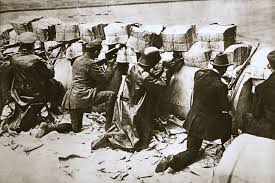 The year 1918 was an extraordinary historical moment. As the Great War roared to an end after four long years of blood and horror, it appeared briefly that the future of the world lay wide open. The old order was overthrown. States were collapsing. Monarchs, the sons of dynasties that had ruled eastern and central Europe for centuries, abdicated and fled. Noisy, violent crowds of hungry civilians and grim, weary soldiers flooded grey city streets, demanding peace and a better life. In the countryside, peasants chased away the lords who had ruled over them and seized their land. Mad, bad and dangerous revolutionaries pushing radical ideals and preaching utopia saw that their hour had struck. The German theologian Ernst Troeltsch aptly named this time, when no one had a firm grip on power and anything appeared possible, ‘the dreamland of the armistice period’. These excellent books by Jonathan Schneer and Robert Gerwarth both show just how much was at stake and capture the breathless excitement and mortal fear that the upheaval generated.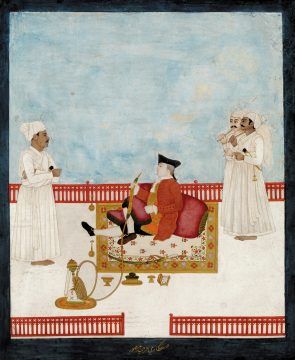
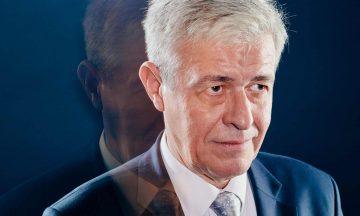 Neuroscientist
  In our current political climate, it’s sad but not surprising that a U.S. senator would accuse China’s “brightest minds” of studying in America only to return home “to compete for our jobs, to take our business, and ultimately to steal our property.”
 Few things are more unexpected than a genuinely inspirational memoir by a freshman member of Congress. If you’re looking for the perfect antidote to the perpetual tweetstorm of insanity and hatred from Donald Trump, try this beautiful new book from the
 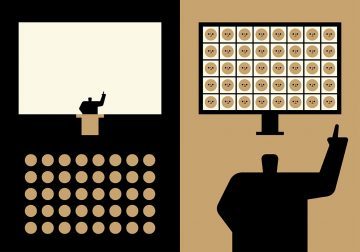 Before the COVID-19 pandemic, Adam Fortais had never attended a virtual conference. Now he’s sold on them — and doesn’t want to go back to conventional, in-person gatherings. That’s because of his experience of helping to instigate some virtual sessions for the March meeting of the American Physical Society (APS), after the organization
 There are some problems for which it’s very hard to find the answer, but very easy to check the answer if someone gives it to you. At least, we think there are such problems; whether or not they really exist is the famous
  One of the least expected aspects of 2020 has been the fact that epidemiological models have become both front-page news and a political football. Public health officials have consulted with epidemiological modelers for decades as they’ve attempted to handle diseases ranging from HIV to the seasonal flu. Before 2020, it had been rare for the role these models play to be recognized outside of this small circle of health policymakers.
 Published shortly after his death in 1633,
 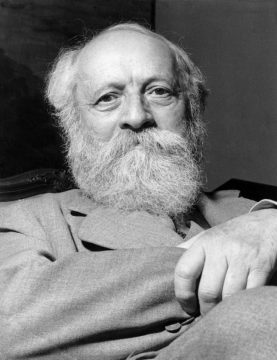 “I am unfortunately a complicated and difficult subject.” With these words of Martin Buber, Paul Mendes-Flohr lays down the challenge for his meticulous biography of the distinguished Jewish scholar, humanist, and author of I and Thou. “Complicated,” to be sure, and “difficult,” certainly; that goes with the territory of Buber’s at times maze-like philosophical explorations and heavily Germanic articulation. And one may add to these challenges the fact that—to quote this biographer—Buber was a “contested figure who evoked passionate, conflicting opinions about his person and his thought.” Yet these obstacles are by no means insurmountable, thanks to Mendes-Flohr’s philosophical acumen and gift for succinct expression. Indeed, in his capable hands Buber’s life makes for an engrossing, instructive tale, and an exemplary contribution to Yale’s “Jewish Lives Series.”