
These days
I have turned on the radio.
I have turned off the radio.
I have texted.
I have waited.
I have run from screen to screen,
playing the game of panic,
and I have panicked,
unaccompanied,
with gusto and abandon.
I have waited in line outside of the grocery store,
and waited in line inside of the grocery store,
and comforted a woman in line ahead of me,
overwhelmed by dog food,
and weeping because she had lost her mother.
I have rearranged my life,
and also the plants.
I have mended my black sweater with navy blue thread.
I have waited for the mango to warm up on the table,
I have made tea and scrubbed the dishes,
and learned to measure twenty seconds by heart.
I have witnessed a baptism on church Zoom,
and typed prayers into a chat box.
I have made soup with onions and carrots,
which sweetened the broth unexpectedly.
I have looked for apartments with gardens
and for other apartments with laundry,
and meanwhile I have approximated the spin cycle
by shuffling my feet in soapy water in the tub.
I have pretended to work.
I have given up on reading,
and on patience for language,
and instead I have stood at my north-facing window,
observing the blue jay in the catalpa tree,
and the cardinal in the paper mulberry,
watched their bodies beat with the effort of their calls,
which I have learned, also,
and noted to myself,
blue jay,
cardinal,
and tried to recall
hours later,
as the sun sets, out of view,
somewhere west of this mess of clouds,
pink, at last, at 7 o’clock,
after so many months of darkness.
by Miranda Rose Hall
from 3 Views Theater
 Before Italy became a nation, it was made up of a collection of city-states governed by un’autorità superior, in the form of a powerful noble family or a bishop. Siena was an exception in that it favoured civic rule. This partly accounts for the unique character of its art. It produced Ambrogio Lorenzetti’s The Allegory of Good and Bad Government, a series of frescos housed in the Palazzo Pubblico, the civic heart of the city. It is one of the earliest and most significant secular paintings we have. If civic rule were a church, this would be its altarpiece. Siena also imbued its artists with a rare and humanist curiosity that, even in their depictions of religious scenes, involved them in meditations on human psychology and ideas.
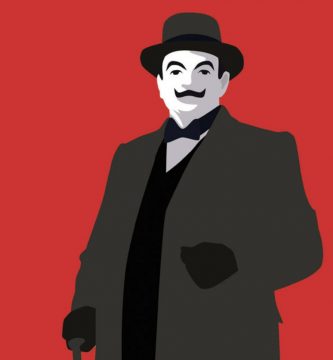 In 1916, the 26-year-old Agatha Christie finished writing her first detective novel at Dartmoor, a quiet upland in Devon, UK, known for its beautiful granite hilltops. Sir Arthur Conan Doyle had published The Hound of the Baskervilles, in 1902, which would become one of the most widely read Sherlock Holmes adventures—and the story was set in this same corner of the world, Dartmoor.
 The
The  As it turns out, humans are wired to worry. Our brains are continually imagining futures that will meet our needs and things that could stand in the way of them. And sometimes any of those needs may be in conflict with each other.
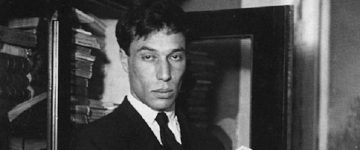 In the opening lines of Cold Warriors, Duncan White notes that “between February and May 1955, a group covertly funded by the Central Intelligence Agency launched a secret weapon into Communist territory”: balloons carrying copies of George Orwell’s
  In the early nineteen-hundreds, the American writer O. Henry coined the term “banana republic” in a series of
  The idea for publishing a novel posthumously came to Kingston after learning of Mark Twain’s autobiography, which wasn’t released in uncensored form until 2010, a hundred years after his death. If Kingston knew that she wouldn’t have to answer for her work, perhaps she would be able to write more freely. At first, her notes represented an attempt to capture each day’s “intensity,” she said. In time, she realized that she had written about twelve hundred single-spaced pages. She continued writing. She told her agent, Sandy Dijkstra, that the book would remain unpublished for a hundred years. “I was stunned, shocked, and more,” Dijkstra said in an e-mail, “and told her that I could not promise to be a living and functioning agent a century from now.” Kingston has not shown her any of it. “Maybe you can persuade Maxine to show it to us much sooner,” she said. “Magical thinking works on the page, but not so well in real life.”
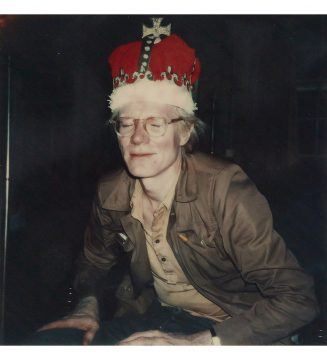 From time to time, Andy Warhol entertained the wish to host a television show called Nothing Special, and to operate a chain of cafeterias for solitary diners, the Andy-Mat. A social oddity since his Dickensian childhood, Warhol retained the imprint of not-having and not-belonging into adulthood, acquiring vivid people he didn’t much care about and pricey objects he never looked at. To a society poised to reject him, he presented a façade of detachment from other people’s lives, even from his own: in an interview with Alfred Hitchcock, he said that getting shot had been “like watching TV.”
 In January,
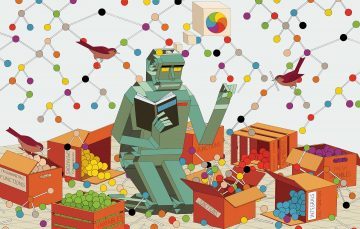 By now, people treat neural networks as a kind of AI panacea, capable of solving tech challenges that can be restated as a problem of pattern recognition. They provide natural-sounding language translation. Photo apps use them to recognize and categorize recurrent faces in your collection. And programs driven by neural nets have defeated the world’s best players at
 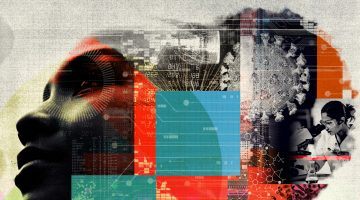 Anthony Fauci, who leads the National Institute of Allergy and Infectious Diseases, believes a vaccine is unlikely to arrive within a year. Others in the field suggest even 18 months is optimistic, and that’s assuming it can be quickly mass produced and nothing goes wrong. As Bill Ackman, the billionaire and founder of investment firm Pershing Square, warns on CNBC, “Capitalism does not work in an 18-month shutdown.”
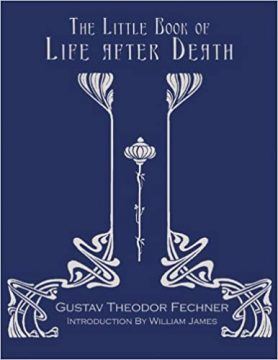 The soul exists. That’s what it does. It doesn’t need traditional religion or occultist speculation to justify, let alone explain, its existence. The soul can simply be a thing-in-itself, free from purpose or the need to be redeemed or maintained or isolated for study. We often talk about the soul simply as the nonmaterial and thus mysterious aspect of our being, something we feel but can’t point to—or what is silent and constant, enclosed in our mortal coil. It’s also entirely possible that there’s no nonmaterial part of our being, and whatever intangible dimension of ourselves we feel or think we feel is just, as yet, unexplained by science. Or maybe we do have souls, but they die with the body. Given such speculative uncertainty, the closest approach to the soul for many without recourse to religious reassurance is “consciousness,” though this may amount to no more than replacing one word with another.
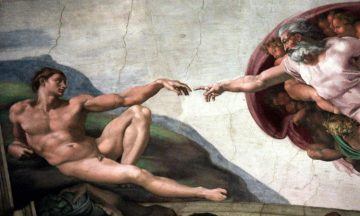
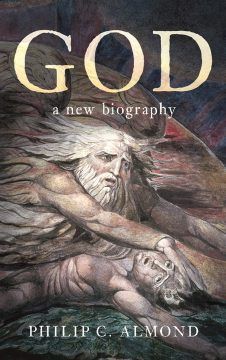 Though Almond doesn’t outright say it, God: A New Biography implies that the various Reformation theologies emerging in early modernity were responsible not just for separating God from rational philosophical approximation, but for a certain anemic flattening of our language concerning the divine as well. What is thus born is the “God” whom most of us think of when we hear that word; not the cloud of unknowing of apophatic mystics or the “Ground of Being” of post-modern theologians, but the white-haired “Nobodaddy” dismissed by William Blake. Such a God has little to do with conceptions of ultimate meaning, and is rather a projected dictatorial figure, not the domain of ultimate significance to be discussed, but rather an idol to be dismissed. Rejected, for that matter, by the forward-thinking peasants of Soira and dismissed by many today (including myself). It would be a mistake to read that as necessarily an atheism. Speaking for myself, what I reject is that limited definition of God, rather than the discourse toward ultimate meaning which Almond so capably describes over the course of his book.