
Corey Robin at his own website:
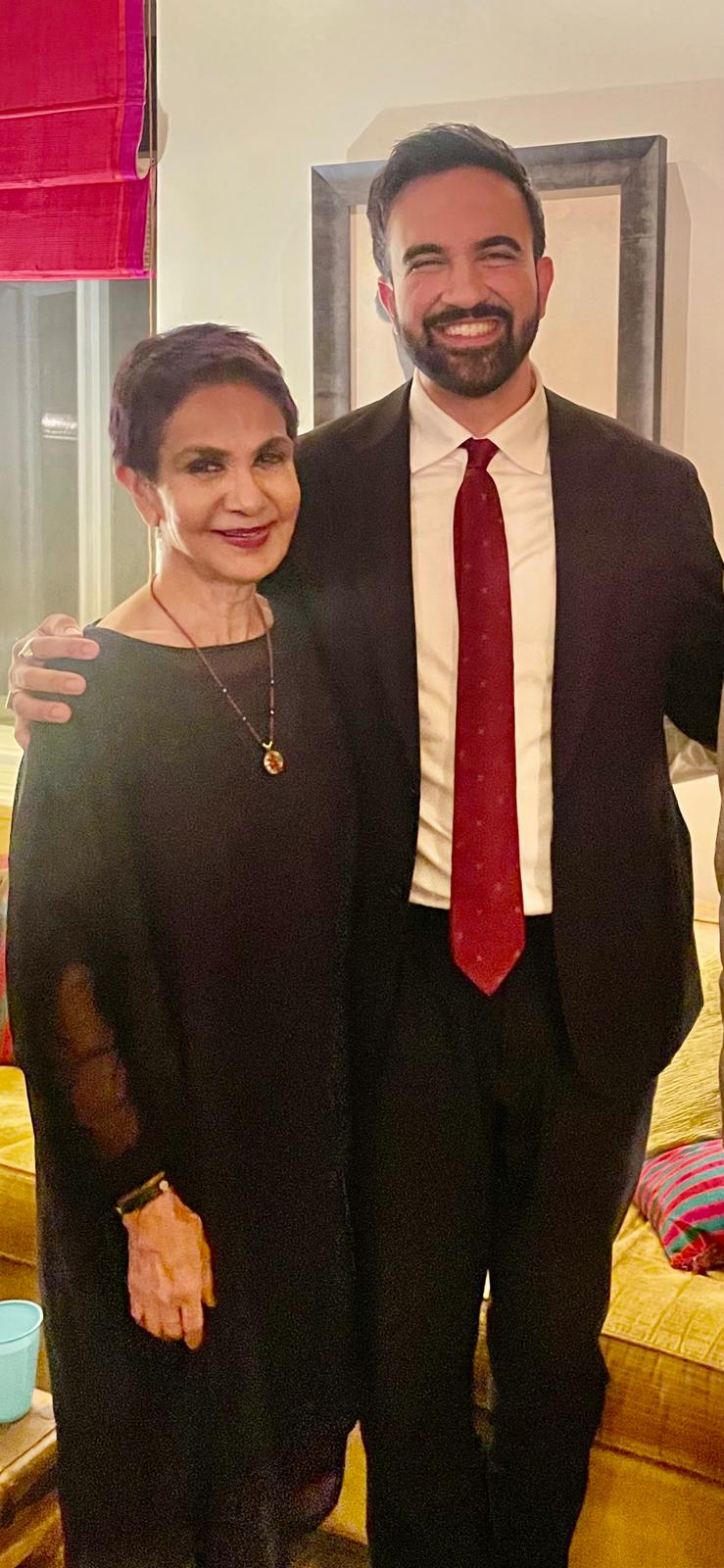
Zohran Mamdani is running now against Andrew Cuomo, a corrupt sexual harasser, who has been aided from the start by Donald Trump. Donald Trump is a corrupt sexual harasser who never met a law he didn’t want to break. Through pressure from Trump and Billy Ackman and a combination of real estate developers, financiers, pro-Israel forces, Cuomo is now being helped by the stepping down of Eric Adams, another corrupt politician whose bacon was saved only when Trump forced lower-tier federal prosecutors to drop the government’s corruption case against Adams in return for Adams’ helping Trump pursue his illegal and unconstitutional plan to deport immigrants.
Notice what Zohran, already blessed with so many political gifts, has going for him here. Not only is he completely untainted by corruption. He’s never broken the law. He’s as clean as a whistle.
There was a time when that wouldn’t have been remarkable. We’ve reached a moment in our political development when it is. What’s more, that steadfast legality and sense of lawfulness belongs to a democratic socialist, a critic of Israel, a man who wants to freeze the rent, make buses free and fast, childcare universal, and life in New York affordable.
More here.
Enjoying the content on 3QD? Help keep us going by donating now.
 Duchamp did leave behind some gnomic quips—“Intrinsic value has a greater density than relative value” (I don’t know what that means)—and some crisp writing. In a poem about Crotti, she declared, “He believes in everything—accepts everything—denies everything—sells 60 cylinder cars—loses and wins—makes games and invents reasons for living.” Another intriguing fact: Her compatriots adored her. Writing under a pseudonym, Picabia declared, “Suzanne Duchamp does more intelligent things than paint.” There can be no higher praise from him.
 While on paper an obvious insider, Raymond Geuss has for decades been criticizing contemporary philosophy as though he were an outsider, viewing it as an intellectually limiting practice too occupied with academically narrow, self-generated problems. He performs this critique with an eye to the past, returning often to canonical or more peripheral figures from the history not only of philosophy but adjacent fields such as literature and classics; accordingly, he aspires to occupy the position of the interdisciplinary critic and interpreter, highlighting exemplary achievements that inspire a more inclusive approach to philosophy.
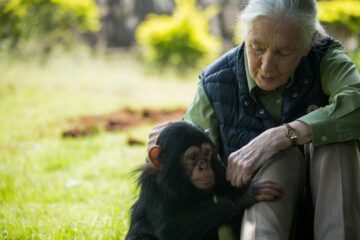 Jane Goodall, a British primatologist known for her work with chimpanzees, died on Wednesday 1 October, aged 91. She was in California on a speaking tour and died of natural causes, according to the Jane Goodall Institute.
 Born in Tamale and primarily raised in Accra, Mahama chose to base his art studio, Red Clay, in the provincial city rather than in the nation’s capital. Tamale, an important trading hub in northern Ghana, is known for its fugu clothing, a type of smock with roots in the Malian and Songhai empires. Over the centuries, Muslim traders built mosques and schools in sedate Tamale, which was more inland and distant from the direct links of the transatlantic slave and colonial trade. By contrast, Accra, the nation’s capital, with its Parliamentary Building and Black Star Square, is enlivened by streams of mellow banter and commerce. The city’s nocturnal activity creates an electric pulse. Pentecostal revival meeting lights and condominium-sale advertisements illuminate the city, leaving a ruddy glow along the highway. Although both Accra and Tamale have influenced Mahama’s work insofar as he draws from the capital’s marketplace and the provincial city’s scrap metal, his talent emerged against the broader backdrop of the postindependence promise of industrialization and its failure to deliver prosperity to most Ghanaians. Mahama’s installations, which say something about societal deterioration, also dramatize the country’s inability to sustain robust funding in the arts or technology in its postindependence years.
 “The Days of Awe are coming.” Rather than a tagline for a Netflix series modeled on Game of Thrones, the phrase is the literal translation of Yamim Nora’im, or Jewish High Holidays. These awesome days begin with Rosh Hashanah on September 22 and reach a crescendo with Yom Kippur on October.
 M
M Last week, OpenAI released a
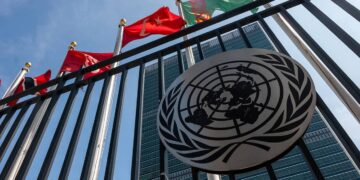 Five years ago, I wrote a commentary about the United Nations as it turned 75. The title, “
 Cormac McCarthy, one of the greatest novelists America has ever produced and one of the most private, had been dead for 13 months when I arrived at his final residence outside Santa Fe, New Mexico. It was a stately old adobe house, two stories high with beam-ends jutting out of the exterior walls, set back from a country road in a valley below the mountains. First built in 1892, the house was expanded and modernized in the 1970s and extensively modified by McCarthy himself, who, it turns out, was a self-taught architect as well as a master of literary fiction.
 C
C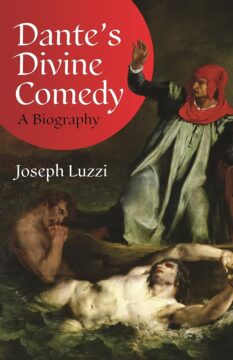 “Now he is scattered among a hundred cities,” W.H. Auden wrote in 1939, “And wholly given over to unfamiliar affections.” Auden was ruminating on the recent death of the Irish poet W.B. Yeats, but the words could serve as an epitaph for any great author. Poets like to imagine that their creations confer afterlives—for themselves and their subjects—impervious to the assaults of “wasteful war” and “sluttish time” so ruinous to monuments of marble or metal (see Horace’s Ode 3.30 and Shakespeare’s Sonnet 55). But as Auden recognized, the moment an author dies, his or her legacy is on the loose. Any chance those poems have of a future depends on what readers make of them: “The words of a dead man,” Auden continues, “Are modified in the guts of the living.”
 McKibben’s solar revolution has unfurled with startling rapidity. The last two years, he argues, have marked an epochal technoeconomic shift. And yet, despite a lot of solar deployment during that period, one would be hard-pressed to find much evidence of a shift in any of the key greenhouse-gas emissions metrics. The vast majority of global energy continues to be produced by fossil fuels, a fact that hasn’t much changed
  They say my generation is wasting our lives watching mindless entertainment. But I think things are worse than that. We are now turning our lives into mindless entertainment. Not just consuming slop, but becoming it.