
Matt Taibbi in Substack:
 Sometimes it seems life can’t get any worse in this country. Already in terror of a pandemic, Americans have lately been bombarded with images of grotesque state-sponsored violence, from the murder of George Floyd to countless scenes of police clubbing and brutalizing protesters.
Our president, Donald Trump, is a clown who makes a great reality-show villain but is uniquely toolless as the leader of a superpower nation. Watching him try to think through two society-imperiling crises is like waiting for a gerbil to solve Fermat’s theorem. Calls to “dominate” marchers and ad-libbed speculations about Floyd’s “great day” looking down from heaven at Trump’s crisis management and new unemployment numbers (“only” 21 million out of work!) were pure gasoline at a tinderbox moment. The man seems determined to talk us into civil war.
But police violence, and Trump’s daily assaults on the presidential competence standard, are only part of the disaster. On the other side of the political aisle, among self-described liberals, we’re watching an intellectual revolution. It feels liberating to say after years of tiptoeing around the fact, but the American left has lost its mind. It’s become a cowardly mob of upper-class social media addicts, Twitter Robespierres who move from discipline to discipline torching reputations and jobs with breathtaking casualness.
More here.
 Lev Landau, a Nobelist and one of the fathers of a great school of Soviet physics, had a logarithmic scale for ranking theorists, from 1 to 5. A physicist in the first class had ten times the impact of someone in the second class, and so on. He modestly ranked himself as 2.5 until late in life, when he became a 2. In the first class were Heisenberg, Bohr, and Dirac among a few others. Einstein was a 0.5!
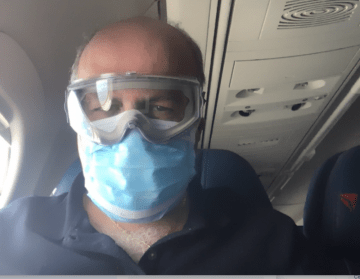 Six errors: 1) missing the compounding effects of masks, 2) missing the nonlinearity of the probability of infection to viral exposures, 3) missing absence of evidence (of benefits of mask wearing) for evidence of absence (of benefits of mask wearing), 4) missing the point that people do not need governments to produce facial covering: they can make their own, 5) missing the compounding effects of statistical signals, 6) ignoring the Non-Aggression Principle by pseudolibertarians (masks are also to protect others from you; it’s a multiplicative process: every person you infect will infect others).
 This pandemic is closer to a disruption than a crisis or emergency. While all three refer to unexpected and dangerous events requiring immediate action not all involve a rupture. Crises and emergencies have become chronic conditions in finance and politics. This is why we prepare for them through financial contingency plans, safety drills, and disseminating information for the public. These, according to some political scientists, can also socialize people into better democratic habits and attitudes. Disruptions, by contrast, are meant to tear apart our existence. To take a prominent contemporary example, think of the industries that Uber and Amazon have disrupted by offering cheaper services and products.
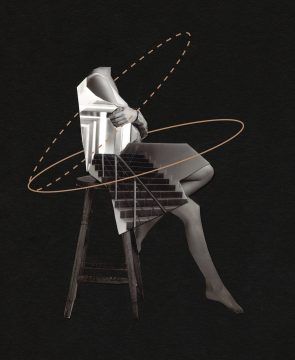 The last class Joel Sanders taught in person at the Yale School of Architecture, on Feb. 17, took place in the modern wing of the Yale University Art Gallery, a structure of brick, concrete, glass and steel that was designed by Louis Kahn. It is widely hailed as a masterpiece. One long wall, facing Chapel Street, is windowless; around the corner, a short wall is all windows. The contradiction between opacity and transparency illustrates a fundamental tension museums face, which happened to be the topic of Sanders’s lecture that day: How can a building safeguard precious objects and also display them? How do you move masses of people through finite spaces so that nothing — and no one — is harmed?
 Annie Zaidi was already a writer of renown in Mumbai when, in 2019, she submitted a 3,000-word essay to the
 Mathew Lawrence, Adrienne Buller, Joseph Baines & Sandy Hager over at Common Wealth:
 Branko Milanovic over at his website, Global Inequality:
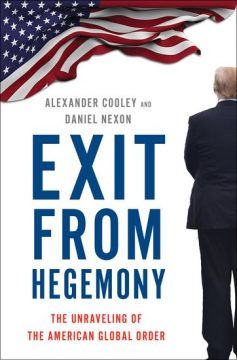 Erik D’Amato reviews Alex Cooley and Dan Nexon’s new book, Exit from Hegemony: The Unraveling of the American Global Order in The LA Review of Books:
 John Quiggin in Aeon: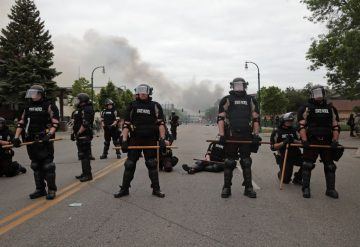
 On her first night in Los Angeles, the model-turned-author Susanna Moore slept in a broom cupboard. She was 21, and had been flown in by a producer to appear in the 1967 Dean Martin spy comedy, The Ambushers. Prior to this she had been working as a fashion model and was helping to put her husband, Bill, through college in Chicago. With barely a cent to her name, she arrived to find the hotel was not expecting her. The desk clerk took pity and sent her to the fourth floor where there was a tiny closet crammed with bleach, toilet brushes and mops. There Moore bedded down on a small rusty cot, the smell of ammonia in her nostrils. Despite this inauspicious start, she was “neither worried nor afraid”, and soon resolved to leave her husband and make LA her home.
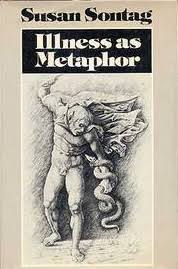 Metaphors of illness come in two varieties. We may give an illness a name that is not its own—“cancer is an invasion.” Or we may use the names of illnesses to talk about something else—“Stalinism is a cancer.” In the first case, Sontag says, “the disease itself becomes a metaphor”; in the second, the disease’s “horror is imposed on other things.” Sontag takes both to distort the patient’s experience of illness by overlaying it with meanings it does not deserve. But the two deserve separate treatments. “Stalinism is a cancer” exploits illness; it uses sickness to cast light on something else. It presupposes that cancer is more straightforward, more readily comprehensible than Stalinism—otherwise, why try to understand the latter in terms of the former? It obscures cancer precisely by presenting it as readily comprehensible. “Cancer is an invasion” is something else entirely, something far more likely to be used by someone seeking to make sense of their own sickness. Audre Lorde reaches for the image repeatedly in her memoir. “I am not only a casualty,” she writes in The Cancer Journals. “I have been to war, and still am. … I refuse to be reduced in my own eyes … from warrior to mere victim.”
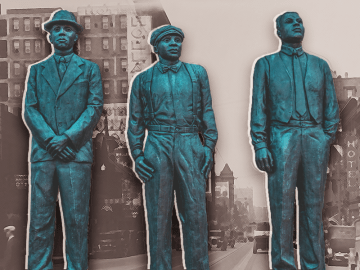 Over the years, the horror of June 15, 1920, when three black men were lynched by a white mob in Duluth, faded away behind a “collective amnesia,” says author Michael Fedo. Faded away, at least, in the memories of Duluth’s white community. In the 1970s, when Fedo began researching what would become