
Robin D. G. Kelley in the Boston Review:
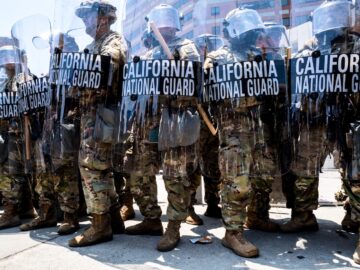 Fourteen years ago, Noam Chomsky published “The Responsibility of Intellectuals, Redux” in these pages. He used the occasion of the tenth anniversary of 9/11 to revisit his classic 1967 essay on the subject, although the immediate occasion for the piece was the assassination of Osama bin Laden by U.S. Navy Seals. As the Obama administration (and much of America) celebrated, Chomsky exposed the operation as a violation of U.S. and international law. The singular goal was to kill bin Laden, not capture him and bring him to trial. There was no pretense of habeas corpus since his body was summarily dumped into the sea.
Chomsky thus reiterates his original contention that it is the “responsibility of intellectuals” to tell the truth about war—in this instance, the war on terror and the crimes of U.S. imperialism in the Middle East, Latin America, Asia, and Africa. Referring to decades of debate on the phrase, he notes, “The phrase is ambiguous: does it refer to intellectuals’ moral responsibility as decent human beings in a position to use their privilege and status to advance the causes of freedom, justice, mercy, peace, and other such sentimental concerns? Or does it refer to the role they are expected to play, serving, not derogating, leadership and established institutions?” His answer was clear: intellectuals must be guided by conscience and refuse to be beholden to state interests, either out of political loyalty or ideological commitment or both.
More here.
Enjoying the content on 3QD? Help keep us going by donating now.
 Fragile quantum states might seem incompatible with the messy world of biology. But researchers have now coaxed cells to produce quantum sensors made of proteins. Quantum states are incredibly sensitive to changes in the environment. This is a double-edged sword. On the one hand, they can
  For women with breast cancer, stressors are associated with deleterious alterations to the systemic and tumor immune environment, according to a study
 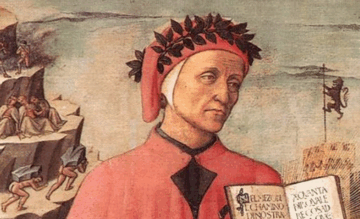 “Now he is scattered among a hundred cities,” W.H. Auden wrote in 1939, “And wholly given over to unfamiliar affections.” Auden was ruminating on the recent death of the Irish poet W.B. Yeats, but the words could serve as an epitaph for any great author. Poets like to imagine that their creations confer afterlives—for themselves and their subjects—impervious to the assaults of “wasteful war” and “sluttish time” so ruinous to monuments of marble or metal (see Horace’s Ode 3.30 and Shakespeare’s Sonnet 55). But as Auden recognized, the moment an author dies, his or her legacy is on the loose. Any chance those poems have of a future depends on what readers make of them: “The words of a dead man,” Auden continues, “Are modified in the guts of the living.”
 The modern concept of GDP was developed in the 1930s and became firmly established during World War II, as it served a national purpose. While Germany was working on its own methods for gauging economic capacity, the United States and the United Kingdom gained a decisive strategic edge by being the first to define total output and compile reliable statistics. This enabled the Allies to maximize production and manage the sacrifices required of their citizens more effectively.
 How will AI affect American workers? There are two major narratives floating around. The “
 On Wednesday
 The visible effects of ageing on our body are in part linked to invisible changes in gene activity. The epigenetic process of DNA methylation — the addition or removal of tags called methyl groups — becomes less precise as we age. The result is changes to gene expression that are linked to reduced organ function and increased susceptibility to disease as people age. Now, a meta-analysis of epigenetic changes in 17 types of human tissue throughout the entire adult lifespan provides the most comprehensive picture to date of how ageing modifies our genes.
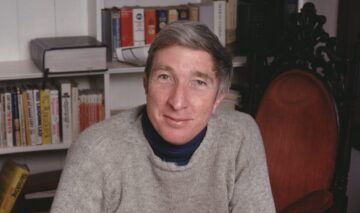 Few American authors of the past century churned out as many words. Even peers who matched or exceeded Updike’s productivity when it came to novels, such as Philip Roth, could not keep pace when factoring in the numerous other modes in which he regularly put pen to paper: short stories, poems, book reviews, essays, a play, a memoir, and even five books for children. Multiple books appeared after his death, including a final volume of short stories, My Father’s Tears.
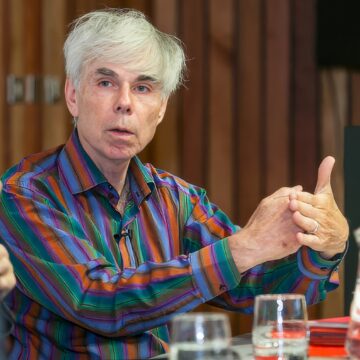 In 1974, five years before he wrote his Pulitzer Prize–winning book Gödel, Escher, Bach: An Eternal Golden Braid,
  A postwar plan for Gaza circulating within the Trump administration, modeled on President Donald Trump’s vow to “take over” the enclave, would turn it into a trusteeship administered by the United States for at least 10 years while it is transformed into a gleaming tourism resort and high-tech manufacturing and technology hub.
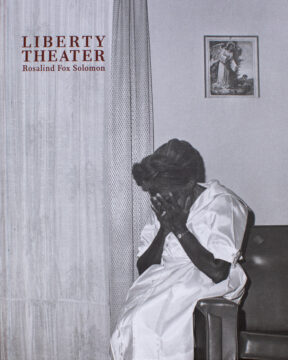 Rosalind Fox Solomon has almost never worked on assignment. When she first started taking photographs with an idea of making art, no one would have expected her to turn that into a career; she was heading into her 40s with two children, a woman learning to communicate as she hadn’t been able to before. She started out shooting close to her home in Chattanooga, Tennessee. Even after she started gaining recognition and traveling farther afield, she didn’t exactly have a long-term plan: She would, she says, just decide to go somewhere — occasionally because of a disruptive event, like an earthquake or a flood, but usually just because, hiring a guide and a translator if she needed one. In India, Guatemala, Brazil, or Missouri, she’d move around and look at people, engaging them but not saying much, and come back with pictures. That’s it.