
Category: Recommended Reading
Art by Women About Women Making Art About Women
Melissa Febos at The Believer:
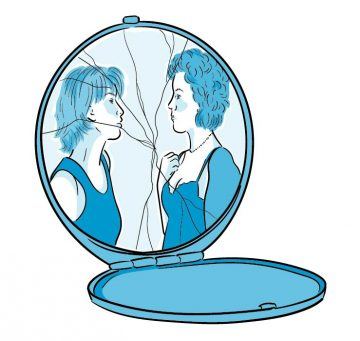 The first lesbian movie I loved was Heavenly Creatures, Peter Jackson’s sumptuous 1994 film starring a young Kate Winslet as a dangerously charismatic schoolgirl who enraptures a sallow classmate with her phantasmagoric fantasy world. In the end, they kill the classmate’s mother. At age fourteen, that squared with my concept of love: predicated on fantasy, eroticized by power imbalance, likely to end in murder—not so much that of anyone’s mother, but more likely of me, by the strength of my own whirling feelings.
A year later, it was The Incredibly True Adventures of Two Girls in Love, Maria Maggenti’s considerably less gothic tale of high school senior Randy (a young, butch Tina from The L Word), who has been sleeping with an older, married woman when she meets Evie, a rich and popular girl who stops at the gas station where Randy works. The movie ends with the two kissing amid a chaotic muddle of class tension, homophobic friends, and angry parents and school administrators.
more here.
God’s Architect
Ingrid D. Rowland at the NYRB:
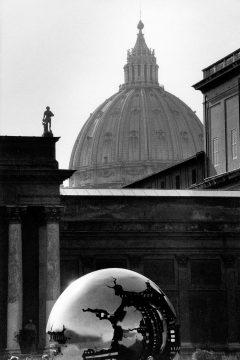
To this aged Michelangelo, with his frailties, his frustrations, and his insoluble contradictions, William Wallace has devoted the latest and most poignant of his books on the artist (there are six others). Because all creative people start out as young people, we have a tendency to ascribe creativity to youth itself, but mature masters like Michelangelo remind us that the urge to create has nothing to do with age or the lack of it, but rather with that inventive spirit both he and Vasari called ingegno—inborn wit, cleverness, genius. The spirit often manifests young, but like wine and wood, it depends on age to reveal its full complexity. When Michelangelo turned seventy, as he does at the beginning of Michelangelo, God’s Architect, he had nineteen more years to live, every one of them spent at work. As dear friends died and his body weakened, he took on a remarkable series of huge, daunting projects, fully aware, as Wallace emphasizes, that he would never live to see them completed. In his deeply spiritual vision of the world, his own limits hardly mattered; God had called him, and he had answered.
more here.
The Cancer Chair
Christian Wiman in Harper’s:
 The second-worst thing about cancer chairs is that they are attached to televisions. Someone somewhere is always at war with silence. It’s impossible to read, so I answer email, or watch some cop drama on my computer, or, if it seems unavoidable, explore the lives of my nurses. A trip to Cozumel with old girlfriends, a costume party with political overtones, an advanced degree on the internet: they’re all the same, these lives, which is to say that the nurses tell me nothing, perhaps because amid the din and pain it’s impossible to say anything of substance, or perhaps because they know that nothing is precisely what we both expect. It’s the very currency of the place. Perhaps they are being excruciatingly candid.
There is a cancer camaraderie I’ve never felt. That I find inimical, in fact. Along with the official optimism that percolates out of pamphlets, the milestone celebrations that seem aimed at children, the lemonade people squeeze out of their tumors. My stoniness has not always served me well. Among the cancer staff, there is special affection for the jocular sufferer, the one who makes light of lousy bowel movements and extols the spiritual tonic of neuropathy. And why not? Spend your waking life in hell, and you too might cherish the soul who’d learned to praise the flames. I can’t do it. I’m not chipper by nature, and just hearing the word cancer makes me feel like I’m wearing a welder’s mask.
In the cancer chair there is always a pillow and a blanket. I’ve never used either, though on two occasions (2007, 2013) my spastic reactions to my cure led nurses to hurriedly pile blankets on my feverish form in the way I pile blankets on my twin girls when they are cold. Now why did I have to think of that. The comparison, I mean. It is wildly inapt: the nurses’ ministrations are efficient and mirthless, and not once have they concluded with a good tickle. Why must the mind—my mind—make these errant excavations into pure pain? I was just digging along like a dog, chats and chairs, a pillow and a blanket.
My children have never seen a cancer chair. They’ve visited me during extended hospital stays, but that’s different, and the last one is just far back enough in their consciousnesses to be, for now, benign.
More here.
The Belt That Listens to Your Bowels
Alan Burdick in The New Yorker:
 In 2005, Barry Marshall, an Australian gastroenterologist and researcher, shared the Nobel Prize in Medicine for the discovery that peptic ulcers are caused not by stress, as was commonly thought, but by a bacterium called Helicobacter pylori. (Marshall, the director of the Marshall Centre for Infectious Diseases Research and Training, at the University of Western Australia, proved this in part by ingesting H. pylori himself and becoming ill.) The finding meant that ulcers could be treated with antibiotics, and it has made stomach cancer, often associated with ulcers, a rarity in developed countries.
Marshall has also spent considerable time confronting another common gut ailment, irritable-bowel syndrome, or I.B.S. “It occupies about thirty per cent of my practice,” he told me recently. I.B.S. is a complex of conditions that is defined mainly by its broad array of symptoms, which can include stomach pain, bloating, cramps, diarrhea, constipation, or any combination thereof; eleven per cent of Americans suffer from it. “It’s a diagnosis of exclusion,” Marshall said, meaning that it’s the vague category of what’s left over when more serious possibilities are ruled out. As a result, patients often must endure a steeplechase of uncomfortable tests—colonoscopies, biopsies, stool samples—only to learn, months later, that they have I.B.S., which can be treated with medicine, changes in diet, or both.
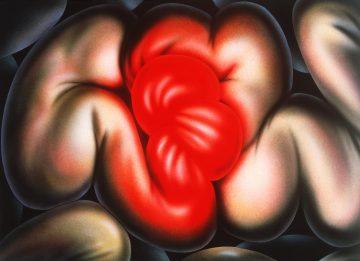
Marshall now thinks he’s found a way to diagnose I.B.S. quickly and directly: by listening to it. Earlier this week, at the annual Digestive Disease Week conference, in Washington, D.C., Marshall described a device that he and colleagues are developing: a wide belt, to be worn by the patient, that records the creaks and undulations of the gut, analyzes them with software, and recognizes the distinct sonic signature of I.B.S. For centuries, physicians have used their ears to pick up hints of trouble in the heart and lungs. In theory, I.B.S. should succumb to a similar approach. Marshall described the ailment as “a motility problem”—an abnormal movement of matter and gases through the intestines, producing a wild range of sounds as the bowel squeezes harder or softly at different times in different places. But the gut, unlike the heart or lungs, is more than twenty feet long, and, although physicians can listen to it, “they don’t listen long enough, and it’s hard to know what to listen for,” Marshall said. He began to imagine a high-tech gadget that could listen for a couple of hours, parse the many frequency patterns, and analyze the results. “That was just a concept,” Marshall said. “When we started, it wasn’t obvious that this would work.”
Marshall drew his inspiration, in part, from his son, who helps analyze seismic data from the seabed for hints of undiscovered reserves of petroleum.
More here.
Friday Poem
Seduction
Poetry catches me with her toothed wheel
and forces me to listen stock-still
to her extravagant discourse.
Poetry embraces me behind the garden wall, she picks up
her skirt and lets me see, loving and loony.
Bad things happen, I tell her,
I, too, am a child of God,
allow me my despair.
Her answer is to draw her hot tongue
across my neck;
she says rod to calm me,
she says stone, geometry,
she gets careless and turns tender,
I take advantage and sneak off.
I run and she runs faster,
I yell and she yells louder,
seven demons stronger.
She catches me, making deep grooves
from tip to toe.
Poetry’s toothed wheel is made of steel.
.
by Adélia Prado
from The Alphabet in the Park
Wesleyan University Press, 1990
Original Portuguese at “Read more”
Read more »
Thursday, July 2, 2020
A Book Nominally About Rubens Offers An Honest Portrait Of The Way The Author’s Mind Works—And Sometimes Doesn’t
Jackson Arn in Art in America:
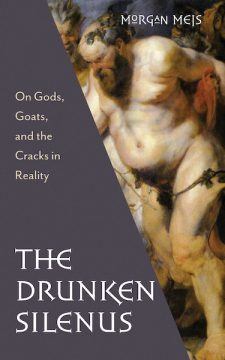 In his new book, The Drunken Silenus, Morgan Meis doesn’t dabble in faux honesty. He goes for the real deal, and the book is all the better for it. Although he barely writes about his personal life, The Drunken Silenus is as much of a warts-and-all self-portrait as any the autofiction boom has produced. It’s a portrait of the way his mind works, and occasionally doesn’t work, and as such, it is sometimes very humiliating indeed. The book begins as a close analysis of the titular Rubens painting and ends, 172 pages later, as an analysis of, give or take, everything. Along the way, one finds a speculative character study of Silenus (in Greek mythology, Dionysus’s fat, drunken sidekick); a biographical sketch of Rubens’s father; a reading of Nietzsche’s The Birth of Tragedy, another book that takes Silenus as the jumping-off point; a biographical sketch of Nietzsche; and a long spiel about the madness of war.
That this all fits together as well as it does isn’t a triumph of structure or careful reasoning so much as a triumph of tone—a certain erudite, insolent, shallowly deep, deeply shallow tone. Meis doesn’t make points so much as bellow them with varying levels of coherence, and he seems to get a kick out of stretching already questionable analogies within an inch of their lives. Consider the following: “Rubens had learned a lesson that Nietzsche was never quite able to get through his head. It doesn’t matter. It just doesn’t matter where you do it, where you live out your life. If the shit inside is solid then it will never matter. Alas, as we’ve already noted, the shit inside Nietzsche was anything but solid. It was runny.” Isn’t this slightly awful, and rather brilliant?
More here.
Survivors of SARS-CoV-2 infection may be susceptible to reinfection within weeks or months
Amanda Heidt in The Scientist:
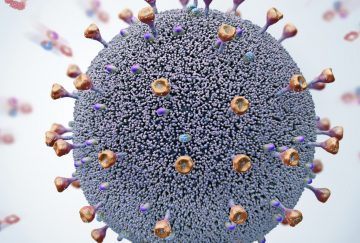 A pair of studies published this week is shedding light on the duration of immunity following COVID-19, showing patients lose their IgG antibodies—the virus-specific, slower-forming antibodies associated with long-term immunity—within weeks or months after recovery. With COVID-19, most people who become infected do produce antibodies, and even small amounts can still neutralize the virus in vitro, according to earlier work. These latest studies could not determine if a lack of antibodies leaves people at risk of reinfection.
One of the studies found that 10 percent of nearly 1,500 COVID-positive patients registered undetectable antibody levels within weeks of first showing symptoms, while the other of 74 patients found they typically lost their antibodies two to three months after recovering from the infection, especially among those who tested positive but were asymptomatic.
In contrast, infections caused by coronavirus cousins such as SARS and MERS result in antibodies that remain in the body for nearly a year, according to The New York Times.
More here.
Why some Asian accents swap Ls and Rs in English
Why the Arctic Is Warming So Fast, and Why That’s So Alarming
Matt Simon in Wired:
 On Saturday, the residents of Verkhoyansk, Russia, marked the first day of summer with 100 degree Fahrenheit temperatures. Not that they could enjoy it, really, as Verkhoyansk is in Siberia, hundreds of miles from the nearest beach. That’s much, much hotter than towns inside the Arctic Circle usually get. That 100 degrees appears to be a record, well above the average June high temperature of 68 degrees. Yet it’s likely the people of Verkhoyansk will see that record broken again in their lifetimes: The Arctic is warming twice as fast as the rest of the planet—if not faster—creating ecological chaos for the plants and animals that populate the north.
“The events over the weekend—in the last few weeks, really—with the heatwave in Siberia, all are unprecedented in terms of the magnitude of the extremes in temperature,” says Sophie Wilkinson, a wildfire scientist at McMaster University who studies northern peat fires, which themselves have grown unusually frequent in recent years as temperatures climb.
The Arctic’s extreme warming, known as Arctic amplification or polar amplification, may be due to three factors.
More here.
How to Read a Historical Book of Magic / Necromancy
Consider The Eel
Patrik Svensson at The Paris Review:
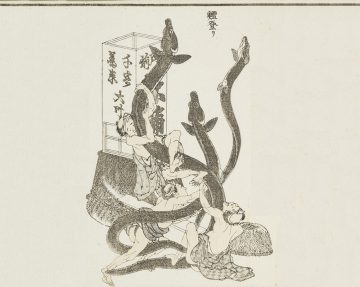 In one of the twentieth century’s most memorable scenes from literature, a man is standing on a beach, pulling on a long rope that stretches out to sea. The rope is covered in thick seaweed. He yanks and tugs, and out of the foaming waves comes a horse’s head. It’s black and shiny and lies there at the water’s edge, its dead eyes staring while greenish eels slither from every orifice. The eels crawl out, shiny and entrails-like, more than two dozen of them; when the man has shoved them all into a potato sack, he pries open the horse’s grinning mouth, sticks his hands into its throat, and pulls out two more eels, as thick as his own arms.
This macabre fishing method is described in Günter Grass’s 1959 novel, The Tin Drum. Rarely has the eel been more detestable.
more here.
All About Swimming
Fran Bigman at Literary Review:
 Until I read Howard Means’s Splash! and Bonnie Tsui’s Why We Swim, my main encounter with the history of the sport had been a Victorian-inspired swimming gala organised by members of my local team at north London’s Parliament Hill Lido. We competed in novelty races that predated the streamlining of swimming into a competitive sport, swimming upright holding umbrellas in one race, wearing blindfolds in another. We jumped into the pool in vintage dresses to see what it was like to swim hampered by heavy fabrics.
I learned much from both books. The first-known depictions of swimming are pictographs made eight thousand years ago on the walls of the so-called Cave of the Swimmers in the middle of the Sahara, where there were once deep-water lakes. The ancient Greeks often triumphed in battle due to their swimming prowess.
more here.
Darwin’s Surprise: Why are evolutionary biologists bringing back extinct deadly viruses?
Michael Specter in The New Yorker:
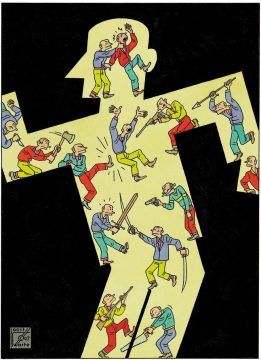 Nothing—not even the Plague—has posed a more persistent threat to humanity than viral diseases: yellow fever, measles, and smallpox have been causing epidemics for thousands of years. At the end of the First World War, fifty million people died of the Spanish flu; smallpox may have killed half a billion during the twentieth century alone. Those viruses were highly infectious, yet their impact was limited by their ferocity: a virus may destroy an entire culture, but if we die it dies, too. As a result, not even smallpox possessed the evolutionary power to influence humans as a species—to alter our genetic structure. That would require an organism to insinuate itself into the critical cells we need in order to reproduce: our germ cells. Only retroviruses, which reverse the usual flow of genetic code from DNA to RNA, are capable of that. A retrovirus stores its genetic information in a single-stranded molecule of RNA, instead of the more common double-stranded DNA. When it infects a cell, the virus deploys a special enzyme, called reverse transcriptase, that enables it to copy itself and then paste its own genes into the new cell’s DNA. It then becomes part of that cell forever; when the cell divides, the virus goes with it. Scientists have long suspected that if a retrovirus happens to infect a human sperm cell or egg, which is rare, and if that embryo survives—which is rarer still—the retrovirus could take its place in the blueprint of our species, passed from mother to child, and from one generation to the next, much like a gene for eye color or asthma.
When the sequence of the human genome was fully mapped, in 2003, researchers also discovered something they had not anticipated: our bodies are littered with the shards of such retroviruses, fragments of the chemical code from which all genetic material is made. It takes less than two per cent of our genome to create all the proteins necessary for us to live. Eight per cent, however, is composed of broken and disabled retroviruses, which, millions of years ago, managed to embed themselves in the DNA of our ancestors. They are called endogenous retroviruses, because once they infect the DNA of a species they become part of that species. One by one, though, after molecular battles that raged for thousands of generations, they have been defeated by evolution. Like dinosaur bones, these viral fragments are fossils. Instead of having been buried in sand, they reside within each of us, carrying a record that goes back millions of years. Because they no longer seem to serve a purpose or cause harm, these remnants have often been referred to as “junk DNA.” Many still manage to generate proteins, but scientists have never found one that functions properly in humans or that could make us sick.
Then, last year, Thierry Heidmann brought one back to life.
More here.
Who discovered messenger RNA?
Matthew Cobb in Current Biology:
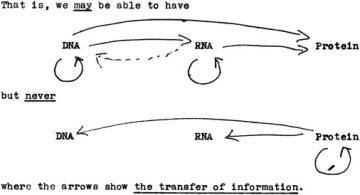 On May 13, 1961, two articles appeared in Nature, authored by a total of nine people, including Sydney Brenner, François Jacob and Jim Watson, announcing the isolation of messenger RNA (mRNA) 1, 2. In the same month, François Jacob and Jacques Monod published a review in Journal of Molecular Biology in which they put mRNA into a theoretical context, arguing for its role in gene regulation [3]. Aside from the technical prowess involved, these papers were feats of the imagination, for they represented an entirely new way of thinking about gene function.
Although insight and hard thinking played a decisive role in developing this new view of life, this work built upon over a decade of research by many groups in the US and Europe as they attempted to unravel how the genetic message gets from DNA to produce proteins. We can reconstruct what happened in these years not only by studying the papers that were produced, but also by examining the reminiscences of those who were involved, both in their memoirs 4, 5, 6, 7, 8 and in oral histories [9], including talks by participants at the conference on the history of mRNA that took place in August 2014 as part of the Cold Spring Harbor Laboratory Genentech Center Conferences on the History of Molecular Biology and Biotechnology.
The acceptance of the genetic role of DNA began in 1944 with the publication of Avery, McLeod and McCarty’s first paper on the identification of the ‘transforming principle’ in pneumococcal bacteria as DNA 10, 11. For much of the 1950s, the suggestion that DNA was the hereditary material in all organisms was accepted as a ‘working hypothesis’ but nothing more — as late as 1961 a paper in Nature left the door open to the possibility that genes were made of proteins, not DNA [12]. One of the continuous concerns throughout this period was that it remained unclear how genes functioned.
A key insight came in 1953, when Watson and Crick suggested that the sequence of bases on a DNA molecule contains ‘genetical information’ [13]. The issue then became how that information was turned into biological function — the nature of the genetic code and how it worked. The person initially responsible for focusing attention on this problem was the cosmologist George Gamow.
More here.
Wednesday, July 1, 2020
The Professor of Gimmicks
Charlie Tyson in the Chronicle of Higher Education:
 In Theory of the Gimmick (Harvard University Press, 2020), Ngai tracks the gimmick through a number of guises: stage props, wigs, stainless-steel banana slicers, temp agencies, fraudulent photographs, subprime loans, technological doodads, the novel of ideas. Across its many forms, the gimmick arouses our suspicion. When we say something is a gimmick, we mean it is overrated and deceptive, that you would have to be a sucker to fall for it. Yet gimmicks exert a strange hold on us. As with a magic show, we can enjoy the gimmick even while we know we are being tricked.
Ngai, a 48-year-old professor of English at the University of Chicago, has slowly been building a reputation as one of America’s most original and penetrating cultural theorists. She has done so by revitalizing the field of aesthetic theory. To some critics, this domain of philosophical inquiry has long seemed fusty and archaic, overly beholden to 18th-century debates. The categories of the sublime and the beautiful, as theorized by Immanuel Kant and Edmund Burke, continue to shape how we make sense of aesthetic experience.
Ngai’s contribution has been to take marginal, nonprestigious aesthetic categories, such as “cuteness,” and treat them with the same seriousness traditionally afforded to the sublime and the beautiful.
More here.
The Woman Who Made Soap
Romeo Vitelli in Providentia:
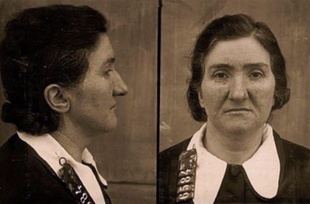 Rome’s Museo Criminologico [Criminological Museum] may not be to everybody’s taste, but it’s definitely worth seeing (alas, it’s now closed though, hopefully, that will change in future). The museum’s collection features photographs and memorabilia from some of the most gruesome forensic cases in the long history of Italy. From Renaissance murders to the Mafia, this museum has it all.
It was there that I first learned about Leonarda Cianciulli, a.k.a. the “Soap Maker of Corregio” and her bizarre criminal career. While almost unknown outside of Italy, Leonarda’s career as a serial killer is still unparalleled in many ways, both for her unique method of concealing bodies and her rather odd motive for killing.
More here.
Fareed Ayaz & Abu Muhammad: “Bajuband Khul Khul Jaye”
On “White Fragility”
Matt Taibbi at Substack:
 A core principle of the academic movement that shot through elite schools in America since the early nineties was the view that individual rights, humanism, and the democratic process are all just stalking-horses for white supremacy. The concept, as articulated in books like former corporate consultant Robin DiAngelo’s White Fragility (Amazon’s #1 seller!) reduces everything, even the smallest and most innocent human interactions, to racial power contests.
It’s been mind-boggling to watch White Fragility celebrated in recent weeks. When it surged past a Hunger Games book on bestseller lists, USA Today cheered, “American readers are more interested in combatting racism than in literary escapism.” When DiAngelo appeared on The Tonight Show, Jimmy Fallon gushed, “I know… everyone wants to talk to you right now!” White Fragility has been pitched as an uncontroversial road-map for fighting racism, at a time when after the murder of George Floyd Americans are suddenly (and appropriately) interested in doing just that. Except this isn’t a straightforward book about examining one’s own prejudices. Have the people hyping this impressively crazy book actually read it?
DiAngelo isn’t the first person to make a buck pushing tricked-up pseudo-intellectual horseshit as corporate wisdom, but she might be the first to do it selling Hitlerian race theory.
More here.
Wynton Marsalis on Albert Murray