
Category: Recommended Reading
What Auden Believed
David Yezzi at The New Criterion:
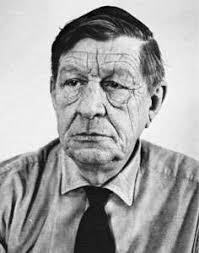 A second spur for Auden was his experience during the Spanish Civil War, where he witnessed the destruction of churches and the persecution and murder of the clergy. As Carpenter writes, “In all, several thousand clergy members of religious orders fell victim to Republican persecutors, and this was only a fraction of the total number of people murdered on the Republican side.” Auden was deeply disillusioned by what he found in Spain. He later said that he “could not escape acknowledging that, however I had consciously ignored and rejected the Church for sixteen years, the existence of churches and what went on in them had all the time been very important to me.”
Indeed, churchgoing again became very important to him. At one point, when Auden was living on Middagh Street in Brooklyn, Golo Mann notes, “On Sundays, he began to disappear for a couple of hours and returned with a look of happiness on his face. After a few weeks he confided in me the object of these mysterious excursions: the Episcopalian Church.”
more here.
The Unusual Life of a Nineteenth-Century Japanese Woman
Lesley Downer at the TLS:
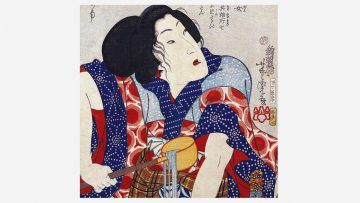
So what was life like in that untouched Japan? We know a surprising amount about life in those days, in part because this was a highly literate society that kept and preserved copious records. Amy Stanley, an associate professor of history at Northwestern University, Illinois, is fluent in pre-modern as well as modern Japanese. In Stranger in the Shogun’s City, she uses private letters together with temple records, bills, receipts, tax returns, salary chits, legal and other documents and books of and about the times to piece together a marvellous patchwork of life in the decades before Western ships were sighted and interaction with the outside world began again in earnest. At the heart of Stanley’s book is the extraordinary and terrible story of Tsuneno, whose life went against the grain not only of what was expected of women in her day but also of what we assume life was like for women at that time.
more here.
Audrey Munson: The most visible person you have never seen
A friendship, a pandemic and a death besides the highway
Basharat Peer in The New York Times:
 DEVARI, India — Somebody took a photograph on the side of a highway in India. On a clearing of baked earth, a lithe, athletic man holds his friend in his lap. A red bag and a half empty bottle of water are at his side. The first man is leaning over his friend like a canopy, his face is anxious and his eyes searching his friend’s face for signs of life. The man is small and wiry, in a light green T-shirt and a faded pair of jeans. He is sick, and seems barely conscious. His hair is soaked and sticking to his scalp, a sparse stubble lines the deathlike pallor of his face, his eyes are closed, and his darkened lips are half parted. The lid of the water bottle is open. His friend’s cupped hand is about to pour some water on his feverish, dehydrated lips.
I saw this photo in May, as it was traveling across Indian social media. News stories filled in some of the details: It was taken on May 15 on the outskirts of Kolaras, a small town in the central Indian state of Madhya Pradesh. The two young men were childhood friends: Mohammad Saiyub, a 22-year-old Muslim, and Amrit Kumar, a 24-year-old Dalit, which refers to former “untouchables,” who have suffered the greatest violence and discrimination under the centuries-old Hindu caste system. Over the next few weeks, I found myself returning to that moment preserved and isolated by the photograph. I came across some details about their lives in the Indian press: The boys came from a small village called Devari in the northern Indian state of Uttar Pradesh. They had been working in Surat, a city on the west coast, and were making their way home, part of a mass migration that began when the Indian government ordered a national lockdown to prevent the spread of the coronavirus. Despite our image-saturated times, the photograph began assuming greater meanings for me.
For the past six years, since Prime Minister Narendra Modi and his Hindu nationalist Bharatiya Janata Party took power, it has seemed as if a veil covering India’s basest impulses has been removed. The ideas of civility, grace and tolerance were replaced by triumphalist displays of prejudice, sexism, hate speech and abuse directed at women, minorities and liberals. This culture of vilification dominates India’s television networks, social media and the immensely popular mobile messaging service WhatsApp. When you do come across acts of kindness and compassion, they seem to be documented and calibrated to serve the gods of exhibitionism and self-promotion. The photograph of Amrit and Saiyub came like a gentle rain from heaven on India’s hate-filled public sphere. The gift of friendship and trust it captured filled me with a certain sadness, as it felt so rare. I felt compelled to find out more about their lives and journeys.
More here.
Friday Poem
Pledge
Now we are here at home, in the little nation
of our marriage, swearing allegiance to the table
we set for lunch or the windchime on the porch,
its easy dissonance. Even in our shared country,
the afternoon allots its golden lines
so that we’re seated, both in shadow, on opposite
ends of a couch and two gray dogs between us.
There are acres of opinions in this house.
I make two cups of tea, two bowls of soup,
divide an apple equally. If I were a patriot,
I would call the blanket we spread across our bed
the only flag—some nights we’ve burned it
with our anger at each other. Some nights
we’ve welcomed the weight, a woolen scratch
on both our skins. My love, I am pledging
to this republic, for however long we stand,
I’ll watch with you the rain’s arrival in our yard.
We’ll lift our faces, together, toward the glistening.
by Jehanne Dubrow
from The Poetry Foundation
comprehensive molecular analysis
Jun Axup in Medium:
 Our blood and cells are complex mixtures of DNA, RNA, proteins, metabolites, lipids, sugars, metal ions, and more. All of these are deeply important in informing our health and wellness. Today, we can measure a few of these molecules routinely, but what are we missing might be in the rest of the data. Dalton Bioanalytics is creating a comprehensive and inexpensive method to look at all these molecules to bring about truly multiomics data. I sat with Austin Quach, CSO of Dalton Bioanalytics, to talk about his platform from inventing it in his lab to starting a company.
How did you become interested in multiomics?
Why are we waiting for disease to strike before treatment? Why do we continue to treat patients using one-size-fits-all? These questions were really the seeds that led to our interest in multiomics. What it boils down to is that we lack the quantity and quality of data to make early detection and precision medicine really successful. There’s a ton of information beyond each person’s genetics including their age, sex, ethnicity, dietary and lifestyle habits, exposure to drugs, medications, pollutants, and infections, tissue, organ, and psychosocial health, etc. The only way to really automatically capture most of this information is to integrate multiple layers of bioinformation — a.k.a. multiomics. For example, genomics (DNA), transcriptomics (RNA), proteomics (proteins), microbiomics (microbes), metabolomics (metabolites), and exposomics (exposures), etc.
Unfortunately, current multiomic approaches are prohibitively expensive. In fact, many have tried to push this approach forward only to realize that it is too expensive to scale. This is when things really got interesting for us — what if we could invent a way to do multiomics using a single low cost assay? The performance specs might not be as good as the individual specialized -omics assays but we might be able to hit that sweet spot where we capture enough data to become invaluable but still maintain affordability. It was basically like that aha moment when you realize what makes smartphones so great: they may not be as good as specialized tools but who has the time and energy to lug around a backpack full of expensive equipment?
More here.
Thursday, July 30, 2020
In heaven with St. Augustine and the Talking Heads
Becca Rothfeld in Cabinet:
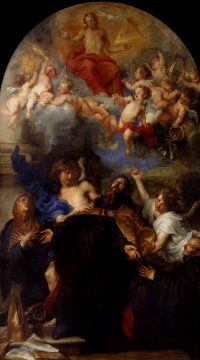 According to medieval Jewish commentaries on the Torah, heaven will be dazzling and dramatic. It will contain chambers “built of silver and gold, ornamented with pearls.” New arrivals will pass through gates guarded by 600,000 angels and bathed in “248 rivulets of balsam and attar.” The righteous will attend elaborate feasts and lounge in lavish gardens. As a rule, paintings of heaven are more vague and more amorphous than paintings of hell, but avuncular artists still stuff them with cherry-cheeked cherubs. In the New Testament, John promises his followers that God’s “house has many rooms.”
I don’t know for sure whether any of this is literal—whether the saved will have real bodies to bathe or eat with, whether the cherubs will dirty any actual diapers. What I do know is that if these are metaphors for anything, they are metaphors for novelty. Whatever life in heaven is really like, even if it does not involve winged babies and banquets, it will never be boring. The many rooms there, be they physical or figurative, will each loom larger than the last.
The Talking Heads seem to reject this common wisdom.
More here.
From Restraining Orders to Assassinations, the Dangerous Work of Saving the Monarch Butterflies
Rob Nixon in the Boston Review:
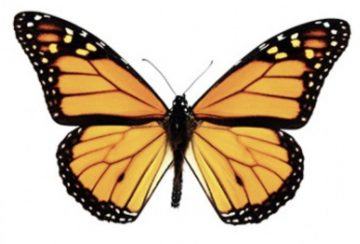 In coming weeks, the Northeast of the United States will experience the peak of its annual migration of monarch butterflies. The butterflies’ life cycle takes place over an astonishingly broad geographic range. Each year, the monarchs overwinter by the millions in the high-altitude forests of Mexico. Then, in the spring and summer, they head north to the United States and southern Canada, the northern limit of where milkweed, the only plants that the fastidious monarchs breed on, will grow.
Because so many ecological factors have to sync perfectly for this journey to work, in recent decades the monarch population has declined rapidly under pressure of environmental changes. In response, a grassroots network of butterfly defenders has sought to preserve the multiple environments that the butterflies need. In the process, the defenders—and, by extension, the butterflies—have made surprising enemies.
More here.
Naomi Wolf Interviews Charlotte Dennett on her New Book: The Crash of Flight 3804: A Lost Spy, a Daughter’s Quest, and the Deadly Politics of the Great Game for Oil
Being at Large
Sam Mickey in the Hong Kong Review of Books:
 A philosopher and cultural critic, Santiago Zabala is well known for articulating the ongoing relevance of a strand of philosophy oriented around interpretation: philosophical hermeneutics. In his latest book, he brings his hermeneutic perspective to an interrogation of the mounting challenges posed by the conditions of today’s intellectual and political landscape. As the subtitle indicates, this book addresses the misinformation and misunderstandings that are so prevalent today. Alternative facts, fake news and post-truth are all symptoms of a lack of any mutual understanding about what is real. Similarly, the return of realism has become a trend in the intellectual world, reflected in the realist rationality proffered by a psychologist like Jordan Peterson or by the philosophical movement of speculative realism. Questions about what is real have never been so pressing on a global scale. Indeed, responses to those questions have impacts not only on humanity but on the diversity of species on Earth, which are currently threatened with a mass extinction event.
For Zabala, responding to what is transpiring in an age of alternative facts calls for an understanding of being, interpretation and emergency – three themes that are for the author “near synonyms” and are also necessary for facilitating freedom today.
More here.
Thursday Poem
The Mother’s Seduction
—for Emily Dickinson
I christen you my mother, and you,
Like her, refuse to give straight answers-
She, silent; you, forever talking slant.
And I’ve exhausted all questions except
The one to which I am answer
And therefore cannot form.
You deal your words like blades or cards
And to keep the game mysterious
You won’t divulge the rules. I never win.
And if I come to you because much time
Has passed since my last meal, you tell a tale
About a crumb that you and Robin feast
Upon, leaving some for charity.
I know it is not true still I believe.
“There’s a pair of us,” you say, “don’t tell-”
And I will keep your secret much too long
Because the racket of this living shames
Me too. The guiltless are not innocent.
I want to lose this innocence, leave
All guilt behind, learn to live loudly,
Become someone, but you won’t tell me how.
I cannot live as you before me did.
It is another time, another place,
A different set of circumstances,
A different work to live.
We have no rest to give each other.
The leaves they turn and turn. With tenderness
I touch you out of sleep; I wake to your
Wild words: much madness is divinest sense.
We cannot reach each other now though I,
Too, dwell in possibility. Escape
Is on my tongue, still, I can no more run
Away from you than crawl into your arms
Constance Merritt
from A Protocol For Touch
University of North Texas Press, 1999
Chasing Success Leads Away From Happiness
Arthur C Brooks in The Atlantic:
 Imagine reading a story titled “The Relentless Pursuit of Booze.” You would likely expect a depressing story about a person in a downward alcoholic spiral. Now imagine instead reading a story titled “The Relentless Pursuit of Success.” That would be an inspiring story, wouldn’t it? Maybe—but maybe not. It might well be the story of someone whose never-ending quest for more and more success leaves them perpetually unsatisfied and incapable of happiness. Physical dependency keeps alcoholics committed to their vice, even as it wrecks their happiness. But arguably more powerful than the physical addiction is the sense that drinking is a relationship, not an activity. As the author Caroline Knapp described alcoholism in her memoir Drinking: A Love Story, “It happened this way: I fell in love and then, because the love was ruining everything I cared about, I had to fall out.” Many alcoholics know that they would be happier if they quit, but that isn’t the point. The decision to keep drinking is to choose that intense love—twisted and lonely as it is—over the banality of mere happiness.
Though it isn’t a conventional medical addiction, for many people success has addictive properties. To a certain extent, I mean that literally—praise stimulates the neurotransmitter dopamine, which is implicated in all addictive behaviors. (This is basically how social media keeps people hooked: Users get a dopamine hit from the “likes” generated by a post, keeping them coming back again and again, hour after miserable hour.) But success also resembles addiction in its effect on human relationships. People sacrifice their links with others for their true love, success. They travel for business on anniversaries; they miss Little League games and recitals while working long hours. Some forgo marriage for their careers—earning the appellation of being “married to their work”—even though a good relationship is more satisfying than any job.
More here.
How Social Isolation Affects the Brain
Catherine Offord in The Scientist:
 Daisy Fancourt was at her home in Surrey in southeast England when the UK government formally announced a nationwide lockdown. Speaking in a televised address on March 23, UK Prime Minister Boris Johnson laid out a suite of measures designed to curb the spread of COVID-19, including closing public spaces and requiring people to stay home except for exercise and essential tasks. For Fancourt, an epidemiologist at University College London (UCL), the announcement meant more than just a change to her daily life. It was the starting gun for a huge study, weeks in the planning, that would investigate the effects of enforced isolation and other pandemic-associated changes on the British public.
In more normal times, Fancourt and her colleagues study how social factors such as isolation influence mental and physical health. Before Johnson’s late-March announcement, the team had been watching as Italy, and subsequently other countries in Europe, began closing down public spaces and enforcing restrictions on people’s movements. They realized it wouldn’t be long before the UK followed suit. “We felt we had to start immediately collecting data,” Fancourt says. She and her colleagues rapidly laid the groundwork for a study that would track some of the effects of lockdown in real time. Between March 24 and the middle of June, the study had recruited more than 70,000 participants to fill out weekly online surveys, and in some cases answer questions in telephone interviews, about wellbeing, mental health, and coping strategies.
This project and others like it underway in Australia, the United States, and elsewhere aim to complement a broader literature on how changes in people’s interactions with those around them influence their biology. Even before COVID-19 began its global spread, millions of people were already what researchers consider to be socially isolated—separated from society, with few personal relationships and little communication with the outside world. According to European Union statistics, more than 7 percent of residents say they meet up with friends or relatives less than once a year. Surveys in the UK, meanwhile, show that half a million people over the age of 60 usually spend every day alone.
More here.
“The Last Days of Immanuel Kant,” a Physical Comedy of the Philosophical Life
Richard Brody at The New Yorker:
 For that matter, Kant’s rigorous discipline turns out to be contagious. Though he was unmarried, he didn’t live alone—he had a household and spent much time interacting with his friend and unofficial majordomo Wasianski (played by André Wilms) and the manservant Lampe (Roland Amstutz)—and much of the movie’s action is centered on Kant’s obsessional domestic routine and the petty agonies of its perturbations. (The script, by Collin and André Scala, is loosely based on the memoirs of the real-life Wasianski, as retold by Thomas De Quincey.) Each morning, Lampe awakens Kant with the same phrase (“Herr Professor, it’s time!”)—and undoes the cord leading from the bed to the doorknob in case the philosopher should awaken during the night and need to get out in the dark. He serves Kant a pot of coffee with a similarly fixed motto (“Herr Professor, here is the coffee!”) and—after the philosopher takes three quick slugs of it with the same three brusque gestures—hands him his pipe for a smoke and, soon thereafter, the newspaper. When the coffee is delayed, Kant vents his anger with derisive twists of metaphysical irony regarding deferred happiness and the comforts of death.
more here.
The Last Days of Immanuel Kant
Walcott in New York
Caryl Phillips at the NYRB:
Early Caribbean poetry often paid homage to English landscape. While staring at Jamaica’s Blue Mountains, or gazing upon a river in the lush tropical heartland of Dominica, one might evoke the Lake District or the lazy meandering of the River Avon. Walcott wanted to do things differently and move beyond mere imitation. His task was fundamental: he would have to first name, and then describe, the uniqueness of the flora and fauna of the Caribbean. Furthermore, in the atmosphere of rising nationalism that was blowing through the region, he would have to be careful not to allow his awareness of social and racial injustice to disrupt his vision and cause his work to be sullied by either anger or ideology. The youthful Walcott knew he had much to learn, but he was determined to stay focused on what he later referred to, in the poem “A Letter from Brooklyn,” as “my sacred duty to the word.”
more here.
Wednesday, July 29, 2020
Angrynomics: a reply to Chris Dillow by Eric Lonergan
Eric Lonergan in Philosophy of Money:
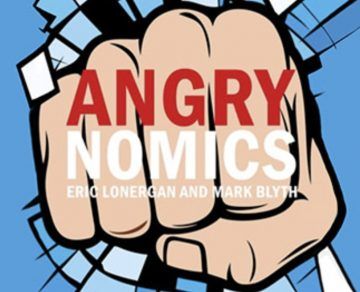 Chris Dillow writes perhaps the most interesting economics blog I know. Its scope is considerable, and despite his declaration of bias – he self-identifies as a ‘marxist’ – he is typically empirical. His recent review of Angrynomics, a book I co-authored with Mark Blyth, raises a fundamental question which I have been reflecting on. It is encapsulated by the rhetorical question with which Chris ends his review:
“What chance do we have of such reform, given that our existing institutions serve extractive capitalism so well by diverting anger away from its proper target?”
Some context may help clarify this question. In Angrynomics we make a distinction between two forms of public anger: moral outrage and tribal rage. It is important to be clear that these are not subjective classifications that Mark and I have plucked out of thin air. They are empirically distinct phenomena. To observe their existence requires no assumption of relative merit. There seems to be two observable forms of anger which humans express publicly: anger at perceived injustice which I label the anger of angels, and the anger of tribal fans, or the anger of devils. To observe these forms of anger in play all that is required is a trip to a football match (there is always an angry minority) or attendance at an extinction rebellion protest.
In his review, Chris adheres to this typology of anger but argues that ‘extractive capitalism’ has hijacked tribal rage to serve its interests, and subdue the potential of legitimate indignation to create real reform.
More here. And here is a reply from Chris Dillow to this.
World’s largest nuclear fusion project begins assembly in France
Damian Carrington in The Guardian:
 The world’s largest nuclear fusion project began its five-year assembly phase on Tuesday in southern France, with the first ultra-hot plasma expected to be generated in late 2025.
The €20bn (£18.2bn) Iter project will replicate the reactions that power the sun and is intended to demonstrate fusion power can be generated on a commercial scale. Nuclear fusion promises clean, unlimited power but, despite 60 years of research, it has yet to overcome the technical challenges of harnessing such extreme amounts of energy.
Millions of components will be used to assemble the giant reactor, which will weigh 23,000 tonnes and the project is the most complex engineering endeavour in history. Almost 3,000 tonnes of superconducting magnets, some heavier than a jumbo jet, will be connected by 200km of superconducting cables, all kept at -269C by the world’s largest cryogenic plant.
More here.