Rebecca Onion in Slate:
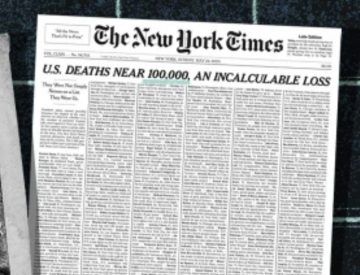 At first, some believed the numbers of Americans dead of the coronavirus might stay in the five figures. Then, as the toll climbed into six, some grieved, some grew numb, some made comparisons to the numbers lost in wars, some threw up every possible defense to deny that these numbers mattered. How is it that so many deaths—194,000 in the U.S. as of this weekend’s official count—can feel so intangible, so hard for so many people to fathom?
Jacqueline Wernimont, a historian who writes about quantification and commemoration, has been watching this unfold and feeling no small sense of déjà vu. Wernimont’s book, Numbered Lives: Life and Death in Quantum Media, is a history of the way we came to quantify mass death—and how those numbers have, too often, blunted the pain of those deaths. We spoke recently about the blurry historical line between “bills of mortality” in plague times and COVID dashboards, and why numbers can make some people feel, and others stop feeling. Our conversation has been condensed and edited for clarity.
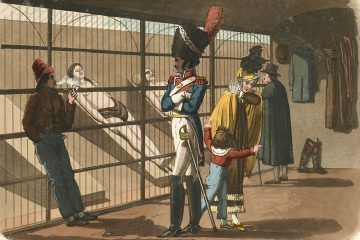
Rebecca Onion: In your book, you point to the bills of mortality, which publicized the numbers of dead during 17th century plague epidemics in London, as a first instance of media that people in the middle of an outbreak could use to keep up with death counts. What were the bills of mortality, for the unfamiliar?
Jacqueline Wernimont: The bills were publications, but also internal government documents. They were often published as broadsides—longer pieces of paper that could be nailed to poles or put in taverns or, say, at the entrance of London Bridge. They were sold as a single sheet for about 2 pence in the market and were compiled by what was known as the “Worshipful Company of Parish Clerks,” an incorporated group that had a royal warrant to gather information about people who had died and to publish and sell it.
The practice of gathering deaths and birth information had been going on for a long time, back to the medieval period, but around this time the tradition shifted.
More here.

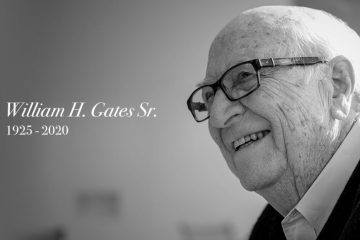 Dad wrote me a letter on my 50th birthday. It is one of my most prized possessions. In it, he encouraged me to stay curious. He said some very touching things about how much he loved being a father to my sisters and me. “Over time,” he wrote, “I have cautioned you and others about the overuse of the adjective ‘incredible’ to apply to facts that were short of meeting its high standard. This is a word with huge meaning to be used only in extraordinary settings. What I want to say, here, is simply that the experience of being your father has been… incredible.”
 Sexuality is, and always has been, a topic that is endlessly fascinating but also contentious. You might think that asexuality would be more straightforward, but you’d be wrong. Asexual people, or “aces,” haven’t been front and center in the public discussion of gender and sexuality, and as a result there is confusion about such basic issues as what “asexuality” even means. Angela Chen is a science journalist and an ace herself, and she’s written a new book about asexuality and how it fits into the wider discussion of sex and gender. Precisely because sexuality is so taken for granted by many people, thinking about asexuality not only helps us understand the issues confronting aces, but the meaning of sexuality more broadly.
 Researchers have shown how industries could work together to recycle cigarette butts into bricks, in a step-by-step implementation plan for saving energy and solving a global littering problem. Over 6 trillion cigarettes are produced each year globally, resulting in 1.2 million tons of toxic waste dumped into the environment. RMIT University researchers have previously shown fired-clay bricks with 1% recycled cigarette butt content are as strong as normal bricks and use less energy to produce. Their analysis showed if just 2.5% of global annual brick production incorporated 1%
  Scientific American has never endorsed a presidential candidate in its 175-year history. This year we are compelled to do so. We do not do this lightly.
 Rail: Were you always a figurative painter?
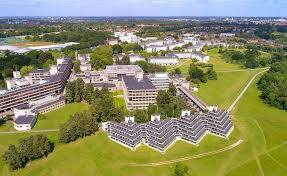 Widening opportunity in education is the noblest of social and political projects. But the cost is now clear. In the ‘bad old days’ students were, as they are today, taught with commitment and passion, but sometimes eccentricity added a spark. Provided he – and it was usually a he – turned up fully dressed and sober and didn’t lay hands on anyone, the crazy lecturer could be an inspiration. Expectations were less explicit, the rhetoric and metrics of achievement were absent, which made everyone feel freer. Even applying to a university seemed less pressured, because it was so unclear what it would be like when you got there. You absorbed teachers’ anecdotal experiences and sent off for prospectuses, including the student-produced ‘alternative’ versions mentioning safe sex and cheap beer. Even after matriculation I had only a vague sense of the structure of my course. The lecture list was to be found in an austere periodical of record available in newsagents. Mysteries that today would be cleared up with two clicks on a smartphone had to be resolved by listening to rumours. This news blackout has been replaced by abundant online information, the publication of lucid curricular pathways, the friendly outreach of student services and the micromanagement of an undergraduate’s development. Leaps of progress all, if it weren’t for the suspicion that students might develop better if they had to find out more things for themselves. We learned to be self-reliant and so were better prepared for an indifferent world; we didn’t for a moment see the university as acting in loco parentis. Excessive care for students is as reassuring as a comfort blanket and can be just as infantilising.
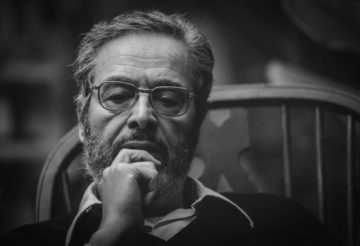 Adam Shatz in the LRB:
 Many have called for a people’s vaccine for COVID-19—a vaccine provided universally and accessibly to the entire world population. The moral arguments may be familiar, but economics supports the case, too. Economics also helps to explain what role the public sector should play in developing a people’s vaccine and how such efforts should be coordinated across countries.
 We’re seeing
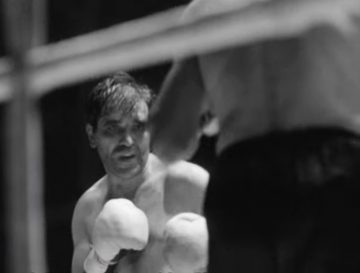 From the start, Lopes makes clear the fusion of style and substance that, no less than the fusion of reportage and reënactment, gives “Belarmino” its (and Belarmino his) artistic identity. The boxer—a former
  You’d think that overseeing an entire issue of The Scientist focused on artificial intelligence would cause my mind to wander far into the future—robotic researchers formulating digital hypotheses, whizzing about in sleek, metallic labs. But immersing myself in stories about the novel insights and deep analyses enabled by smart instruments and machine learning did not transport me into a vision of science in the 23rd century.