
Olivia Durif in the Los Angeles Review of Books:
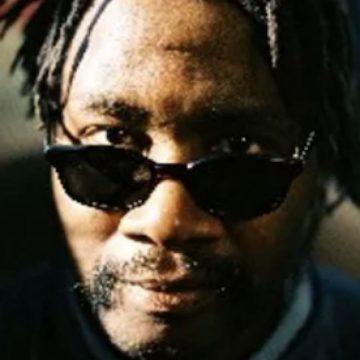 “Prisons are created internally / and are found everywhere.” My conversations with Spoon Jackson keep returning to this point, a line from one of his poems. Prisons are both real and imaginary. All people experience some kind of prison, some to a greater degree than others. Those degrees are not coincidental. Jackson, a 63-year-old Black man, has been serving a life sentence without the possibility of parole for 42 years and has lived in a series of prisons. He discovered poetry one day, about 30 years ago, sitting in his cell, looking over the bay at San Quentin. At least that’s how he tells it.
Since then, he has won four PEN America Prison Writing Awards for his poetry. In 1988, Jackson played Pozzo in a historic production of Waiting for Godot at San Quentin. In 2010, he co-authored By Heart, a joint memoir he wrote with his poetry teacher, Judith Tannenbaum. Jackson’s poetry and life have inspired more than one full-length documentary. I had known of him and his poetry since 2016, when I spent a New York spring doing editorial work for Die Jim Crow, now the first nonprofit record label for currently and formerly incarcerated musicians.
More here.
 There are as many as 9 million feral swine across the U.S., their populations having expanded from about 17 states to 38 over the last three decades. Canada doesn’t have comparable data, but Ryan Brook, a University of Saskatchewan biologist who researches wild pigs, predicts that they will occupy 386,000 square miles across the country by the end of 2020, and they’re currently expanding at about 35,000 square miles a year.
 For good reason, The Great Gatsby is one of the most admired and talked-about books of the twentieth century. And that reason is, of course, that it’s really short—47,094 words, to be exact. I read it for the first time in a few hours at a swim meet (the aptness of the setting wasn’t clear to me until Chapter 8) and probably would have finished sooner had it not been for the snatches of Eminem coming from somebody’s boombox. You can count the book’s speaking roles on your fingers, and any high school sophomore can skim it the night before the big exam. Assign that to millions of teenagers for sixty-odd years, and a Great American Novel is born.
 What is it about the proposal that strikes me as so disturbing?’ Reading through an article describing a local government measure, I feel opposition rising within me. Normally, forming an opinion about such things would take me some time. But not here. The proposal instantly strikes me as unjust. My reaction is not just intellectual; it is visceral. My emotions are engaged. My imagination is exercised. As I imagine the proposal playing out in practice, the distinctive brand of injustice seems to be jumping out of every word on the page.
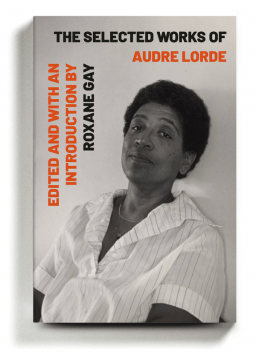 Lorde loved to be in dialogue, loved thinking with others, with her comrades and lovers. She is never alone on the page. Even her short essays come festooned with long lines of acknowledgment to those who have sharpened their ideas. Ghosts flock her essays. She writes to the ancestors and to women she meets in the headlines of the newspaper — missing women, murdered women, naming as many as she can, the sort of rescue and care for the dead that one sees in the work of Saidiya Hartman and Christina Sharpe. In “The Cancer Journals,” in which she documented her diagnosis of breast cancer, she noted: “I carry tattooed upon my heart a list of names of women who did not survive, and there is always a space left for one more, my own.”
 Adam Tooze in The Guardian:
 Lynn Parramore interviews Lance Taylor over at INET:
 Michael Scott Moore in the LA Review of Books:
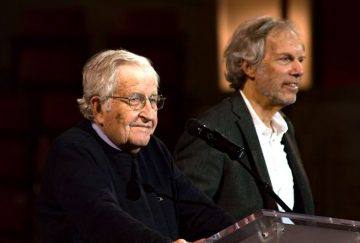 Noam Chomsky and Robert Pollin talk to C. J. Polychroniou in Boston Review:
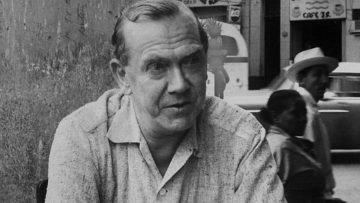 Joseph Conrad’s death made Graham Greene feel, at 19, sitting on a beach in Yorkshire, ‘as if there was a kind of “blank” in the whole of contemporary literature’. Greene’s own death in 1991, aged 87, had a similar effect on many younger writers, myself included. For John le Carré, his most obvious successor, Greene had ‘carried the torch of English literature, almost alone’. His cool fugitive presence, in Martin Amis’s phrase, had been there all our reading lives. In an age of diminishing faith, he had used Catholic parables in a way that lent them a power beyond their biblical origins, mining the gospels rather as le Carré has mined the Cold War. Shaking his hand in Moscow in 1987, Mikhail Gorbachev spoke for an international audience: ‘I have known you for some years, Mr Greene’ — although it was unclear whether as an admirer of his novels, or if Russia’s president had seen his name in intelligence reports concerning Latin America.
 In 2014, Kate Livingston