
Alia Ahmed at The Hudson Review:
 Today I am in Saddar, the former colonial center, clamorous and poetically falling to bits. Pakistan is a particularly loud country (“Well, yes,” a famous doctor once countered, rolling his eyes, “there are people here,” yet I stand by it), and Saddar is no different. Once a pedestrian zone crisscrossed by tram lines, it is now clogged by technicolor buses and auto-rickshaws, dusty vans, beat-up cars, or the tinted 4 x 4 of a Very Important Person, complete with armed bodyguards limply hanging off the side like party streamers. Traffic cops, elegant in starched white uniforms, stand bravely amidst the chaos to direct it with waving arms and screeching whistles. Saddar is home to the Karachi Press Club, the Cotton Exchange, the City Railway Station and, of course, the experiment in human ingenuity that is the parking lot outside the National Bank. Cars are parked in tight rows, squeezed into whatever available space, no sensible way to vacate. A smattering of biryani restaurants lines the far end of the lot. Dilawar (a young Pushtun with green eyes, a migrant from the cold north) hollers for the other “valets” and, consolidating their manpower, lift stationary cars out of the way, hooting encouragement, so I can reverse.
more here.
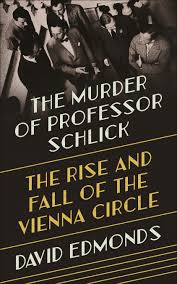 Austria between the world wars fostered an extraordinary number of talents in diverse fields: Sigmund Freud in psychology, Arnold Schoenberg in music, Karl Kraus in journalism, Robert Musil in literature, Gustav Klimt in art, the Bauhaus in architecture, and the “Austrian school” in economics. In some of these areas, the overriding ethos was hostility to what the Bauhaus called “ornament.” The Vienna Circle of philosophers, led by Moritz Schlick, hoped to cleanse philosophy of anything vague or, to use their favorite term of abuse, “metaphysical.” Some members also aspired to provide firm foundations for knowledge, an ambition that can be traced back to Descartes and the 17th-century rationalists.
 Cancer is a global health concern. There are over 100 types of cancer, which taken together, kill more than 10 million people across the world each year. Although localised cancers can be treated successfully through excision or localised radiotherapy, metastatic cancers spread throughout the body and are incurable, eventually leading to death. Once cancer cells have metastasised, they grow aggressively and are resistant to virtually all treatments. Despite enormous funds and dedicated efforts put into cancer research over the last half-century, half of all people diagnosed with cancer still die from their disease.
 On a chilly morning in February, about a thousand Chinese immigrants, Chinese Americans and others filled the streets of San Francisco’s historic Chinatown. They marched down Grant Avenue led by a bright red banner emblazoned with the words “Fight the Virus, NOT the People,” followed by Chinese text encouraging global collaboration to fight Covid-19 and condemning discrimination. Other signs carried by the crowd read: “Time For Science, Not Rumors” and “Reject Fear and Racism.” They were responding to incidents of bias and
  “No one,” declared James Thurber, “can write a sentence like E. B. White.” Throughout his six-decade career, White was widely celebrated for his mastery of “the plain style.” His columns and anecdotes for the New Yorker, his longer essays, and his immensely popular trio of children’s books (Charlotte’s Web, Stuart Little, The Trumpet of the Swan) were invariably praised for their clarity and unadorned directness, not to mention their pithy gestures of tasteful irreverence.
 WHILE FOR DECADES
 THE FINAL TALLY OF ECONOMIC DAMAGE
 In a perfect world, we would learn from success and failure alike. Both hold instructive lessons and provide needed reality checks that may safeguard our decisions from bad information or biased advice. But, alas, our brain doesn’t work this way. Unlike an impartial outcome-weighing machine an engineer might design, it learns more from some experiences than others. A few of these biases may already sound familiar: A positivity bias causes us to weigh rewards more heavily than punishments. And a confirmation bias makes us take to heart outcomes that confirm what we thought was true to begin with but discount those that show we were wrong. A new study, however, peels away these biases to find a role for choice at their core. A bias related to the choices we make explains all the others, says Stefano Palminteri of the French National Institute for Health and Medical Research (INSERM), who conducted a study published in Nature Human Behaviour in August
  Even
Even  Jordi Vaquer in Idees:
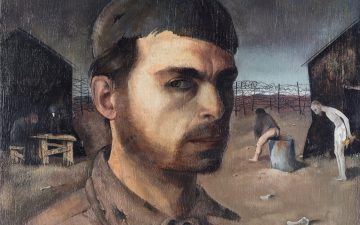 Samantha Rose Hill in Aeon: