
Category: Recommended Reading
Thursday Poem
Family Trees
—for the 2016 Guam Soil and Water Conservation Districts’ Educator Symposium
1
Before we enter the jungle, my dad
asks permission of the spirits who dwell
within. He walks slowly, with care,
to teach me, like his father taught him,
how to show respect. Then he stops
and closes his eyes to teach me
how to listen. Ekungok, as the winds
exhale and billow the canopy, tremble
the understory, and conduct the wild
orchestra of all breathing things.
2
“Niyok, Lemmai, Ifit, Yoga’, Nunu,” he chants
in a tone of reverence, calling forth the names
of each tree, each elder, who has provided us
with food and medicine, clothes and tools,
canoes and shelter. Like us, they grew in dark
wombs, sprouted from seeds, were nourished
by the light. Like us, they survived the storms
of conquest. Like us, roots anchor them to this
island, giving breath, giving strength to reach
towards the Pacific sky and blossom.
3
“When you take,” my dad says, “Take with
gratitude, and never more than what you need.”
He teaches me the phrase, “eminent domain,”
which means “theft,” means “to turn a place
of abundance into a base of destruction.”
The military uprooted trees with bulldozers,
paved the fertile earth with concrete, and planted
toxic chemicals and ordnances in the ground.
Barbed wire fences spread like invasive vines,
whose only fruit are the cancerous tumors
that bloom on every branch of our family tree.
Wednesday, October 14, 2020
Biology’s next great horizon is to understand cells, tissues and organisms as agents with agendas
Michael Levin and Daniel C. Dennett in Aeon:
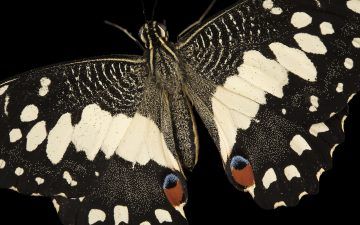 Biologists like to think of themselves as properly scientific behaviourists, explaining and predicting the ways that proteins, organelles, cells, plants, animals and whole biota behave under various conditions, thanks to the smaller parts of which they are composed. They identify causal mechanisms that reliably execute various functions such as copying DNA, attacking antigens, photosynthesising, discerning temperature gradients, capturing prey, finding their way back to their nests and so forth, but they don’t think that this acknowledgment of functions implicates them in any discredited teleology or imputation of reasons and purposes or understanding to the cells and other parts of the mechanisms they investigate.
But when cognitive science turned its back on behaviourism more than 50 years ago and began dealing with signals and internal maps, goals and expectations, beliefs and desires, biologists were torn. All right, they conceded, people and some animals have minds; their brains are physical minds – not mysterious dualistic minds – processing information and guiding purposeful behaviour; animals without brains, such as sea squirts, don’t have minds, nor do plants or fungi or microbes. They resisted introducing intentional idioms into their theoretical work, except as useful metaphors when teaching or explaining to lay audiences. Genes weren’t really selfish, antibodies weren’t really seeking, cells weren’t really figuring out where they were. These little biological mechanisms weren’t really agents with agendas, even though thinking of them as if they were often led to insights.
We think that this commendable scientific caution has gone too far, putting biologists into a straitjacket that prevents them from exploring the most promising hypotheses, just as behaviourism prevented psychologists from seeing how their subjects’ measurable behaviour could be interpreted as effects of hopes, beliefs, plans, fears, intentions, distractions and so forth.
More here.
Bats, bugs, and beauty: The best microscopy images of 2020

More here.
The Prescience of Shelby Steele
Samuel Kronen in Quillette:
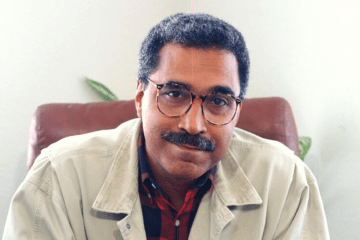 Shelby Steele is experiencing a revival. For over 30 years, the controversial black American essayist and culture critic has consistently produced some of the most original insights to be found on the precarious issue of race in America and has been met with reactions that range from reverence to revulsion. Usually, it’s one reaction or the other. To his critics, Steele is a race traitor, a contrarian black conservative who makes a living assuaging the guilty consciences of whites at the expense of his own people. To his admirers, he is a lone voice of clarity in the chaos of America’s racial discourse who, at 74 years of age, continues to speak uncomfortable and disconcerting truths to power. But his greatest strength may turn out to be a knack for anticipation. As the social upheavals inspired by America’s “racial reckoning” rage on, Steele’s work now looks prescient—it identified the underlying forces that would eventually shape our explosive cultural moment, and offers a more honest accounting of our past and present.
More here.
Sen. Sheldon Whitehouse (Democrat, Rhode Island) exposes how the Supreme Court is rigged by big money
Nicholson Baker In The Labyrinths Of American Secrecy
Charlie Savage at The Nation:
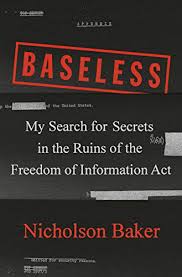 Baker has long been intrigued by the fact that the declassified versions of government documents concerning bioweapons from this era that are available still tend to be heavily censored. The continued secrecy, for him, raises a striking question: What other information do these documents contain that remains so sensitive after all this time that the US government continues to hide it from the American public and the rest of the world under these redactions?
Baker—a pacifist who previously wrote Human Smoke, which controversially suggested that World War II was not worth fighting and portrayed Winston Churchill and Franklin Roosevelt as warmongers alongside Adolf Hitler—decided to immerse himself in this mystery, working meticulously through these blacked-out or whited-out passages to puzzle over what might lurk beneath the censor’s markings.
more here.
Adrianne Lenker’s Radical Honesty
Amanda Petrusich at The New Yorker:
 In late August, the singer, songwriter, and guitarist Adrianne Lenker stood beside a creek in upstate New York, watching the water move. The day before, Lenker, who is twenty-nine, had packed up the Brooklyn apartment she’d been sharing with two roommates. She was preparing to haul a vintage camping trailer across the country to Topanga Canyon, on the west side of Los Angeles, where her band, Big Thief, was planning to meet up. For the next couple of months, at least, the trailer would be home.
Moving can be disorienting—all that sorting and boxing and tossing out forces a kind of self-reckoning—and for Lenker the experience was only intensified by the ongoing anxiety of the coronavirus pandemic, which made imagining any sort of future feel optimistic, if not naïve. The exhaustion and sorrow of the spring had left everyone feeling precarious. The sun refracted against the surface of the creek until the water turned black. Our conversation drifted toward the Zen idea of impermanence. “Is it too early for this?” Lenker joked. “Nice to meet you—let’s talk about death.”
more here.
Big Thief: NPR Music Tiny Desk Concert
US 2020 election: Could the polls be underestimating Donald Trump?
Ben Walker in New Statesman:
 We “data people” have all been burnt by polling – and it hurts. In Britain, America and elsewhere, there have been enough high profile “misses” by the industry to give anyone cold feet about relying on polls as the sole metric for how an election might play out. On balance, however, polling has good form for calling most races right – and is becoming increasingly accurate. If this comes as a surprise, it might be because humans often process negative memories (poll misses) more thoroughly than they do positive (accurate polls). Perhaps conscious that history may repeat itself, betting markets are ranking a Trump victory as more likely than what our model and the models of other outlets forecast.
In the US, the antipathy towards polling is heightened because they have a president most polls did not see coming. In 2016, survey data understated Trump’s margin against Hillary Clinton by between 3pts and 6pts in most key battleground states. Some of this miss could be attributed to margin of error, but for polls to have underestimated Trump in a uniform way across different states indicates something else was going on; and, in particular, that the pollsters struggled to correctly quantify insurgent movements.
The question for 2020 is: will it happen again? Polling this time has been much more stable. But intense uncertainty remains about their value and accuracy. Especially when it comes to whether there is a shy Trump vote.
More here.
Wednesday Poem
Why Latin Should Be Taught in High School
Because one day I grew so bored
with Lucretius, I fell in love
with the one object that seemed to be stationary,
the sleeping kid two rows up,
the appealing squalor of his drooping socks.
While the author of De Rerum Natura was making fun
of those who fear the steep way and lose the truth,
I was studying the unruly hairs on Peter Diamond’s right leg.
Titus Lucretius Caro labored, dactyl by dactyl
to convince our Latin IV class of the atomic
composition of smoke and dew,
and I tried to make sense of a boy’s ankles,
the calves’ intriguing
resiliency, the integrity to the shank,
the solid geometry of my classmate’s body.
Light falling through blinds,
a bee flinging itself into a flower,
a seemingly infinite set of texts
to translate and now this particular configuration of atoms
who was given a name at birth,
Peter Diamond, and sat two rows in front of me,
his long arms, his legs that like Lucretius’s hexameters
seemed to go on forever, all this hurly-burly
of matter that had the goodness to settle
long enough to make a body
so fascinating it got me
through fifty-five minutes
of the nature of things.
by Christopher Bursk
from The Improbable Swervings of Atoms
the University of Pittsburgh Press
Black Spartacus: The Epic Life of Toussaint Louverture review – superb history of Haiti
Ian Thomson in The Guardian:
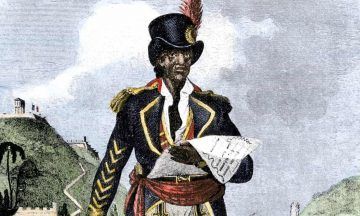 On January 1804, the West Indian island of Saint-Domingue became the world’s first black republic. The Africans toiling on the sugar-rich plantations overthrew their French masters and declared independence. The name Saint-Domingue was replaced by the aboriginal Taíno Indian word Haiti (meaning “mountainous land”) and the Haitian flag created when the white band was ceremonially ripped from the French tricolour. Two hundred years on, Haiti’s is the only successful slave revolution in history. It was led by Toussaint Louverture, a Haitian former slave and emblem of slavery’s hoped-for abolition throughout the Americas.
This superb new history of Louverture and his legacy portrays Saint-Domingue as the most profitable slave colony the world had ever known. The glittering prosperity of Nantes and Bordeaux, Marseilles and Dieppe, derived from commerce with the Caribbean island in coffee, indigo, cocoa and cotton; Saint- Domingue’s sugar plantations alone produced more cane than all the British West Indian islands together.
More here.
Tuesday, October 13, 2020
David Byrne Likes Reading Aloud to His Friends
From the New York Times:
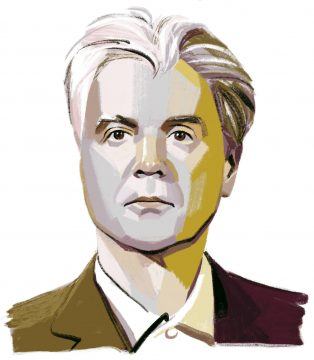
What’s the last great book you read?
“The Technology Trap,” by Carl Benedikt Frey, made me look at the industrial revolution, invention, sleeping beauties, contexts and the forces that shape our societies differently. Counter to much conventional wisdom there was plenty of innovation and invention before the industrial revolution — but it seems there was either no need for it or it was actively discouraged by the aristocracy, who saw it as threatening: New inventions that would leave large numbers of peasants unemployed might provoke an uprising.
Techies and economists love to point out that the textile machines the Luddites opposed in the 19th century brought greater prosperity to all — but it took three generations before the benefits kicked in, and there was a lot of pain and suffering in the meantime. And as Frey points out, history is made in the short term.
More here.
Sean Carroll’s Mindscape Podcast: Adam Riess on the Expansion of the Universe and a Crisis in Cosmology
Sean Carroll in Preposterous Universe:
 Astronomers rocked the cosmological world with the 1998 discovery that the universe is accelerating. Well-deserved Nobel Prizes were awarded to Saul Perlmutter, Brian Schmidt, and today’s guest Adam Riess. Adam has continued to push forward on investigating the structure and evolution of the universe. He’s been a leader in emphasizing a curious disagreement that threatens to grow into a crisis: incompatible values of the Hubble constant (expansion rate of the universe) obtained from the cosmic microwave background vs. direct measurements. We talk about where this “Hubble tension” comes from, and what it might mean for the universe.
More here.
Slaves to the Asset
Brett Christophers in Labour Hub:
 The period since the global financial crisis has seen increased recognition, sparked in particular by the work of Thomas Piketty, that contemporary capitalism is increasingly ‘rentierist’ in nature – dominated by the control of scarce rent-generating assets such as land, infrastructure and digital platforms.
It is also increasingly accepted that the UK is the archetype of such a rentier economy. Having pursued the privatization of public assets further arguably than anywhere else, the country is reaping the consequences in terms of entrenched rentier ascendancy and power.
In most discussions of rentier capitalism, work is conspicuously absent. This is easy to explain. Work, it is said, is what happens in ‘productive’, non-rentier capitalism. Rentiers, by contrast, do not work. Their income is derived not from doing something – working – but exclusively from controlling something – the scarce asset, whatever that asset happens to be. It is in this sense that rentier incomes are said to be ‘unearned’ incomes, in contradistinction to the earned incomes of productive capitalists and those employed by them.
Yet the reality is much less clear-cut.
More here.
Does free will exist? Daniel Dennett, Patrick Haggard, and Helen Steward deliberate
Seeds of cancer in normal skin
Inigo Martincorena in Nature:
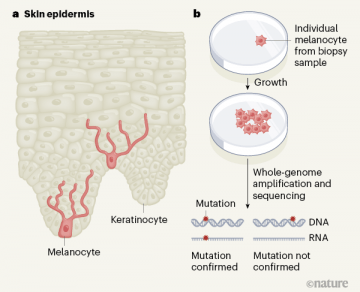 Mutations occur in our cells throughout life. Although most mutations are harmless, they accumulate in number in our tissues as we age, and if they arise in key genes, they can alter cellular behaviour and set cells on a path towards cancer. There is also speculation that somatic mutations (those in non-reproductive tissues) might contribute to ageing and to diseases unrelated to cancer. However, technical difficulties in detecting the mutations present in a small number of cells, or even in single cells, have hampered research and limited progress in understanding the first steps in cancer development and the impact of somatic mutation on ageing and disease. Writing in Nature, Tang et al.1 report work that overcame some of these experimental limitations to explore somatic mutations and selection in individual melanocytes — the type of skin cell that can give rise to the cancer melanoma.
The epidermis is the skin’s outermost layer. Just 0.1 millimetres thick, the epidermis is battered by mutation-promoting ultraviolet rays over a person’s lifetime, and is the origin of the vast majority of skin cancers.
To understand the extent of somatic mutation in a human tissue, and the origin of skin cancers, a previous study2 used DNA sequencing of small biopsies of normal epidermis. This revealed not only that mutations are common in normal cells, but also that mutations in cancer-promoting genes favour the growth of small groups of mutant cells (clones) that progressively colonize our skin as we age. However, the sequencing of biopsies of epidermis made up of thousands of cells mostly detected mutations in cells called keratinocytes, which comprise around 90% of all cells in the epidermis3. These are the cells from which the common, but typically treatable, non-melanoma skin cancers develop. The origins of melanoma, a rarer but more lethal form of skin cancer, lie in single cells scattered throughout the skin, called melanocytes (Fig. 1). These cells produce a pigment called melanin that gives skin its colour and protects it from the onslaught of sun damage.
More here.
The Language of Pain
Cristina Rivera Garza in The Paris Review:
 On September 14, 2011, we awoke once again to the image of two bodies hanging from a bridge. One man, one woman. He, tied by the hands. She, by the wrists and ankles. Just like so many other similar occurrences, and as noted in newspaper articles with a certain amount of trepidation, the bodies showed signs of having been tortured. Entrails erupted from the woman’s abdomen, opened in three different places.
It is difficult, of course, to write about these things. In fact, the very reason acts like these are carried out is so that they render us speechless. Their ultimate objective is to use horror to paralyze completely—an offense committed not only against human life but also, above all, against the human condition.
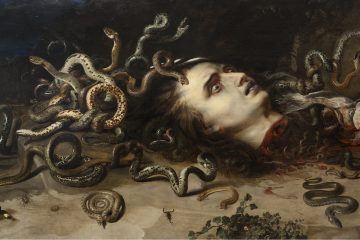
In Horrorism: Naming Contemporary Violence—an indispensable book for thinking through this reality, as understanding it is almost impossible—Adriana Cavarero reminds us that terror manifests when the body trembles and flees in order to survive. The terrorized body experiences fear and, upon finding itself within fear’s grasp, attempts to escape it. Meanwhile, horror, taken from the Latin verb horrere, goes far beyond the fear that so frequently alerts us to danger or threatens to transcend it. Confronted with Medusa’s decapitated head, a body destroyed beyond human recognition, the horrified part their lips and, incapable of uttering a single word, incapable of articulating the disarticulation that fills their gaze, mouth wordlessly. Horror is intrinsically linked to repugnance, Cavarero argues. Bewildered and immobile, the horrified are stripped of their agency, frozen in a scene of everlasting marble statues. They stare, and even though they stare fixedly, or perhaps precisely because they stare fixedly, they cannot do anything. More than vulnerable—a condition we all experience—they are defenseless. More than fragile, they are helpless. As such, horror is, above all, a spectacle—the most extreme spectacle of power.
More here.
Tuesday Poem
“When a woman, having placed one of her feet on the foot of her lover, and the other on one of his thighs, passes one of her arms round his back, and the other on his shoulders, makes slightly the sounds of singing and cooing, and wishes, as it were, to climb up him in order to have a kiss, it is called an embrace like the ‘climbing of a tree.’” —from The Kama Sutra of Vatsyayana, tr. by Sir Richard Burton
Climbing of a Tree
Once, half way up your thigh,
my calf twisted around yours
while my hands clasped behind your ears
like the tender tendril ends
of wisteria, leaves still
furled together.
Now I am chopping these down
whole woody coils fall
each time I stop to cover my face
and cry. I feel them,
lying heavily on the ground
and dragging as I walk.
I smell them, living green,
and they coat my hands, sticky sweet.
by A. Anupama
from NC Magazine, Poetry,
Vol. VI, No. 6, June 2015
The Pre-Jazz Life and Music of Buddy Bolden
Howard Fishman at Salmagundi:
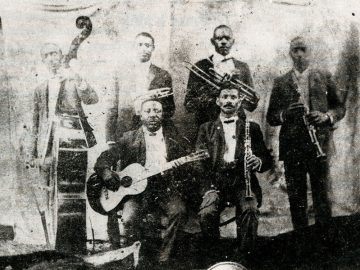 The hallmarks of the Buddy Bolden myth go something like this: in the whispery pre-jazz world of turn of the twentieth century New Orleans, one titanic musical presence loomed larger than any – Bolden, the Paul Bunyan of the cornet. He played louder, harder, and hotter than any horn player before, or since. Unlike the ensembles led by his contemporaries, most or all of whom read printed sheet music on the bandstand, Bolden’s band was primarily made up of “ear” players. They were among the first (some claim the first) to bring the art of improvisation to the kinds of ensembles that preceded the advent of the musical style we now call jazz – mostly string bands and small orchestras performing marches, hymns, rags, and popular songs of the day. No recordings of Bolden and his band exist, though an unverified story persists that he made at least one Edison wax cylinder that has never been found – the Holy Grail of early jazz. But the legend that’s been handed down is that Bolden’s playing and his ability to read and draw from the energy of his adoring, excitable audiences was radical, incendiary, and transgressive.
more here.