
Category: Recommended Reading
New York City’s Hart Island
Alexandra Marvar at The Believer:
 Starting in the 1870s, and every year for the past fifteen years, journalists have told and retold the “hidden history” of New York City’s Hart Island, a hundred-acre city cemetery off the coast of the Bronx. Some fields are rolling and green with little white plot markers. Others are fresh brown earth, where individual coffins are buried in communal graves. Where there are not bodies, there are dry stone walls, woodlands, wetlands, and nineteenth-century brick ruins ringed by salt marshes and rubble. For over 150 years, the cemetery has been run as an extension of the prison system, difficult to visit, and this fact tends to capture the imagination.
Stories about it have often circled the same details: An island prison for the dead!Boxes of dismembered limbs and Civil War soldiers and bones all clacking together, forgotten in the dirt on a mostly barren piece of land shaped like the top of what else but a tibia bone, ever shrouded in fog, capitula and patellae protruding from its eroding edges.
more here.
JBS Haldane: The Man Who Knew Almost Everything
Ray Monk at The New Statesman:
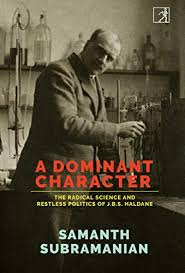 JBS Haldane – “Jack” to his family and friends – was once described as “the last man who might know all there was to be known”. His reputation was built on his work in genetics, but his expertise was extraordinarily wide-ranging. As an undergraduate at Oxford, he studied mathematics and classics. He never gained any kind of degree in science, but he could explain the latest work in physics, chemistry, biology and a host of other disciplines. He could recite great swathes of poetry in English, French, German, Latin and Ancient Greek. A big man (another description of him is “a large woolly rhinoceros of uncertain temper”), he was unafraid to take anyone on in a fight and, equally, could drink anyone under the table.
In his lifetime (he died in 1964 at the age of 72), Haldane was very well known because of his journalism, his appearances on the radio, his bestselling books of popular science and his promotion of communism. Today, what most people know about him is often confined to the probably apocryphal story that, when asked what his studies of nature had taught him about the Creator, he replied that He has “an inordinate fondness for beetles”.
more here.
Thursday, November 5, 2020
The left just got crushed
Damon Linker in The Week:
 When every legally cast vote has been counted, Joe Biden will probably have prevailed in enough states to claim victory in the presidential race, perhaps even ending up with a few more Electoral Votes than Donald Trump managed to earn four years ago. That means Trump will probably be out, defeated in his bid for re-election.
But this is not a moment for Democrats to celebrate.
In the expectations game, the Democratic Party whiffed and whiffed badly. The Biden campaign and its allies managed to drive up turnout — but so did Trump. Republicans put up a hell of a fight, and not just, or even mainly, in the battle for the White House. Democrats have almost certainly failed to win a Senate majority, and so far they have lost some ground in the House as well (while still on track to maintain control of the lower chamber of Congress).
That means that Biden is on track to be a weak, ineffectual president governing at the mercy of Mitch McConnell’s Machiavellian machinations.
More here.
The World’s Worst Public Transport System (in Karachi) Attempts to Modernize
Faseeh Mangi at Bloomberg:
 Karachi ranks as having the worst public transport system globally, according to a 2019 study by car-parts company Mister Auto that looked at 100 major cities. It serves about 42% of Karachi’s commuters, relying on decades-old, overcrowded buses that use the roof as a second deck for passengers at times. Roads are filled with potholes, not all traffic signals are automated, and it’s common to see drivers running red lights. And yet the former capital is home to Pakistan’s main ports and the regional headquarters for companies such as Standard Chartered Plc and Unilever Plc, helping it generate half of the nation’s tax revenue.
Those funds, however, get distributed to other parts of the country. The city’s outgoing mayor Waseem Akhtar said last year he had only 12% administrative control of the city and a lack of funds. The army controls the wealthier areas of Karachi, while the rest is divided among the provincial and federal governments that don’t get along.
“Karachi, despite its importance, is a political orphan,” said Arsalan Ali Faheem, a consultant at DAI, a Bethesda, Maryland-based company that advises on development projects.
More here.
Drone view of Mohenjodaro (The Indus Valley Civilization)
The genomic revolution gives us an opportunity to bend the mortality curve of cancer
Joshua J. Ofman and Azra Raza in Scientific American:
 Improving early cancer detection may be the only way to really put a dent in the cancer mortality curve; however, early cancer detection is suffering from a common ailment in medicine and public health: the streetlight effect. We are looking for five cancers “over here” under the streetlight where we have early detection tests, but about 70 percent of cancer deaths are occurring “over there,” in the dark, where we aren’t even looking. Some may assume that we aren’t screening for these cancers because we don’t have treatments, but a review of practice guidelines and the literature shows that nearly all early cancers have effective treatments, even if watchful waiting is recommended for some, such as nonaggressive early prostate cancers.
Patients don’t get to choose which cancer they get. So, what if we transition away from screening for individual cancers, and start screening individuals for all possible cancers? What if we dramatically improved overall cancer detection? What if we shifted to tracking the cancer detection rate (CDR) in the population?
More here.
Thursday Poem
“Levity in low times is not a bad thing”
…………….………—Ignora Angstorm
Portrait of Lady
Your thighs are appletrees
whose blossoms touch the sky.
Which sky? The sky
where Watteau hung a lady’s
slipper. Your knees
are a southern breeze — or
a gust of snow. Agh! what
sort of man was Fragonard?
—As if that answered
anything. — Ah, yes. Below
the knees, since the tune
drops that way, it is
one of those white summer days,
the tall grass of your ankles
flickers upon the shore—
Which shore?
the sand clings to my lips—
Which shore?
Agh, petals maybe. How
should I know?
Which shore? Which shore?
—the petals from some hidden
appletree — Which shore?
I said petals from an appletree.
The Martin Papers
Christian Lorentzen in Bookforum:
 “SENESCENCE” ISN’T QUITE THE RIGHT WORD for the stage the writers of the Baby Boom have reached. Sure, they may be collecting social security, the eldest of them in their mid-seventies, but the wonders of modern science may allow some another couple of decades of productivity. When the Reaper starts to come for the writer’s instrument, the first thing to go is flow, but that may not matter: fragments are in. In a decade or so, robbed of their transitions and reduced to accumulating prose shards, the octogenarian Boomers may find themselves newly trendy. A strange fate for a generation that entered the literary world at the height of its postmodern excesses: everyone still standing will turn into Lydia Davis.
Topical relevance is another matter. On these shores, the Dirty Realists have been the victims of their generational good fortune. The decades of affluence—and cushy teaching positions—that followed their breakout work have alienated them from the hardscrabble subject matter that made them so interesting in the first place. In Britain, the Boomers have been, since their arrival, the most celebrated literary cohort in history. Endless scandals, enormous book deals, a worldwide fatwa—one of them reviewing another without sufficient deference used to be the cause of international headlines. Arriving in a mature and thriving literary culture, many of them took up staff positions at venerable London papers—the Times Literary Supplement, the New Statesman, the Sunday Times, The Observer—and published in the upstart journals: Ian Hamilton’s New Review, Bill Buford’s Granta, the fledgling London Review of Books under Mary-Kay Wilmers and Karl Miller. By the 1980s and 1990s, the culture had decided to make celebrities out of its authors. The agent Andrew Wylie expanded his operations from New York to London and began to extract astronomical advances from an increasingly corporate publishing industry. Tina Brown’s takeover of the New Yorker in 1992, with Buford installed as fiction editor, completed the transatlantic circuit of literary hype.
More here.
Are infections seeding some cases of Alzheimer’s disease?
Alison Abbott in Nature:
 Two years ago, immunologist and medical-publishing entrepreneur Leslie Norins offered to award US$1 million of his own money to any scientist who could prove that Alzheimer’s disease was caused by a germ. The theory that an infection might cause this form of dementia has been rumbling for decades on the fringes of neuroscience research. The majority of Alzheimer’s researchers, backed by a huge volume of evidence, think instead that the key culprits are sticky molecules in the brain called amyloids, which clump into plaques and cause inflammation, killing neurons. Norins wanted to reward work that would make the infection idea more persuasive. The amyloid hypothesis has become “the one acceptable and supportable belief of the Established Church of Conventional Wisdom”, says Norins. “The few pioneers who did look at microbes and published papers were ridiculed or ignored.”
In large part, this was because some early proponents of the infection theory saw it as a replacement for the amyloid hypothesis. But some recent research has provided intriguing hints that the two ideas could fit together — that infection could seed some cases of Alzheimer’s disease by triggering the production of amyloid clumps. The data hint at a radical role for amyloid in neurons. Instead of just being a toxic waste product, amyloid might have an important job of its own: helping to protect the brain from infection. But age or genetics can interrupt the checks and balances in the system, turning amyloid from defender into villain.
More here.
American Reds : The Rise & Fall of The American Communist Party
American Reds : The Rise & Fall of The American Communist Party
The Inner Life of American Communism
Corey Robin at The Nation:
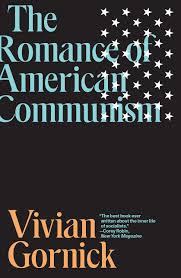 In their heyday, the communists were the most political and most intentional of people. That made them often the most terrifying of people, capable of violence on an unimaginable scale. Yet despite—and perhaps also because of—their ruthless sense of purpose, communism contains many lessons for us today. As a new generation of socialists, most born after the Cold War, discovers the challenges of parties and movements and the implications of involvement, the archive of communism, particularly American communism, has become newly relevant. So have two commentaries on that archive: Vivian Gornick’s The Romance of American Communism, originally published in 1977 and reissued this year, and Jodi Dean’s Comrade: An Essay on Political Belonging.
more here.
Elegies for The Cigarette
Andrew Marzoni at The Baffler:
 Immanuel Kant, who smoked a pipe of tobacco with his tea once or twice a day, described the aesthetic category of the sublime as a “negative pleasure”: “incompatible with charms,” as “the mind is not just attracted by the object but is alternately always repelled as well.” Not unlike the feeling of respect, sublimity is greeted by the Kantian subject with a manic combination of satisfaction and fear, a sense of pride in the superiority of human intellect at the expense of imaginative and physical fallibility. A frisson of euphoria and disgust, or as Richard Klein writes in Cigarettes Are Sublime, “a darkly beautiful, inevitably painful pleasure that arises from some intimation of eternity.” The “taste of infinity in a cigarette” presents to the smoker a philosophical “edge of the abyss”: mortality, selfhood, existence. For Annie Leclerc, in Au feu du jour, “the cigarette is the prayer of our time.”
more here.
Wednesday, November 4, 2020
George Condo Interview: The Way I Think
QAnon: A World of Pure Imagination
Paige K. Bradley at Artforum:
 To fixate on the question of Q’s identity would be, in the conspiracist’s parlance, to chase a false flag. And a group curiously close to Q would likely say the same: the leftist Italian literary collective Wu Ming, a pseudonym translating to “anonymous” or “no name,” which was formed in 2000 as an outgrowth of Luther Blissett, a nom de plume for the same circle of coauthors. In 1999, Blissett published Q, a historical-adventure novel set during the sixteenth-century Protestant Reformation that follows an anonymous Anabaptist radical as he is pursued around Europe by Q, a Roman Catholic spy. In a December 2002 essay posted to its website, Wu Ming declared, “We are interested in ﹡mythopoesis﹡, i.e. the social process of constructing myths, by which we do not mean ‘false stories,’ we mean stories that are told and shared, re-told and manipulated, by a vast and multifarious community, stories that may give shape to some kind of ritual, some sense of continuity between what we do and what other people did in the past. A tradition.” This sounds uncannily similar to QAnon’s story for the people. Q often claims that “Future proves past,” setting its readers up to understand time as a circular process, and, in a sense, it’s not wrong. Time ceases to be progressive in Q’s realm, and on the world stage, ancient crimes and sins are eternally recurring eruptions that must be quashed anew by righteous armies in recycled costumery. Anyone with a taste for devotion and a capacity for faith is a potential conscript. Someone, somewhere, is laughing their head off at their joke, having inflamed all sides in a war for what’s true and who’s accountable for it. No need to bother with guillotines when heads are already lost. And here fall the rest of us down rabbit holes that never end, while others await the longed-for storm, not realizing they have drowned beneath its waves.
more here.
The Polymath
Dmitri Levitin at Literary Review:
 Burke’s story is ultimately one of decline, from the ‘monsters of erudition’ of the 17th century to the present era of specialisation. Early modernists may feel that he is slightly cheating in his description of their period by setting up as separate disciplines subjects that were always studied together. For example, optics, astronomy and geometry were all part of ‘mathematics’, and it was effectively impossible to specialise in only one of them; in these terms, anyone who practised the subject was a polymath. This being admitted, some figures omitted here seem more worthy of inclusion than others who do appear: for example, the Flemish Simon Stevin made seminal contributions to pure and applied mathematics, as well as engineering, music theory and bookkeeping, while also practising chemistry, among many other disciplines.
more here.
The Indecency of Our Electoral Democracy
Justin E. H. Smith in his Substack Newsletter:
 Among the many rules for the conduct of life that Pythagoras passed down to members of his philosophical cult, there is a peculiar prohibition that keeps coming up in late-antique testimonia: Consume no lentils. Decline all lupins. Eat not pulses. Abstain from beans. Different authors provide different rationales for this (Diogenes Laërtius says that it is because beans resemble testicles, and perhaps also the gates of Hades), but we may isolate three of them as the most common and most compelling. First, you must not eat beans because they produce within you an undesirable flatus, damaging to your health and noxious to those around you. Second, you must not eat beans for the same reason you must not eat meat — they too are ensouled, and may well harbour the particular souls of your reincarnated love ones.
If I may pause here for a moment before getting to the third reason, allow me to note that the first two are not as different from one another as you might suppose: when in the Meditations of 1641 René Descartes found it important to deny of his own soul that it is a “subtle vapour”, he was going against a very deeply ingrained strain of popular philosophy, extending back well before the golden age of classical Greece, according to which the vital principle in a body is itself a sort of flatus.
More here.
Why is life expectancy in the US lower than in other rich countries?
Max Roser in Our World in Data:
 Why do Americans have a lower life expectancy than people in other rich countries, despite paying so much more for health care?
The short summary of what I will discuss below is that Americans suffer higher death rates from smoking, obesity, homicides, opioid overdoses, suicides, road accidents, and infant deaths. In addition to this, deeper poverty and less access to healthcare mean Americans at lower incomes die at a younger age than poor people in other rich countries.
More here.