
David Sims in The Atlantic:
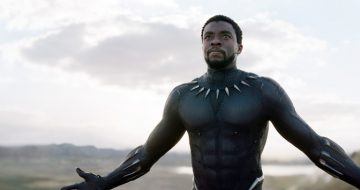
Almost as shocking as the news that Chadwick Boseman died yesterday at the age of 43 was the revelation that the actor had spent the past four years battling colon cancer. This timeline means that he was diagnosed in 2016—the year that he debuted as King T’Challa in Marvel’s Captain America: Civil War. And it means that after his diagnosis, Boseman filmed and appeared in Marshall, Black Panther, two more Avengers movies, 21 Bridges, Spike Lee’s Da 5 Bloods, and an upcoming adaptation of Ma Rainey’s Black Bottom. This output is immense coming from an actor who had been making major Hollywood films for only two years before his big Marvel break—a superstar run that seems all the more miraculous in light of the knowledge that Boseman pulled it off while quietly undergoing many surgeries and rounds of chemotherapy.
…Boseman’s history of playing beloved, revolutionary figures shaped the way audiences and other directors saw him. When Spike Lee was making his latest film, Da 5 Bloods, he centered the plot on a Black soldier who had died in the Vietnam War: Stormin’ Norman, a wise squad leader whose compatriots try to recover his body many years later. Lee was adapting an original script that depicted Norman as still being alive, carrying out raids deep in the jungles, but he decided that the character made more sense as a deceased, romanticized figure—a tragic loss from a bleak era in American history. “Here’s the thing for me. This character is heroic; he’s a superhero. Who do we cast? We cast Jackie Robinson, James Brown, Thurgood Marshall, and we cast T’Challa!” Lee told me in an interview earlier this year. “Chad is a superhero! That character is Christlike … there’s light from heaven coming down from above on him.”
More here.
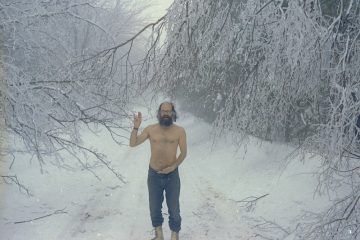 In 1965, Bob Dylan gifted Allen Ginsberg with a Uher reel-to-reel tape recorder, which Ginsberg was to use to record his thoughts and observations as he traveled throughout the United States. Ginsberg, already heavily influenced by Jack Kerouac’s methods of spontaneous composition, felt the taping was an ideal way to pursue his own spontaneous work. He began planning a volume of poems, a literary documentary examining contemporary America, not unlike what Kerouac had done in On the Road, or what Robert Frank had accomplished in his photographs in The Americans. He would add one important element: the violence, destruction, and inhumanity of the escalating war in Vietnam—an edgy contrast to what he was witnessing in his travels, particularly his country’s natural beauty. The public’s polarized dialogue over Vietnam—and, earlier in the decade, the civil rights movement—convinced Ginsberg that America was teetering on the precipice of a fall.
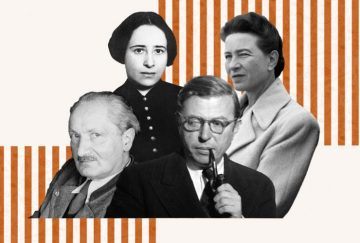 Carmen Lea Dege in Boston Review:
 Maya Adereth, Shani Cohen and Jack Gross interview Stephen Marglin in Phenomenal World:
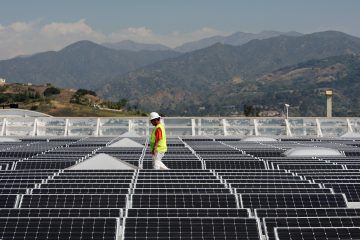 Kate Aronoff in TNR:
 Kimberly Drew and various people in the arts in Vanity Fair:
 Rebecca Tan in The Washington Post:
 Although Mark Twain apparently didn’t coin the phrase “truth is stranger than fiction,” he offered perhaps the best explanation for why it is so. “It is because fiction is obliged to stick to possibilities,” he wrote. “Truth isn’t.” History is replete with proof; try, for instance, plotting a novel that faithfully replicates the events of Sept. 11 or John F. Kennedy’s assassination and watch it be dismissed as absurd.
 You walk into your living room to find your friends, Anne and Bob, talking about whether euthanasia is morally right or wrong. Their conversation starts in a friendly way, but when Bob claims that his view is “clearly true” Anne rolls her eyes and tells him why his view isn’t true. Anne claims that Bob’s view about euthanasia is not only not obviously true, it is not true at all. She gives a counterexample, and Bob gives his reply. Eventually their argument stops, they both sense they are going in circles. Bob turns to you and asks which view you think is true. You tell them that they need to answer another question first. Anne and Bob sigh and don the well-worn expressions of people who have a philosopher for a friend.
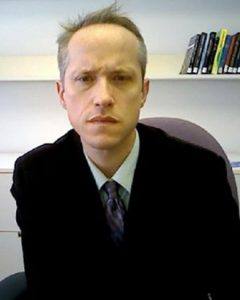 Among the several hundred people who signed up for this newsletter within two days of its launch, I recognised the e-mail addresses of perhaps twenty percent. This means that, for the rest, I have no idea at all what you know of me. So, briefly, I am, among other things, a professor of philosophy, American by birth, based in Paris since 2012.
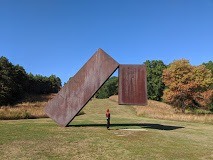 Sculpture parks proliferated, worldwide, in the second half of the twentieth century, in the wake of an identity crisis for large three-dimensional art. Modernist austerity had stripped sculpture of its traditional architectural and civic functions: there were no more integrated niches and pedestals, few new formal gardens, and an epochal apathy regarding statues—until lately! (We are now practically neo-Victorian in our awakenings—rude, for the most part—to symbolism in statuary.) Never mind the odd plaza-plunked, vaguely humanist Henry Moore. Where could one put outsized works that were almost invariably abstract—modernism’s universalist ideals persisting—to give them a chance of seeming to mean something? In nature! Conjoining the made with the unmade, gratifying both. Sculpture parks emerged as game preserves and laboratories for big art. Storm King’s early concentration of works by relevant artists of the late nineteen-sixties and seventies includes some formulaic banalities, tending to presume a surefire magic in embowered angular geometry, but even there you may savor the zest of a moment when sculpture jumped into nature’s lap. The history is complicated and obscured, in the art world, by the contemporaneous development, in the sixties, of Minimalism, which, by engaging the physical presence of viewers, shrugs off its surroundings.
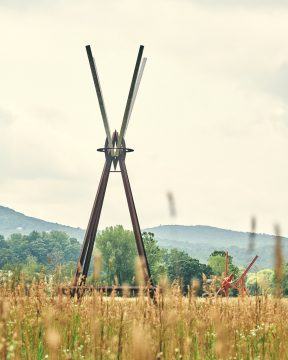 Across Storm King’s open fields and rolling meadows are giant works by Sol LeWitt, Alice Aycock, Ursula von Rydingsvard; ensconced within the paths of a wood is smaller, earlier statuary by names grown obscure, as well as a weathered, trowel-nicked concrete slab by
  To Donald Trump, it’s “