
Liam Heneghan in Aeon:
 It is our sad lot that we love perishable things: our friends, our parents, our mentors, our partners, our pets. Those of us who incline to nature draw this consolation: most lovely natural things – the forests, the lakes, the oceans, the reefs – endure at scales remote from individual human ones. One meaning of the Anthropocene is that we must witness the unravelling of these things too. A tree we loved in childhood is gone; a favourite woodlot is felled; a local nature preserve invaded, eroded and its diversity diminished; this planet is haemorrhaging species.
When a rare Panamanian frog was named in 2005 for George Rabb, an eminent herpetologist and friend to many in the Chicago conservation community, we celebrated this newly named animal. By the time he died in 2017, Rabb’s fringe-limbed frog (Ecnomiohyla rabborum) was assumed extinct in the wild.
There are two types of charisma: the charisma of the lit stage and that of the lambent sanctuary. Rabb’s charisma was the latter, softer, form. One of the most influential conservation biologists of his generation, he directed the Brookfield Zoo in Chicago from 1976 until 2003. He was involved in the protection of species and habitats around the globe. I first met him in the late-1990s at a meeting of the Midwestern regional conservation alliance, Chicago Wilderness. What I learned from George – who knew keenly what it is to endure loss – is that repair is possible.
More here.
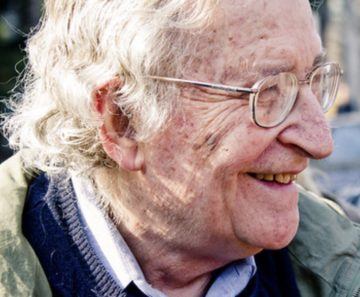 A couple of days before he was scheduled to discuss, on the platform of the Tata Literary Festival 2020, his recent book Internationalism or Extinction, a group of India’s social and political activists wrote an open letter to Noam Chomsky in which they suggested that he boycott the festival. They cited the less-than-wholesome credentials of the festival’s sponsors, the Tatas, in the matter of human rights and apropos of how they ran their businesses. The activists reminded Chomsky that the Tatas’ business empire had expanded over the years by ruthlessly displacing – with active help from the Indian state, and often with brute force – vast tribal communities from their traditional habitats in several Indian provinces. They also talked about open-cast mining and other deleterious business practices the Tatas continued to pursue in flagrant disregard of environmental concerns. By lending his formidable name and his enormous prestige to the festival, the activists believed, Chomsky would only help “erase their (the Tatas’) crimes from public consciousness”.
 In the early 1980s, the painter, sculptor, and all-around technological savant
 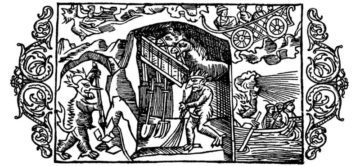 In the winter of 1984, Timothy Tangherlini worked on a dairy farm on the Danish island of Funen. One day, while brushing cattle in the barn, he spotted a tiny man in a hat sitting on the back of one of the cows. When Tangherlini tried to speak to the stranger, the little man jumped out the barn window. Assuming it was a trick, he told the couple that owned the farm about the encounter. They both shrugged. “That was the nisse,” they explained.
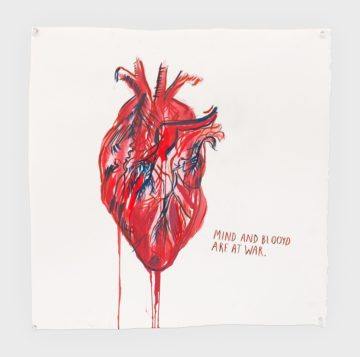 I REMEMBER BETTER THAN MOST where I was when I knew Donald Trump would win. Not just that he would win but that “the office” would not subdue him, that he was coming because he was the crest of a wave, a force made unstoppable by its mostly unseen mass. It was October 9, 2016, I was forty-four, and I was having a heart attack. On the TV above my hospital bed, at his second debate with Hillary Clinton, Trump loomed over Clinton’s shoulder. My nurse, a Trump supporter, gave me a drip of nitroglycerin. It was a slow-moving heart attack. It’d gathered strength across days, at first fooling the ER doctors, who’d told me tests made them “95 percent certain” my heart was fine, which happens to be about the same certainty with which most pundits spoke of the imminent Clinton victory. The ER doctors had sent me home, they’d told me I could bet on those odds. But a heart is not a nation. Mine was just unlucky. Or maybe lucky, because a friend who understood the odds, or pain, better than I did insisted I return to the hospital.
 Breast cancer is the most common cancer in women worldwide, but many immunotherapies have had limited success in treating aggressive forms of the disease. “A deeper understanding of the immunobiology of breast
 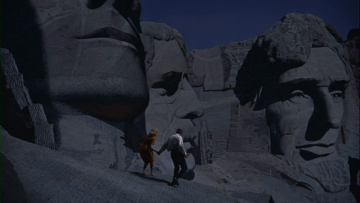 The title of this talk
 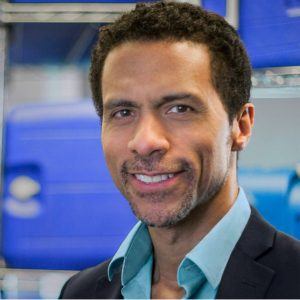 Many characteristics go into making human beings special — brain size, opposable thumbs, etc. Surely one of the most important is language, and in particular the ability to learn new sounds and use them for communication. Many other species communicate through sound, but only a very few — humans, elephants, bats, cetaceans, and a handful of bird species — learn new sounds in order to do so. Erich Jarvis has been shedding enormous light on the process of vocal learning, by studying birds and comparing them to humans. He argues that there is a particular mental circuit in the brains of parrots (for example) responsible for vocal learning, and that it corresponds to similar circuits in the human brain. This has implications for the development of intelligence and other important human characteristics.
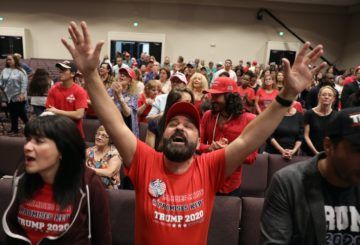 This is a grievous and dangerous time for American Christianity. The frenzy and the fury of the post-election period has laid bare the sheer idolatry and fanaticism of Christian Trumpism.
 In 1947, a 16-year-old David Cornwell
  T
T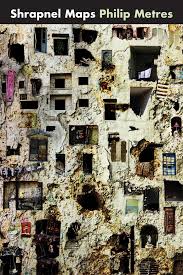 For much of his career, Metres has focused on American wars in the Arab world. In Shrapnel Maps, his new collection of poems from Copper Canyon Press, he shifts his terrain to Palestine-Israel. Drawing on disparate sources, including 1948 memorabilia, maps and texts from centuries earlier, and testimonies of refugees, activists, and suicide bombers, Metres orchestrates a grand conversation of voices and perspectives across three nations. The book is broken into ten sections, resembling a binder containing a war correspondent’s notes. At a climactic moment, Metres turns “shrapnel” into a verb, referring to a “shrapneled map.” The phrase evokes the image of metal invading the body politic, calling to mind these lines from the Iraq veteran writer Kevin Powers: as if “war is just us / making little pieces of metal / pass through each other.”
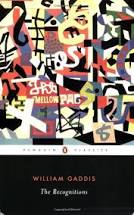 William Gaddis’s first novel, The Recognitions (1955), was initially famous for its inaccessibility. More talked about than read, the book perplexed critics with its seemingly endless allusions and erudite tangents. Despite this initial reception, however, the novel was eventually recognized as a major achievement, whose formal complexity signaled postwar fiction’s evolution beyond its vestigial modernism. Gaddis’s second novel, J R (1975), won the National Book Award, an honor he would receive again almost twenty years later, for A Frolic of His Own (1994). By the time he died, in 1998, his influence on American fiction had become pervasive, extending from the encyclopedic systems novels of the Seventies and Eighties to the more recent excesses of hysterical realism. Among the great postmodernists, only Pynchon, himself a Gaddis acolyte, comes close to exerting the same planetary attraction.
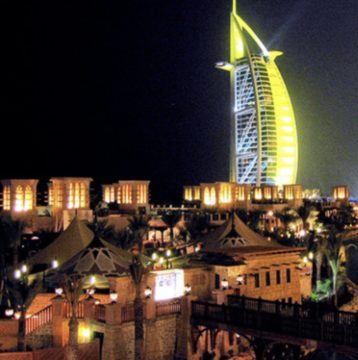 THE UNITED ARAB EMIRATES