Pamela Sneed in The Paris Review:
 Uncle Vernon was cool, tall, hazel-eyed, and brown-skinned. He dressed in the latest fashions and wore leather long after the sixties. Of all of my father’s three brothers, Vernon was the artist—a painter and photographer in a decidedly nonartistic family. To demonstrate his flair for the dramatic and avant-garde, his apartment was stylishly decorated. It showcased a faux brown suede, crushed velvet couch with square rectangular pieces that sectioned off like geography, accentuated by a round glass coffee table with decorative steel legs. It was pulled together by a large seventies organizer and stereo that nearly covered the length of an entire wall. As a final touch, dangling from the shelves was a small collection of antique long-legged dolls. This was my uncle and memories of his apartment were never so clear as the day I headed there with my first boyfriend, Shaun Lyle.
It was the eighties, late spring, the year king of soul Luther Vandross debuted his blockbuster album, Never Too Much, with moving songs about love. If ever there was a moment in my life that I felt free, unsaddled by life’s burdens, and experienced, in the words of an old cliché, “winds of possibility,” it had to be the time with Shaun Lyle heading upstairs to my uncle’s house as Luther Vandross blared soulfully out from the stereo, “A house is not a home.”
Of course Shaun was not the first or last person with whom I’d experienced feelings or sensations of unbridled freedom. Like seasons, freedom came in cycles, like in fall, in college with no money, chumming around with my best friend and school buddy Michael. We spent late afternoons wandering Manhattan’s East and West Village, searching for cheap drinks and pizza at happy hour specials, ecstatic in our poverty. Michael was a blond Irish Catholic punk rocker from Boston. We met when I was an RA at the New School’s Thirty-Fourth Street dorms at the YMCA. They were narrow, tiny rooms like closets and some floors served as a hostel for homeless men. Punk music blared from Michael’s room. I would knock on the door, commanding, “Turn it down.” Eventually, we united over the fact that he put a towel under the door to block the smell of weed smoke that frequently leaked from his room into the hallway. Michael and I were both writers, astute critics, and teacher’s pets. In fiction-writing class, we formed a power block. No piece of writing done by another student escaped our scathing critique. Professors deferred to us. “Michael, Pamela, what do you think?”
More here.

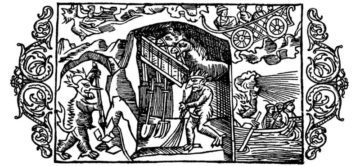 In the winter of 1984, Timothy Tangherlini worked on a dairy farm on the Danish island of Funen. One day, while brushing cattle in the barn, he spotted a tiny man in a hat sitting on the back of one of the cows. When Tangherlini tried to speak to the stranger, the little man jumped out the barn window. Assuming it was a trick, he told the couple that owned the farm about the encounter. They both shrugged. “That was the nisse,” they explained.
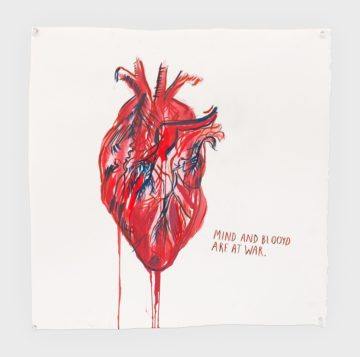 I REMEMBER BETTER THAN MOST where I was when I knew Donald Trump would win. Not just that he would win but that “the office” would not subdue him, that he was coming because he was the crest of a wave, a force made unstoppable by its mostly unseen mass. It was October 9, 2016, I was forty-four, and I was having a heart attack. On the TV above my hospital bed, at his second debate with Hillary Clinton, Trump loomed over Clinton’s shoulder. My nurse, a Trump supporter, gave me a drip of nitroglycerin. It was a slow-moving heart attack. It’d gathered strength across days, at first fooling the ER doctors, who’d told me tests made them “95 percent certain” my heart was fine, which happens to be about the same certainty with which most pundits spoke of the imminent Clinton victory. The ER doctors had sent me home, they’d told me I could bet on those odds. But a heart is not a nation. Mine was just unlucky. Or maybe lucky, because a friend who understood the odds, or pain, better than I did insisted I return to the hospital.
 Breast cancer is the most common cancer in women worldwide, but many immunotherapies have had limited success in treating aggressive forms of the disease. “A deeper understanding of the immunobiology of breast
  The title of this talk
  Many characteristics go into making human beings special — brain size, opposable thumbs, etc. Surely one of the most important is language, and in particular the ability to learn new sounds and use them for communication. Many other species communicate through sound, but only a very few — humans, elephants, bats, cetaceans, and a handful of bird species — learn new sounds in order to do so. Erich Jarvis has been shedding enormous light on the process of vocal learning, by studying birds and comparing them to humans. He argues that there is a particular mental circuit in the brains of parrots (for example) responsible for vocal learning, and that it corresponds to similar circuits in the human brain. This has implications for the development of intelligence and other important human characteristics.
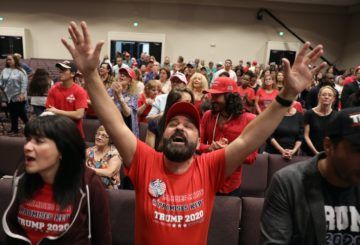 This is a grievous and dangerous time for American Christianity. The frenzy and the fury of the post-election period has laid bare the sheer idolatry and fanaticism of Christian Trumpism.
 In 1947, a 16-year-old David Cornwell
  T
T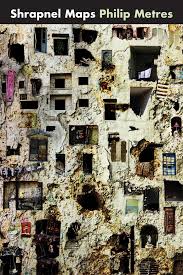 For much of his career, Metres has focused on American wars in the Arab world. In Shrapnel Maps, his new collection of poems from Copper Canyon Press, he shifts his terrain to Palestine-Israel. Drawing on disparate sources, including 1948 memorabilia, maps and texts from centuries earlier, and testimonies of refugees, activists, and suicide bombers, Metres orchestrates a grand conversation of voices and perspectives across three nations. The book is broken into ten sections, resembling a binder containing a war correspondent’s notes. At a climactic moment, Metres turns “shrapnel” into a verb, referring to a “shrapneled map.” The phrase evokes the image of metal invading the body politic, calling to mind these lines from the Iraq veteran writer Kevin Powers: as if “war is just us / making little pieces of metal / pass through each other.”
 William Gaddis’s first novel, The Recognitions (1955), was initially famous for its inaccessibility. More talked about than read, the book perplexed critics with its seemingly endless allusions and erudite tangents. Despite this initial reception, however, the novel was eventually recognized as a major achievement, whose formal complexity signaled postwar fiction’s evolution beyond its vestigial modernism. Gaddis’s second novel, J R (1975), won the National Book Award, an honor he would receive again almost twenty years later, for A Frolic of His Own (1994). By the time he died, in 1998, his influence on American fiction had become pervasive, extending from the encyclopedic systems novels of the Seventies and Eighties to the more recent excesses of hysterical realism. Among the great postmodernists, only Pynchon, himself a Gaddis acolyte, comes close to exerting the same planetary attraction.
 THE UNITED ARAB EMIRATES
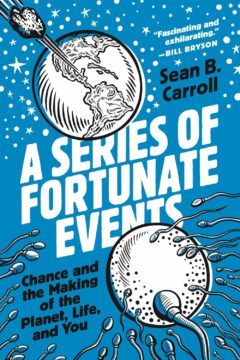 It is to biologist Sean B. Carroll’s credit that he’s found a way of taking a puzzle that could easily fill volumes (and probably has filled volumes), and presenting it to us in a slim, non-technical, and fun little book,
 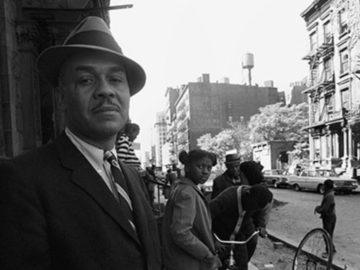 I first heard the phrase “Stay in your lane” a few years ago, in a writing workshop I was teaching. We were talking about a story that a student in the group, an Asian-American man, had written about an African-American family.
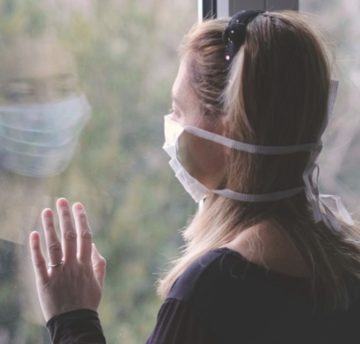 Unlike the September 11 attacks and the 2008 financial crisis – the first two supposedly global events of the 21st century – this pandemic has not spared anyone anywhere, and its consequences will continue to be felt for decades in every corner of the world.
 Hindi—the original name of the language now known as Urdu—and modern Hindi are two distinct languages. Despite being a fairly new language, notions regarding Urdu’s origins and history are as hotly debated amongst the public at large as among scholars and linguists. Interestingly, the name Urdu gained currency circa 1857, with the formal cessation of Mughal rule. Hindi was the name commonly used until the second decade of the 20th century by none other than Iqbal, a poet whose poetry is overtly Islamic. His use of ‘Hindi’, instead of ‘Urdu’, gives lie to determined efforts, after the establishment of the Muslim League in 1903, to paint Urdu as the language of Muslims, as opposed to modern Hindi as the language of Hindus. Urdu would then be utilised to mobilise Muslim support for a new country. The publication of Shamsur Rahman Faruqi’s seminal work, Urdu ka Ibtedaee Zamana: Adabi Tarikh o Tahzib ke Pahlu (1999), followed by its original English version (Early Urdu Literary Culture and History [2001]), compelled the revision of many current and honoured notions about early Urdu and its literary culture. In many ways, it was a pioneering work which needs to be revisited. The book demolished myths and assumptions about the early history of the language as it developed in and around Delhi from the late 17th century onwards. It provided new information—not yet challenged—about the origin of the language name ‘Urdu’, and many other aspects of Urdu’s literary history.