
Christmas Sparrow
The first thing I heard this morning
was a rapid flapping sound, soft, insistent–
wings against glass as it turned out
downstairs when I saw the small bird
rioting in the frame of a high window,
trying to hurl itself through
the enigma of glass into the spacious light.
Then a noise in the throat of the cat
who was hunkered on the rug
told me how the bird had gotten inside,
carried in the cold night
through the flap of a basement door,
and later released from the soft grip of teeth.
On a chair, I trapped its pulsations
in a shirt and got it to the door,
so weightless it seemed
to have vanished into the nest of cloth.
But outside, when I uncupped my hands,
it burst into its element,
dipping over the dormant garden
in a spasm of wingbeats
then disappeared over a row of tall hemlocks.
For the rest of the day,
I could feel its wild thrumming
against my palms as I wondered about
the hours it must have spent
pent in the shadows of that room,
hidden in the spiky branches
of our decorated tree, breathing there
among the metallic angels, ceramic apples, stars of yarn,
its eyes open, like mine as I lie in bed tonight
picturing this rare, lucky sparrow
tucked into a holly bush now,
a light snow tumbling through the windless dark.
by Billy Collins
from Aimless Love, 2012
 It’s more than good news.
  Zara Houshmand: As an Iranian American, I’ve lived under the shadow of conflict between my two homes for much of my life, and it seemed to me that there was a strange irony there, a potentially fertile blind spot, and a possible bridge in Rumi’s popularity in America today. If he were alive today, Rumi probably wouldn’t get a visa to enter this country, though he’s clearly under our skin regardless.
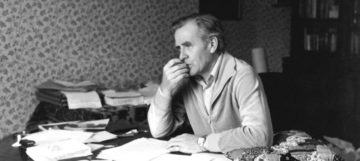 Schiff commented: “Reading him, we discover that we are all, like his secret agents, dissemblers selling our ‘covers’ to the world. We all have something to hide,” and we all want to align ourselves with a cause or a passion.
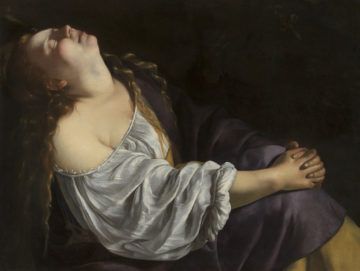 HEIC ARTEMISIA the tombstone of Artemisia Gentileschi is said to have read. Clear and simple, forgoing the usual embellishments, such as names of father, husband, and children, dates of birth and death. HEIC ARTEMISIA, or HERE LIES ARTEMISIA.
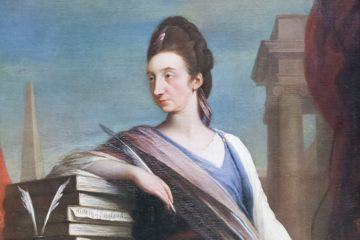 History used to be so much easier. There were the Wars of the Roses, then the Reformation, the Civil War, the Enlightenment and finally the Victorians. Each one had its own century and its distinctive tag. Throw in Henry VIII and Elizabeth I, garnish with a few zealots and adventurers, some glorious triumphs and some grisly deaths. It was all part of our Island Story. You knew where you were.
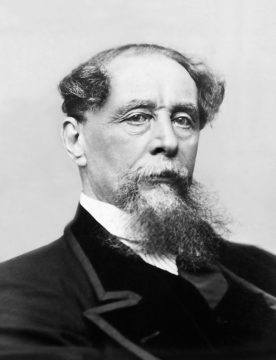 In February of 1824, Charles Dickens watched in anguish as his father was arrested for debt and sent to the Marshalsea prison, just south of the Thames, in London. “I really believed at the time,” Dickens told his friend and biographer, John Forster, “that they had broken my heart.” Soon, Dickens’s mother and his younger siblings joined the father at Marshalsea, while a resentful Dickens earned money at a blacking factory, labelling pots of polish for shoes and boots. Although his father would be released within months, Dickens would never fully outrun the memory of his family’s incarceration. In her 2011 biography, Claire Tomalin notes that, in adulthood, Dickens became “an obsessive visitor of prisons.” In the autobiographical essay, “Night Walks,” he describes halting in the shadows of Newgate Prison, “touching its rough stone” and lingering “by that wicked little Debtors’ Door – shutting tighter than any other door one ever saw.” While touring America as a famous author, he made sure to go and see the prisons in Boston, New York, and Baltimore, among others.
 It was always predictable that the genome of Sars-CoV-2 would mutate. After all, that’s what viruses and other micro-organisms do. The Sars-CoV-2 genome accumulates around one or two mutations every month as it circulates. In fact, its rate of change is much lower than those of other viruses that we know about. For example, seasonal influenza mutates at such a rate that a new vaccine has to be introduced each year.
 Buddhism would undergo profound changes as it was transmitted from its origins in India east into China, in the first century CE. Terminology had to be assimilated, for one thing. And when one language is translated and assimilated into another, it is inevitable that some conceptual connections will be lost and the meaning of ideas altered. Take Zen Buddhism. In his latest book, David Hinton says that we in the West are not just once-removed from the original Zen—but twice removed. This is because the Zen we know from Japan had already lost much of the original Daoist underpinnings of Chinese Zen—known as Chan—even before the religion traveled across the Pacific to America.
 SAMIRA AHMED’S young adult novel Mad, Bad & Dangerous to Know evokes the mysterious woman at the center of Lord Byron’s 1813 poem The Giaour. Leila is the favored concubine in the court of a Turkish pasha who falls in love with the Giaour (or “infidel”), a non-Muslim man she visits in a rose garden at night. As Leila plots her doomed escape, Ahmed gives Byron’s Orientalized woman a narrative, an identity, and a voice.
 Bears do it. Bats do it. Even European hedgehogs do it. And now it turns out that early human beings may also have been at it. They hibernated, according to fossil experts.
 GLENN LOURY: I was drawing the listener’s attention to the difference between the institutional interest in having a diverse profile of participants and the interests, as I understand them, of the population which may be the beneficiary of this largesse. My point was: if you want genuine equality, this is distinct from titular equality. If you want substantive equality, this is distinct from optics equality. If you want equality of respect, of honor, of standing, of dignity, of achievement, of mastery, then you may want to think carefully about implementing systems of selection that prefer a population on a racial basis. Such a system may be inconsistent over the longer term in achieving what I call genuine equality; real equality; substantive equality; equality of standing, dignity, achievement, honor, and respect.
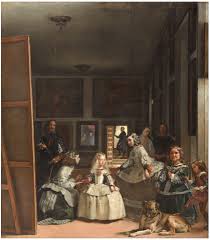 To appreciate fully how the seemingly incidental presence of a ceramic folk craft from Latin America – when polished into pertinence by Velázquez’s virtuoso brush- becomes a visionary lens through which we glimpse the world anew, we must first remind ourselves of the cultural context from which the painting emerged and what it purports to portray. On one significant level, the work provides a self-portrait of the 57-year-old artist four years before his death in 1600, after he had spent more than three decades as court painter to King Philip IV of Spain. Palette in hand on the left side of the painting, Velázquez’s life-size selfie stares our way as if we were the very subject that he is busy capturing on an enormous canvas that rises in front of him – a painting-within-a-painting whose imaginary surface we cannot see.
 Recently, I won’t say exactly when but embarrassingly late in life, I realized that books had been lying to me. Movies were slightly better, but still untruthful. To put it another way, I realized that nothing is connected. Nothing is central. Not all things happen at the same time, or a millisecond before or after that time, or at midnight, or on anniversaries.
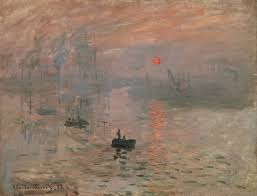 Specifically, I want to suggest that the advent of Impressionism around 1870 marks a fundamental break in what I will call the dialectical continuity of French painting going back to the middle of the eighteenth century, when a new conception of the absorptive and dramatic tableau came to the fore in the paintings of Jean-Baptiste Greuze (themselves inconceivable apart from the precedent of the genre paintings of Jean-Baptiste-Siméon Chardin) and the art critical and theoretical writings of the polymath philosophe Denis Diderot, the founder of art criticism as we know it. This is the fateful development analyzed in my 1980 book, Absorption and Theatricality: Painting and Beholder in the Age of Diderot, in which I argue (I would like to think I demonstrate) that starting in the mid-1750s and 1760s in France the art of painting found it necessary to confront a new imperative: to find the means to suspend or neutralize—to somehow wall off—the now suddenly distracting presence of the beholder; or to put this slightly differently, to somehow establish the supreme fiction or ontological illusion that the beholder does not exist, that there is no one standing before the painting. I describe this imperative in terms of a need to stave off, if possible to overcome, a newly distinct danger of theatricality. And I argue that this was to be accomplished with the aide of two principal strategies: first, the thematization of absorption, which is to say the depiction of personages each of whom was felt to be entirely caught up (absorbed) in whatever was understood to be taking place within the representation; and second, the promotion of a new, more exigent ideal of dramatic unity, according to which all the elements in the painting were directed toward a single dramatic end, thereby achieving a compositional effect of closure vis-à-vis the beholder.