Hadley Freeman in The Guardian:
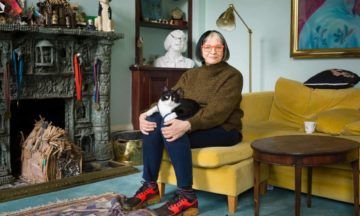 When Philippa Perry finished, after several years of writing and a lifetime of research, the first draft of her book about improving relationships between parents and children, she sent it to her editor – and their relationship promptly collapsed.
“She felt really told off by the book. She has teenagers and, of course, sometimes she would tell them: ‘Get out of bed, you lazy sods!’ So what I wrote went straight into her heart,” says Perry, who very much does not advocate calling one’s children “lazy sods”. This must have been painful for you to hear, I say. “Actually, it was amazing feedback,” she replies with the good cheer of a psychotherapist who firmly believes painful moments can beget productive solutions. “I realised that my own anger towards my parents had leaked out into the book. So I rewrote it and it’s a better book.” And how do matters stand with her editor? “Relationships are often about rupture and repair, and we have very much repaired.”
The result of all this rupturing and repairing was the ingeniously titled The Book You Wish Your Parents Had Read (and Your Children Will Be Glad That You Did), which became one of this year’s publishing success stories, its distinctive orange and blue cover as omnipresent in a certain type of family home as Ella’s Kitchen organic baby food and Cosmic Kids Yoga.
Out in paperback next week, it is Perry’s third book – after Couch Therapy (2010) and How to Stay Sane (2012) – and her most successful. To date, it has sold more than 240,000 copies and it’s not hard to see why: she writes with a thoughtful, inquisitive elegance rarely found in parenting guides, which tend more to dry didacticism. Despite her revisions, the book is still firm with parents but also forgiving (ruptures can be repaired), full of the currently popular attachment-parenting theories (children’s needs come first) while chucking in some common sense (sometimes parents need a break). Most of all, it is incisive and persuasive – God, it’s persuasive. I’ve yet to meet a parent who hasn’t altered their parenting to some degree after reading it, myself extremely included.
More here.

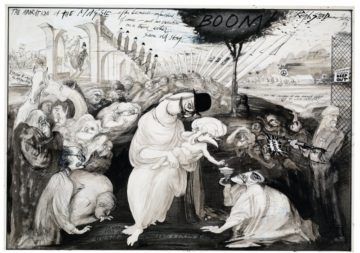 Ralph Steadman was born in Liverpool in 1936, and during the Second World War his family relocated to North Wales. Having honed his technical drawing skills during military service, he moved to London in the 1950s and started work as a cartoonist. Over the course of his 60-year career, Steadman has illustrated classics such as Animal Farm, drawn album covers for bands including the Who, and produced scathing political caricatures for publications on both sides of the Atlantic (he has been contributing to the New Statesman since 1976). He is perhaps best known for his collaborations with the American gonzo journalist Hunter S Thompson, particularly for Thompson’s 1971 novel Fear and Loathing in Las Vegas. Steadman’s provocative, ink-splattered images – some of which, taken from a major new book, are reprinted here – are informed by his philosophy: “There is no such thing as a mistake. A mistake is an opportunity to do something else.”
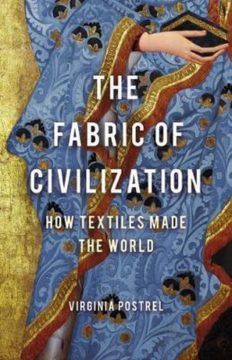 Anyone who has been a teenager or dressed a 4-year-old knows that what we wear can be a source of intense conflict. Clothing is more than essential protection against the elements. It helps define who we are—to the world and to ourselves. And it is an everyday source of aesthetic pleasure. Clothing is a form of self-expression.
 When the Khoisan hunter-gatherers of sub-Saharan Africa gazed upon the meandering trail of stars and dust that split the night sky, they saw the embers of a campfire. Polynesian sailors perceived a cloud-eating shark. The ancient Greeks saw a stream of milk, gala, which would eventually give rise to the modern term “galaxy.”
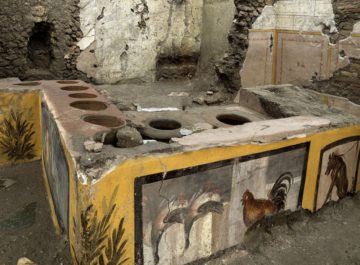 Archaeologists in Pompeii, the city buried in a volcanic eruption in 79 AD, have made the extraordinary find of a frescoed hot food and drinks shop that served up the ancient equivalent of street food to Roman passersby.
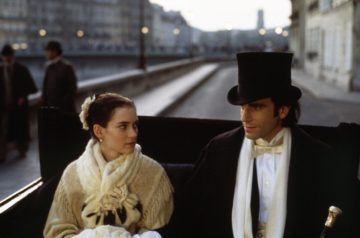 When she began writing “
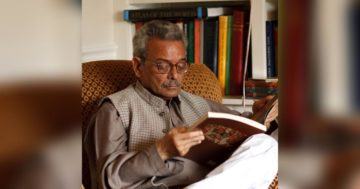 This annus horribilis is not over yet, and it has now taken away from us the greatest doyen and scholar of Urdu literature the world knew over the recent decades, Shamsur Rahman Faruqi. He died peacefully at his home, surrounded by his family and his favourite dogs, having recovered earlier this month from Covid-19. I had the honour and pleasure to visit him in his study in January this year, which isn’t anything less than a library. It is hard to imagine all those books siting there without their avid reader. Ghalib’s often quoted verse “aisā kahan se laun ki tujh saa kahen jise” – “where do I find another who may be like you?” – doesn’t seem to hold truer than in this moment of the greatest loss for Urdu culture.
 Bill McKibben in The New Yorker:
 Mingtang Liu and Kellee S. Tsai in the Marxist Sociology blog:
 Agnes Callard in Boston Review: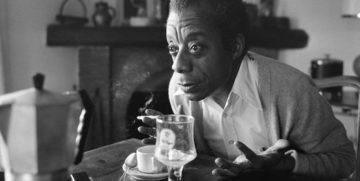
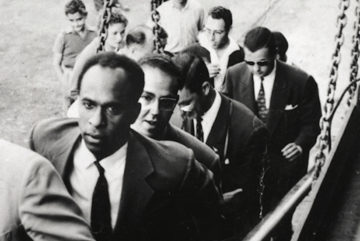 Peter Hudis in Jacobin:
 The question has confounded many: How does Pakistan stay alive?
 The human cost of coronavirus has continued to mount, with more than 77m cases confirmed globally and more than 1.69m people known to have died.
 Although the modern standard is officially exact, it isn’t actually exact. Two atomic clocks of the same design keep slightly different times. By statistically comparing atomic clocks, we know they are accurate to about one second in thirty million years. That’s probably accurate enough for everyday use, but it isn’t accurate enough for some scientific purposes. If we had more precise clocks, we could use them to study everything from geology to dark energy. So there is an ongoing quest to develop a new, more accurate standard.
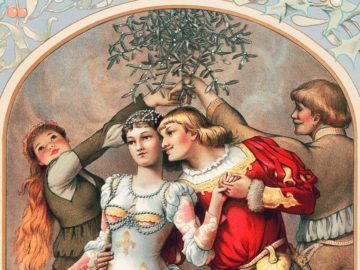 Some plants are so entwined with tradition that it’s impossible to think of one without the other. Mistletoe is such a plant. But set aside the kissing custom and you’ll find a hundred and one reasons to appreciate the berry-bearing parasite for its very own sake. David Watson certainly does. So enamored is the mistletoe researcher that his home in Australia brims with mistletoe-themed items including wood carvings, ceramics and antique French tiles that decorate the bathroom and his pizza oven. And plant evolution expert Daniel Nickrent does, too: He has spent much of his life studying parasitic plants and, at his Illinois residence, has inoculated several maples in his yard — and his neighbor’s — with mistletoes. But the plants that entrance these and other mistletoe aficionados go far beyond the few species that are pressed into service around the holidays: usually the European Viscum album and a couple of Phoradendron species in North America, with their familiar oval green leaves and small white berries. Worldwide, there are more than a thousand mistletoe species. They grow on every continent except Antarctica — in deserts and tropical rain forests, on coastal heathlands and oceanic islands. And researchers are still learning about how they evolved and the tricks they use to set up shop in plants from ferns and grasses to pine and eucalyptus.
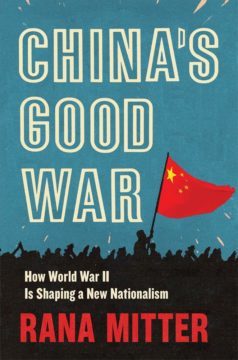 As a young child, I did not put much thought into who had led the Chinese against Japan. Once, at home, I had heard my father make a casual comment that the War of Resistance, as World War II is known in China, was mostly fought by the Nationalists. When I repeated the statement over dinner, my mother stared at her husband as if he were one of her disobedient students. After a long, awkward silence, she turned to look at me and said, “the Nationalists and the Communists cooperated,” before telling everyone at the table to never speak of this again.