
Kendall Little in The New York Times:
2020 was, well, tumultuous to say the least.
 The COVID-19 pandemic and recession caused devastating long-term unemployment and income losses for many, historic low interest rates for borrowers, and stock market highs for investors. Since NextAdvisor’s launch in June, we’ve followed along, looking to the experts and Americans directly affected to better understand — and share — how it all impacts your wallet. As we say goodbye to 2020, our writers and editors are reflecting on what we learned, and want to share some new practices we’re bringing into the new year. The coronavirus pandemic hit the United States in early March, resulting in millions of jobs lost, shuttered businesses, and deep uncertainty about the future. At its peak in April, the unemployment rate reached 14.7%. Today, more than 12 million people remain unemployed. And while the CARES Act initially kept unemployed workers afloat through expanded federal unemployment benefits and relief programs, people unable to return to work are facing real financial cliffs when more programs end later this month.
Throughout the year, we spoke with Americans laid off from some of the hardest-hit industries, as well as small business owners struggling to stay afloat. We learned about the confusion people felt navigating a complicated, fluctuating system which kept many from receiving the benefits they were owed and others without a plan when that financial lifeline was cut short. Most recently, we shared the experiences of a few people who have made long-term life changes in response to the hardship they faced this year. As the challenges continue into 2021, we recognize the importance of continuing to share stories like these, and providing resources for those still struggling. Here’s some of our best coverage of resources and information to help navigate these financial challenges:
More here.
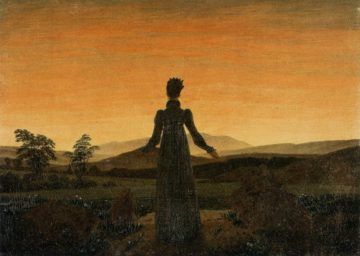 “The Over-Soul” is my favorite essay, but Emerson is better known for “Self Reliance,” that famous paean to individualism. This is the one where Emerson declares that “[w]hoso would be a man must be nonconformist,” and disdains society as “a join-stock company, in which the members agree, for the better securing of his bread to each shareholder, to surrender the liberty and culture of the eater.” Again, the writing is seductive. For anyone adrift in the world, it is reassuring to hear that “[n]othing can bring you peace but yourself,” or that mental will can triumph over fate. It can really be this simple: “In the Will work and acquire, and thou hast chained the wheel of Chance, and shalt sit hereafter out of fear from her rotations.”
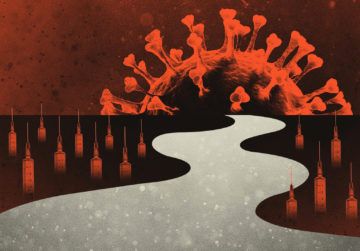 The coronavirus pandemic ignited at the end of 2019 and blazed across 2020. Many countries repeatedly contained it.
  The Complete Works of Alberto Caeiro, translated by Margaret Jull Costa and Patricio Ferrari, presents the work of a complicated man. Caeiro was born in Lisbon in 1889, but he spent most of his life in the countryside. He received almost no formal education, but he was a passionate poet. At 25, he died of tuberculosis. Looking back, we can only be sure of one fact regarding Caeiro: He did not exist.
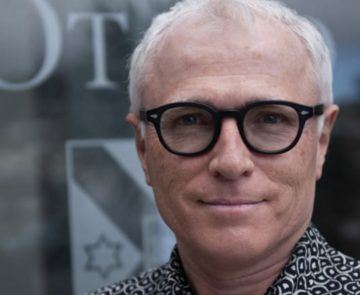 Michael Baker figures he was the first public health expert in the world to talk about eliminating Covid-19, though he’s not sure why.
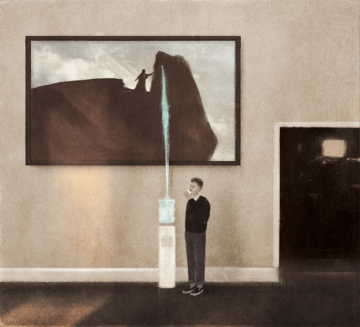 Since Rohr founded the Center for Action and Contemplation in 1987, his aim has been to revive the Christian contemplative tradition. For a growing number of Christendom’s defectors, his teachings have provided a bridge, even a destination. Through conferences, podcasts, dozens of books, a two-year curriculum called the Living School, and his newsletter, Rohr has become a leading voice for a growing population within American Christianity: those who were leaving the church not because they were done with Christianity, but because they were drawn to its more ancient, mystical expressions. In addition to the two thousand attendees from fifty states and fifteen countries, nearly three thousand more people from forty-two countries joined via webcast. I bought one of the last tickets before the conference sold out. To his credit, Rohr is quick to say that whatever popularity he enjoys is not because of himself—“God deliberately made me not so good-looking. I’m short and dumpy, a B student . . . and I don’t think I’m a saint”—but because he speaks on behalf of what he calls the perennial tradition, a lineage rooted in Christianity but that he says is present in all faiths.
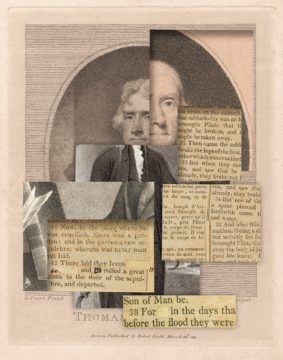 Since 2011, a monument to Martin Luther King, Jr., has sat across the water from the Jefferson Memorial, almost engaging it in a staring contest. The result is a rich spatial symbolism: two ways of seeing Christ duking it out. King saw Jesus in much the way that Douglass did: as a savior, a redeemer, and a liberator sorely degraded by those who claimed his name most loudly. During the Montgomery bus boycott, King reportedly carried a copy of “
 Most of the 74,222,957 Americans who voted to re-elect
  O
O Many people make New Year’s resolutions. The
  In the popular science world, physicist John Wheeler is probably best known for popularizing the term “black hole,” although his research spanned a broad range of fields, including relativity, quantum theory, and nuclear fission. He also worked on Project Matterhorn B in the early 1950s, the controversial US effort to develop a hydrogen bomb. In January 1953, Wheeler accidentally left a highly classified document concerning that program on a train as he traveled from his Princeton, New Jersey home to Washington, DC. It was a stereotypical “
 Our family had been fortunate. Ali was too young for school. Anna’s job allowed her to telework during the pandemic. Unlike many parents, we didn’t have to worry about money or child care. Our little boy adapted well to social isolation. He read, played catch and helped me cook. We explored local parks and ponds, avoiding people and chasing ducks.
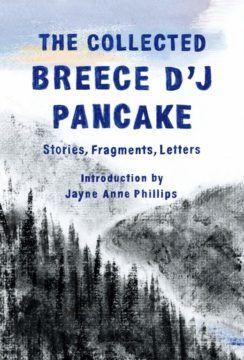 Pancake’s depictions of the culture and geography of Appalachia and the Trans-Allegheny were all but unprecedented. The hills and hollows of West Virginia were largely neglected in American literature, even the intensely regionalist literatures of the South, possibly because West Virginia had fought with the Union during the Civil War, and so had little to contribute to the revisionist horseshit of Lost Cause sentimentality. Pancake seems to know everything about this place, from its hilltops to its coal mines to its barrooms, and he has an eye for the small, sharp details that bring it to life. In “Hollow,” when Buddy wakes up on the floor of his trailer after a night of drinking and brawling, there is “a little ball of rayon batting against his nostril as he breathed.” Bo, in “Fox Hunters,” “stepped onto the pavement feeling tired and moved a few paces until headlights flooded his path, showing up the highway steam and making the road give birth to little ghosts beneath his feet.” At the same time, Pancake is always attentive to the natural world. He finds a kind of holiness in the history-dwarfing scale of geologic time.
 Both The Divine Comedy and Piers Plowman express verities accessed by the mind in repose; Langland’s poem, for not beginning in a dark wood but rather in a sunny field, embodies mystical apprehensions as surely as does Dante. A key difference is that Langland’s allegory is so obvious (as anyone who has seen the medieval play
  What tone can one possibly strike for an overview of 2020? The Queen’s old label of annus horribilis for her own most troubled time hardly seems adequate. Even the right point of view is hard to decide on. Does it make more sense to see the year from high above, taking a picture of an entire panicked planet, or to start from the ant’s- or worm’s-eye view, with the transformation of our manners and minds by the strangeness of 2020 (and by its sadness, too)? Begin with the scale of the misery and dislocation? Narrow down to the specific sensory strangeness of the year?