
Beth Baltzan in American Affairs:
Adam Smith is often considered a libertarian icon. For that, we have Milton Friedman to thank, at least in part. Unlike the more balanced take of his Chicago School predecessors, Friedman portrayed Smith as something of a free market extremist. Friedman’s approach sparked a counterattack by scholars determined to reclaim the nuance in Smith’s ideas, and the effort to correct the record continues to this day.
Still, as we approach the 250th anniversary of the publication of Smith’s The Wealth of Nations, there remains one area in which a misunderstanding of his work persists: international trade. Friedman, perhaps the most influential economist of the second half of the twentieth century, included trade in his caricature of Smith.4 But Friedman’s rendition is flawed at its core because it ignores the real basis for Smith’s antipathy to mercantilism. Smith takes issue not with tariffs per se but with tariffs as a tool of monopoly. To Smith, the interests of the monopolist are at odds with those of the general public. He sides with the public.
The Chicago School approach, in both antitrust and trade, focuses almost exclusively on benefits to the consumer. Smith cared about the effects of monopoly rents on prices, but he saw the public as more than merely a mass of consumers longing for cheap stuff. His political economy is broader than that. It’s about power. When monopolists have too much of it, the public suffers. Smith’s free trade is not freedom from tariffs; it’s freedom from monopolists.
Unfortunately, even today, the Friedman-esque focus on the consumer reigns supreme in trade policy. Yet this myopic emphasis on consumers ended up paving the way for the “the spirit of monopoly” to reenter the trading system, even facilitating the rise of a powerful and aggressive neomercantilist state. This was the opposite of what Smith wanted.
More here.
Enjoying the content on 3QD? Help keep us going by donating now.
 Fyodor Dostoyevsky began to write what would become his last novel, “
 “Magic mushrooms”—long used by Indigenous communities in ceremonial contexts and popularized during the psychedelic heyday of the 1960s—are once again entering the mainstream, in large part for the potential clinical applications of their psychoactive component, psilocybin. Though scientific interest has thus far mainly focused on the use of psilocybin for treating psychiatric conditions like anxiety and depression, a recent study made headlines for findings that hinted at a role for psilocybin in aging-related processes. Specifically, authors Kato et. al. present data from human cells and aging mice that suggest psilocybin could potentially act as a lifespan-extending drug.1
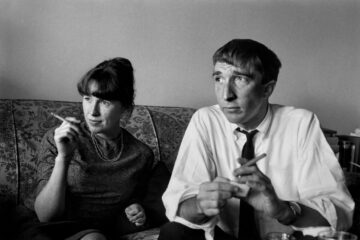 Schiff estimates Updike typed some 25,000 letters and postcards over the course of his life. He neglected to keep carbons and used whatever paper was handy. (“I am pleased to see we share a lack of official stationeries,” he wrote to Alice Munro in 2006, reveling in the reverse snobbery.) He didn’t think much of these missives, or so he said. He told his editor at Knopf, Judith Jones, that “my letters are too dull to be dredged up.”
 In 1939, upon arriving late to his statistics course at the University of California, Berkeley, George Dantzig — a first-year graduate student — copied two problems off the blackboard, thinking they were a homework assignment. He found the homework “harder to do than usual,” he would later recount, and apologized to the professor for taking some extra days to complete it. A few weeks later, his professor told him that he had solved two famous open problems in statistics. Dantzig’s work would provide the basis for his doctoral dissertation and, decades later, inspiration for the film Good Will Hunting.
 Trace evidence analysis is the most versatile of the crime scene disciplines, requiring a specialist to be ready for whatever comes through the door. Officially, a trace analyst handles anything that doesn’t fit into the other standard crime lab departments, which tend to include body fluids (also known as serology), fingerprints, and ballistics. In reality, it can include analyzing an absurd variety of materials. It could be flame accelerant, explosives, cosmetics, carpet fibers, tree bark, hairs, shoe prints, clothing, dirt, glass fragments, tape, glue, and, yes, glitter.
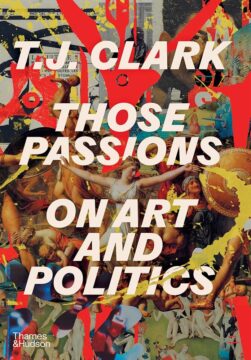 What made Clark’s appearance in the guise of an art critic an event was not just his already existing eminence as an art historian. Nor was it the fact that Clark is one of the rare art historians who has forged a style for his writing, by which I mean that he is always himself, and always recognizably himself, in his prose. Rather, it was that he was contravening the conventional division of labor within art writing: Old art is the subject of history, new art is the subject of criticism. What was thrilling about Clark’s new enterprise was that he was writing about artists such as Bosch and Velázquez not as a historian but as a critic—and yet was doing so with a historian’s erudition and authority rather than with the more approachable fluency with which a belletristic critic such as Jed Perl or Peter Schjeldahl might do so. He was, in a sense, disproving (or at least providing an exception to) Marcel Duchamp’s cynical remark that “after a work has lived almost the life of a man…comes a period when that work of art, if it is still looked at by onlookers, is put in a museum. A new generation decides that it is all right. And those two ways of judging a work of art”—before and after it is consecrated by the museum—“certainly don’t have anything in common.” Clark, by contrast, was treating the art of the past as what it is or should be, something alive and challenging in the present, and not just as what it also is, an artifact.
 L
L Michael Hurley,
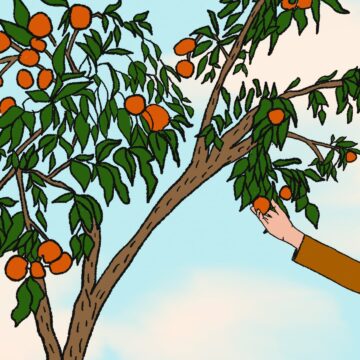 How can we stay happy in an age gone mad? It often feels as though all is unstable at the moment. Uncertainty dominates the economy. Our politics and planet are a mess. Scientific experts and government workers have been cast aside.
  Imagine that you are a cook, and you just made a cake in your kitchen. You’ve made a delicious cake, and you’d like to start a business making 1,000 of them a day. So you replicate your kitchen 1,000 times over—you buy 1,000 residential ovens, 1,000 standard mixing bowls, 1,000 bags of flour. And you hire 1,000 humans to follow your recipe, each making their own cake in the various kitchens you’ve built.