
Jeff Sharlet in Bookforum:
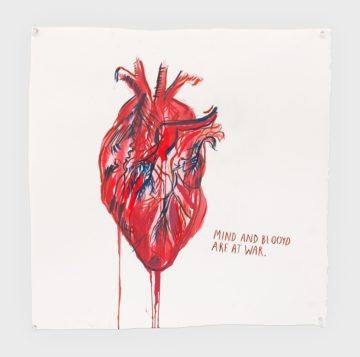 Even if, especially if, Trump leaves—and some portion of us are lulled into mistaking his ascendency for an aberration—we’ll have to choose to look at hate, even as the press swells with self-congratulatory stories of a nation rejecting “division.” Because the hate of which Trump is the coalescence, the coagulation, was not an aberration, it was an inevitability.
I STARTED WRITING THIS ESSAY on the hate under which we all now live the night of Trump’s first debate with Joe Biden. I was trying to think through two new books, Seyward Darby’s Sisters in Hate and Jean Guerrero’s Hatemonger, both smartly reported and urgent. But I stalled. I could read the books, but I didn’t know if I had it in me to write about them. I’d learned, like so many of us, to look away.
I hadn’t given up the hate beat entirely since my heart attack. I’d grown careful.
Last fall, when I started reporting on Trump rallies again, instead of drinking my fear into submission afterward, I’d go for long walks. I read these books while walking the dirt roads where I live now, roads so quiet I could walk and read. But often I’d pause, neither reading nor walking. I considered the question of how to write about hate, what these books—Darby’s, on the internal lives of female leaders of what remains (for now) fringe white nationalism, and Guerrero’s, about Trump senior adviser and speechwriter Stephen Miller, who is mainstreaming those beliefs—might say about the taxonomy of hate, the methodology of its study. As if looking at hate was a matter of professional curiosity.
I had thoughts! But I couldn’t keep what I’d read in my mind, my gut, my—maybe you’ll forgive the cliché—my heart. I’d reached saturation. Or maybe I was finally getting it, the “joke,” which is that you don’t need to go looking for hate. It’s always right there, mundane. I remembered a 2017 New York Times profile of a suburban neo-Nazi, how many accused it of “normalizing” its subject. I hadn’t thought much of it—no need to play neutral with fascism—but I hadn’t agreed when people said it didn’t matter if the Nazi liked Seinfeld and Guillermo del Toro’s Pacific Rim. I thought there was no “normalizing” him, because he was all too normal. It seemed critical to understand the ways in which the antifascist del Toro’s art could be repurposed as hate. If it could happen to del Toro it could happen to anybody. We are, none of us, especially given the whiteness—the anti-Blackness—coded within us all by white supremacy, as far from the Nazi as we want to be. My problem with the Nazi next door wasn’t that we knew too much about him. We didn’t know enough.
More here.
 On a mild Monday this past February, a tense meeting unfolded in a skyscraper in downtown Manhattan. Four Latinx writers and activists sat on one side of a long conference table. Facing them was a collection of white editors and executives from Macmillan, the publishing house that had recently put out
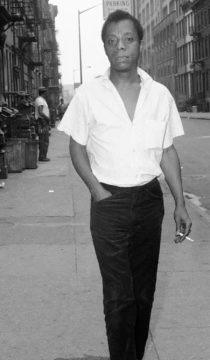 Michael Ondaatje once wrote that if Van Gogh was “our 19th-century artist-saint” then James Baldwin was “our 20th-century one”. For many, Baldwin’s writing has long been a touchstone of anti-racist humanism, but the sense of that particular epithet has never landed more emphatically for me than while reading Eddie S Glaude Jr’s Begin Again, his potent meditation on the enduring legacy of Baldwin’s life and thought, a New York Times bestseller and one of a number of titles that have spoken to the soul of public outrage at
  An old man with a shaggy white beard and matching hair stands in front of an audience of seekers and flower children. They are looking for ways of amplifying their human potential, of becoming more aware of their sense perceptions. It’s the tail end of the 1960s and the Esalen Institute in Big Sur, California, is where it’s happening.
  On Jan. 1, 2021, five long years after the vote for what’s become known as
  Archaeologists believe they have discovered the world’s oldest-known representational artwork: three wild pigs painted deep in a limestone cave on the Indonesian island of Sulawesi at least 45,500 years ago.
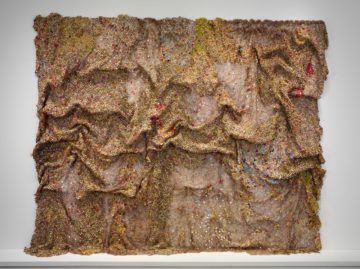 Anatsui, a seventy-six-year-old Ghanaian sculptor based in Nigeria, has transfigured many grand spaces with his cascading metal mosaics. Museums don them like regalia, as though to signal their graduation into an enlightened cosmopolitan modernity; they have graced, among other landmarks, the façades of London’s Royal Academy, Venice’s Museo Fortuny, and Marrakech’s El Badi Palace. The sheets sell for millions, attracting collectors as disparate as moma, the Vatican, and Bloomberg L.P. In the past ten years, public fascination with their medium’s trash-to-treasure novelty has matured into a broader appreciation of Anatsui’s significance. The man who dazzled with a formal trick may also be the exemplary sculptor of our precariously networked world.
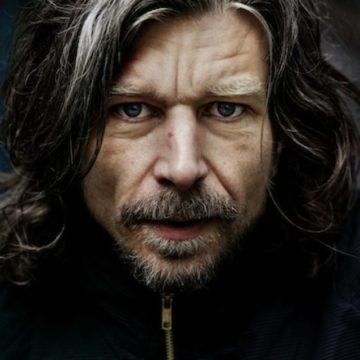 I just published a novel in Norway two months ago. I’m now writing another novel which somehow is related, and I’ve started it, I’ve written a hundred pages or so, so I’m in the middle of the beginning of that, which is the hardest part. But that’s what I’m doing.
 In 1972,
  Over the past year, mobilizations around the world have sprung up against governmental efforts to contain the coronavirus through lockdowns, social distancing guidelines, mask mandates, and vaccines. Led in many cases by angry freelancers and the self-employed, amplified by entrepreneurs of speculative and totalizing prophecies, these movements are less what José Ortega y Gasset called “the revolt of the masses” and more “the revolt of the Mittelstand”—small- and medium-sized businesses. In comparison to the populism that dominated discussion in 2017, they are less tethered to mediagenic leaders and parties, slipperier on the traditional political spectrum, and less fixated on the assumption of state power. The spectacular and deadly storming of the U.S. Capitol on January 6 has understandably eclipsed all other mobilizations for the moment. Yet, by drawing back the lens, we can see where aspects of a narrowly defined Trumpism overlap with a broader global phenomenon—and where they do not.
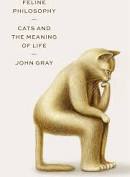 But let’s say it again: to call Gray a misanthrope or a reactionary or a nationalist (or to apply to him any other term from the vocabulary of contemporary political morality) is to miss the point. His books are not attacks on humanity as such. Nor is he tubthumping for a particular politics or even a particular morality (I’ll come in a moment to the question of whether or not a specific politics can or should be extracted from Gray’s work). Instead, his books are in the first instance the record of an honourable attempt to discover what can be said about human beings if we dispense, as thoroughly as we can, with the things that human beings have said about themselves. To step out of Gray’s Total Perspective Vortex and ask, “But what’s left?” is to misunderstand the purpose of the Vortex. What’s left, when Gray is finished, is everything: life, death, nature, the universe. All there is, in other words. The point is the seeing. In the final sentence of Straw Dogs, he asks, “Can we not think of the aim of life as being simply to see?”
 The brief examination of the work of Heinrich von Kleist (1777-1811) conducted here is intended as an essay in criticism in the spirit of Sartre: “Une technique romanesque renvoie toujours à la métaphysique du romancier. La tâche du critique est de dégager celle-ci avant d’apprécier celle-là.” The concept of metaphysics Sartre employs refers, on my reading, to the hardly controversial thought that literary works generally (not only novels) render worlds imaginatively present, and that these worlds exhibit principles of intelligibility. To free up the metaphysics of an artistic world, then, is to solicit the deep criteria (or categories) that organize that world. Such criticism brings the form of an aesthetically achieved world to light and demonstrates how that form is made salient linguistically, rhetorically, narratively, dramatically, and so forth. Call this the non-formalistic criticism of form. Needless to say, the account of Kleist’s work I develop here does not aspire to exhaustiveness. The aim, rather, is to limn the contours of Kleist’s artistic achievement such that acknowledgement of its originality and importance is felt to constitute an intellectual obligation. Acknowledgement, a variant of Hegelian “recognition,” deserves to replace the now faded and, in Sartre’s use, merely technical notion of appreciation.
 Visualize, if you will, a group of bacteria cells. They are kind of silly looking, when you get right down to it: shaped like a sphere or a pill, sometimes covered in tiny hairs or spikes. While technically alive, it is hard to imagine them as being particularly intelligent, much less capable of storing information like artificially intelligent machines such as computers. Curiously, that’s exactly what a group of researchers just did: edited DNA inside individual bacteria cells in order to store digital data.