
Category: Recommended Reading
“Divorcing” Is Literature That Looks Beyond Life
B D McClay in The New Yorker:
 Sophie Blind is dead. Her head was cut clean off her shoulders as she made a dash for a taxi and was hit by a car. She doesn’t seem to mind, though it is a little awkward. “I knew I was dead when I came,” she admits, “but I didn’t want to be the first to say it.” Besides, the event didn’t leave much of a mark: “in less than half an hour,” she informs us, “normal traffic was resumed.” Though death and decapitation seem like straightforward facts, Sophie is the heroine of a novel: “Divorcing,” by Susan Taubes. And in a novel both of these things, it turns out, can be meant in different ways.
“Divorcing” is the only published book by Taubes, who shortly after its release, in 1969, drowned herself “in a ski jacket and slacks,” as the East Hampton Star would report when her body was found. She was forty-one. She left behind letters, some of which have been published; some unpublished writing; some scattered academic articles; and a dissertation still sitting in Harvard’s archives. She is doomed, it would seem, to always appear in the shadow of her longer-lived, more prolific husband, Jacob Taubes, as interesting in her own right, no elaboration. Interesting—but not that interesting. After her death, as she’d say, normal traffic resumed.
Susan Taubes and Sophie Blind share certain biographical traits: psychoanalyst fathers, intellectual husbands, needy mothers, Hungarian childhoods, a conflicted and sometimes even disdainful relationship with their own Jewishness. Nonetheless, “Divorcing,” which was recently reissued by New York Review Books, does not read like a roman à clef. It does engage, as many of those books do, with the collapse of a marriage and a subsequent search for meaning. But while the sort of novels dropped in its blurbs—Renata Adler’s “Speedboat” and Elizabeth Hardwick’s “Sleepless Nights”—occupy a cool, collected “I” that remains untouched, “Divorcing” is a much more unsettled affair. From its opening pages, which unspool in both first and third persons, from a heroine who may or may not have a head, the book does not even attempt stability. Sophie’s death is a case in point; Taubes has no interest in establishing whether it is metaphorical or literal. The book goes on to include dreams, letters, therapy sessions, and a widening study of Sophie’s family history. There are conversational fragments that could be taking place at almost any time within the narrative. And in the final pages, Sophie emerges from a nap and from a sensory deprivation chamber. Was all of the preceding a dream? Does it matter? Sophie Blind is dead. She isn’t here. She isn’t, at all.
More here.
Thursday Poem
Rosa Parks
This is for the Pullman Porters who organized when people said
they couldn’t. And carried the Pittsburgh Courier and the Chicago
Defender to the Black Americans in the South so they would
know they were not alone. This is for the Pullman Porters who
helped Thurgood Marshall go south and come back north to fight
the fight that resulted in Brown v. Board of Education because
even though Kansas is west and even though Topeka is the birth-
place of Gwendolyn Brooks, who wrote the powerful “The
Chicago Defender Sends a Man to Little Rock,” it was the
Pullman Porters who whispered to the traveling men both
the Blues Men and the “Race” Men so that they both would
know what was going on. This is for the Pullman Porters who
smiled as if they were happy and laughed like they were tickled
when some folks were around and who silently rejoiced in 1954
when the Supreme Court announced its 9—0 decision that “sepa-
rate is inherently unequal.” This is for the Pullman Porters who
smiled and welcomed a fourteen-year-old boy onto their train in
1955. They noticed his slight limp that he tried to disguise with a
doo-wop walk; they noticed his stutter and probably understood
why his mother wanted him out of Chicago during the summer
when school was out. Fourteen-year-old Black boys with limps
and stutters are apt to try to prove themselves in dangerous ways
when mothers aren’t around to look after them. So this is for the
Pullman Porters who looked over that fourteen-year-old while
the train rolled the reverse of the Blues Highway from Chicago to
St. Louis to Memphis to Mississippi. This is for the men who kept
him safe; and if Emmett Till had been able to stay on a train all
summer he would have maybe grown a bit of a paunch, certainly
lost his hair, probably have worn bifocals and bounced his grand-
children on his knee telling them about his summer riding the
rails. But he had to get off the train. And ended up in Money,
Mississippi. And was horribly, brutally, inexcusably, and unac-
Read more »
“White Fragility” Gets Jackie Robinson’s Story Wrong
Peter Dreier in Boston Review:
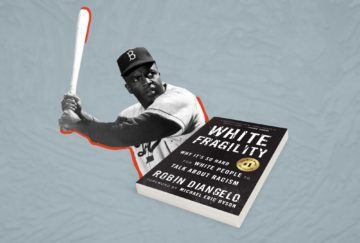 Robin DiAngelo’s book, White Fragility, has been on the New York Times best-seller list for over two years, much of that time ranked number one. The book is assigned frequently in college courses, and DiAngelo is in great demand as a “diversity” consultant to help corporations, universities, government agencies, and other institutions purge themselves of their white privilege. DiAngelo’s core message is that white Americans need to acknowledge their unconscious racial biases which make them, unwittingly in most cases, complicit in what she deems the U.S. racial caste system.
In her book DiAngelo uses Jackie Robinson as an example of her point. Most are familiar with Robinson’s story: in 1947, at the age of twenty-eight, he became the first Black ballplayer to play in the modern major leagues. DiAngelo claims that “the story of Jackie Robinson is a classic example of how whiteness obscures racism by rendering whites, white privilege, and racist institutions invisible.” She continues:
While Robinson was certainly an amazing baseball player, [the] story line depicts him as racially special, a Black man who broke the color line himself. The subtext is that Robinson finally had what it took to play with whites, as if no black athlete before him was strong enough to compete at that level. Imagine if instead, the story went something like this: ‘Jackie Robinson, the first black man whites allowed to play major league baseball.’ This version makes a critical distinction because no matter how fantastic a player Robinson was, he simply could not play in the major leagues if whites—who controlled the institution—did not allow it.
Apparently DiAngelo is not a baseball fan, because, in an error that aligns perfectly with her ideology, she gets this episode of U.S. history all wrong.
More here. (Throughout February, at least one post will be dedicated to honoring Black History Month. The theme this year is: The Family)
Wednesday, February 10, 2021
An Appeal for Friction Writing
Richard Hughes Gibson in The Hedgehog Review:
 A graduate student recently posed this question to me: What is the most common mistake that scholars make when they try to write about contemporary issues? Questions like this usually make me nervous, since the offices of cultural commentator and public intellectual remain very mysterious to me. But in this case, I had a ready answer because we all make the same mistake when writing about contemporary issues: Our writing process lacks sufficient resistance, hesitation, reconsideration—in short, friction.
In calling this “friction,” I deliberately invoke—and challenge—one of the metaphors that has captivated (and inevitably spread beyond) the tech industry during the last decade: “frictionless” design. Ten years ago, Mark Zuckerberg made this metaphor an industry standard when he boasted that improvements at Facebook were ushering in a “frictionless experience” for users. Since then, all of the big tech companies (and companies in other industries) have made friction-reduction a high priority, whether friction is an extra click, an additional action, or another decision that slows a user down.
More here.
The cloak-and-dagger tale behind this year’s most anticipated result in particle physics
Adrian Cho in Science:
 As early as March, the Muon g-2 experiment at Fermi National Accelerator Laboratory (Fermilab) will report a new measurement of the magnetism of the muon, a heavier, short-lived cousin of the electron. The effort entails measuring a single frequency with exquisite precision. In tantalizing results dating back to 2001, g-2 found that the muon is slightly more magnetic than theory predicts. If confirmed, the excess would signal, for the first time in decades, the existence of novel massive particles that an atom smasher might be able to produce, says Aida El-Khadra, a theorist at the University of Illinois, Urbana-Champaign. “This would be a very clear sign of new physics, so it would be a huge deal.”
The measures that g-2 experimenters are taking to ensure they don’t fool themselves into claiming a false discovery are the stuff of spy novels, involving locked cabinets, sealed envelopes, and a second, secret frequency known to just two people, both outside the g-2 team. “My wife won’t pick me for responsible jobs like this, so I don’t know why an important experiment did,” says Joseph Lykken, Fermilab’s chief research officer, one of the keepers of the secret.
More here.
Prioritising the present doesn’t mean you lack willpower
Adam Bulley in Psyche:
 Countless academic articles and self-help books sing to the same tune – characterising immediate gratification as a short-sighted hitch while praising the virtues of long-term thinking as a means for overcoming temptation. Many people have heard of the marshmallow tests, where those children most willing to delay gratification for a second marshmallow did better in various domains in life, such as careers and health, when followed up even decades later. To the farsighted go the spoils, or so we’re frequently told.
Yet, for all its intuitive appeal, this story rests on what I think is a false dichotomy between foresight and impulsivity.
More here.
Alice Coltrane – Journey In Satchidananda
https://www.youtube.com/watch?v=-_CyntV0eqg&ab_channel=RomanticComputer
The Feminine Physique
Petra Browne at The Believer:
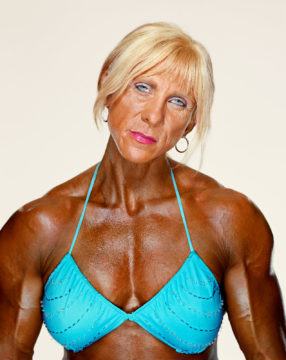 Years ago, when my body simply was what it was, soft and long, before I had even contemplated changing it into anything else, I came across Martin Schoeller’s Female Bodybuilders on a bookstore display table. In it were studio-lit portraits of women whose faces had been reduced to bone and socket and vein, whose skin had been stained with spray tan and eyes outlined in shadow. Enormous muscles rose up to enclose their necks. They looked prehistoric, fossilized and eternal. I thought they had destroyed their chances at love. My mistake was to assume they were living under the star of sexual capital, as I was. After all, they wore the rhinestones and velvet of showgirls. What I didn’t yet understand was that bodybuilders are ruled by a different star, the same star that would later rule me, if only temporarily. It was dim and solitary, with enormous gravity. I still don’t have a name for it.
more here.
On Juan José Saer’s Backwater Modernism
Will Noah at The Baffler:
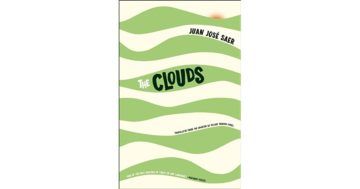 IN 1527, THE VENETIAN EXPLORER Sebastian Cabot established the Sancti Spíritus fort at the mouth of the Carcarañá River, founding Spain’s first settlement in the territory that would become known as Argentina. In charge of an expedition bound for the Maluku islands in the Pacific, Cabot diverted course on hearing that the Paraná river led to mountains rich with silver and gold. Some historical accounts suggest that these rumors came from a sailor named Francisco del Puerto, who was part of Spanish navigator Juan Díaz de Solís’s previous expedition, brought to an end when the landing party were killed by Indigenous people within sight of the ships. The story goes that del Puerto was the only man spared, and that he lived for ten years among the natives. Cabot lived to return to Spain, but his ships carried back no precious metals, and his fort wasn’t fated to become the site of a major city—unlike Buenos Aires, first settled by the Spanish in 1536.
In his book-length reflection on the Río de la Plata and its tributaries, El río sin orillas (The Boundless River), Juan José Saer claims that, “almost without exaggeration,” Sancti Spiritus was founded across the street from his childhood home.
more here.
Kip Thorne and others on Communicating Science to Nonscientists in Post-Election & Post-Pandemic America
Neuroscience shows how interconnected we are – even in a time of isolation
Lisa Feldman Barrett in The Guardian:
 Last week, my whole outlook on the world was transformed by a sheet of blank paper. Not just any paper, but beautifully embossed stationery, silky to the touch and decadent to write on. It was a gift from a dear friend and colleague. We collaborate over Zoom every week, so I could have thanked him on video, but instead I wrote a short note of gratitude and love, and posted it to him. His delight on receipt a few days later mirrored my own, and we shared a moment of emotional connection.
Before that moment, I was immersed in yet another “Blursday” full of Covid-saturated, this-will-never-end moroseness, staring alone at a screen that makes my skin look pallid. Afterwards, to my surprise, I was alight in a sprawling web of human connections. But I shouldn’t have been surprised: I am a neuroscientist who studies how the brain creates your mood. In fact, if you understand a bit about your brain’s inner workings, it may help you to cultivate comfort from those around you, whether physically or in spirit, in difficult times.
Research shows that in every moment of your life, your brain regulates the insides of your body, including your organs, hormones and immune system, to keep you alive. The process is like running a household budget, but instead of money, your brain budgets water, salt, glucose and other bodily resources as you gain and lose them. Actions that spend resources, such as exercise or stressful conversations, are like withdrawals from your account. Actions that replenish resources, such as eating, sleeping, and cuddling a beloved pet are like deposits.
More here.
A Forgotten Founder
Danielle Allen in The Atlantic:
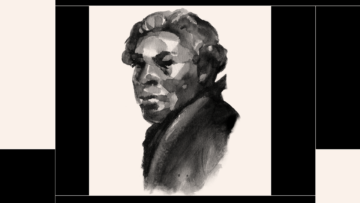 Massachusetts abolished enslavement before the Treaty of Paris brought an end to the American Revolution, in 1783. The state constitution, adopted in 1780 and drafted by John Adams, follows the Declaration of Independence in proclaiming that all “men are born free and equal.” In this statement Adams followed not only the Declaration but also a 1764 pamphlet by the Boston lawyer James Otis, who theorized about and popularized the familiar idea of “no taxation without representation” and also unequivocally asserted human equality. “The Colonists,” he wrote, “are by the law of nature free born, as indeed all men are, white or black.” In 1783, on the basis of the “free and equal” clause in the 1780 Massachusetts Constitution, the state’s chief justice, William Cushing, ruled enslavement unconstitutional in a case that one Quock Walker had brought against his enslaver, Nathaniel Jennison.
Many of us who live in Massachusetts know the basic outlines of this story and the early role the state played in standing against enslavement. But told in this traditional way, the story leaves out another transformative figure: Prince Hall, a free African American and a contemporary of John Adams. From his formal acquisition of freedom, in 1770, until his death, in 1807, Hall helped forge an activist Black community in Boston while elevating the cause of abolition to new prominence. Hall was the first American to publicly use the language of the Declaration of Independence for a political purpose other than justifying war against Britain. In January 1777, just six months after the promulgation of the Declaration and nearly three years before Adams drafted the state constitution, Hall submitted a petition to the Massachusetts legislature (or General Court, as it is styled) requesting emancipation, invoking the resonant phrases and founding truths of the Declaration itself.
Here is what he wrote (I’ve put the echoes of the Declaration of Independence in italics):
The petition of A Great Number of Blackes detained in a State of Slavery in the Bowels of a free & christian Country Humbly shuwith that your Petitioners Apprehend that Thay have in Common with all other men a Natural and Unaliable Right to that freedom which the Grat — Parent of the Unavese hath Bestowed equalley on all menkind and which they have Never forfuted by Any Compact or Agreement whatever — but thay wher Unjustly Dragged by the hand of cruel Power from their Derest frinds and sum of them Even torn from the Embraces of their tender Parents — from A popolous Plasant And plentiful cuntry And in Violation of Laws of Nature and off Nations And in defiance of all the tender feelings of humanity Brough hear Either to Be sold Like Beast of Burthen & Like them Condemnd to Slavery for Life.
In this passage, Hall invokes the core concepts of social-contract theory, which grounded the American Revolution, to argue for an extension of the claim to equal rights to those who were enslaved. He acknowledged and adopted the intellectual framework of the new political arrangements, but also pointedly called out the original sin of enslavement itself.
More here. (Throughout February, at least one post will be dedicated to honoring Black History Month. The theme this year is: The Family)
Wednesday Poem
Breaking & Entering
Only beasts are supposed to hibernate.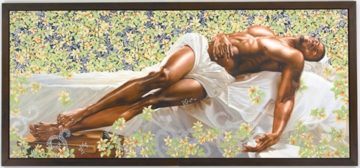
But this brother has been lying there
for years. Truth isn’t a news headline.
Between the lines lay his body, between
brush strokes
his soul ascends doing those things
portraits rarely capture:
giving life, giving face, serving.
A Black man’s body
on display hangs in a museum.
He appears wrapped in a bed sheet
covering his private parts as if
he was a sexless Christ,
as if his private parts made him prey,
or as if both prey and Jesus were one in the same.
But perhaps it’s just respectful to cover
a dead man or at least to cover where he may have been
broken into. Praise to the angel who gave
him wings of canvas and gesso paint—
a better burial than the other brothers got,
those over there, just left on the street.
by Darrel Alejandro Holnes
from Split This Rock
Tuesday, February 9, 2021
History and Memory in the Age of the Search Engine
Justin E. H. Smith in his Substack Newsletter:
 What is memory? I carried with me for more than forty years the distorted and etiolated memory-trace of what I believed was an anti-nuclear protest concert, held around 1979, somewhere in America, featuring James Taylor, Jackson Browne, Peter Frampton, and other stars of that long-forgotten era. Throughout all these decades I was convinced that the concert had been called “Nukes Knocks [sic] Your Socks Off”, or perhaps, alternatively, “Nukes Knocks Yer Sox Off”.
Adjacent to this memory was another one, of my father’s hippie friend’s son, who would later end up in Louisiana’s Angola Prison, I was told, for some crime or other involving heroin. The adolescent, six years or so my elder, entered the living-room where I was patiently waiting as our respective dads fiddled with a vintage printing press in the basement. He pulled a record out of its sleeve, blew on it, and said casually, “You like Sabbath?” I was eight years old. “Yeah,” I said. And his shirt, I recall as clear as day, bore a message: “Nukes Knocks Your Socks Off”.
I have Googled that phrase every six months or so since around 2005, and until recently I continued to turn up nothing. I did turn up records of a concert held in 1979 under the title “No Nukes” —featuring Taylor and Browne, though not Frampton—, as well as of an eponymous concert film from the following year. But that’s not what I was looking for. I was looking, much more precisely, for “Nukes Knocks Your Socks Off”. This phrase had become one of the most vexing items on the list of what I had come to think of, with a hat-tip to Barbara Cassin, as the “Ungoogleables”.
More here.
Sean Carroll’s Mindscape Podcast: Ziya Tong on Realities We Don’t See
Sean Carroll in Preposterous Universe:
 It’s a truism that what we see about the world is a small fraction of all that exists. At the simplest level of physics and biology, our senses are drastically limited; we only see a narrow spectrum of electromagnetic waves, and we only hear a narrow band of sound. We don’t feel neutrinos or dark matter at all, even as they pass through our bodies, and we can’t perceive microscopic objects. While science can help us overcome some of these limitations, they do shape how we think about the world. Ziya Tong takes this idea and expands it to include the parts of our social and moral worlds that are effectively invisible to us — from where our food comes from to how we decide how wealth is allocated in society.
More here.
A Tour of American Accents
Multilateral Cooperation for Global Recovery
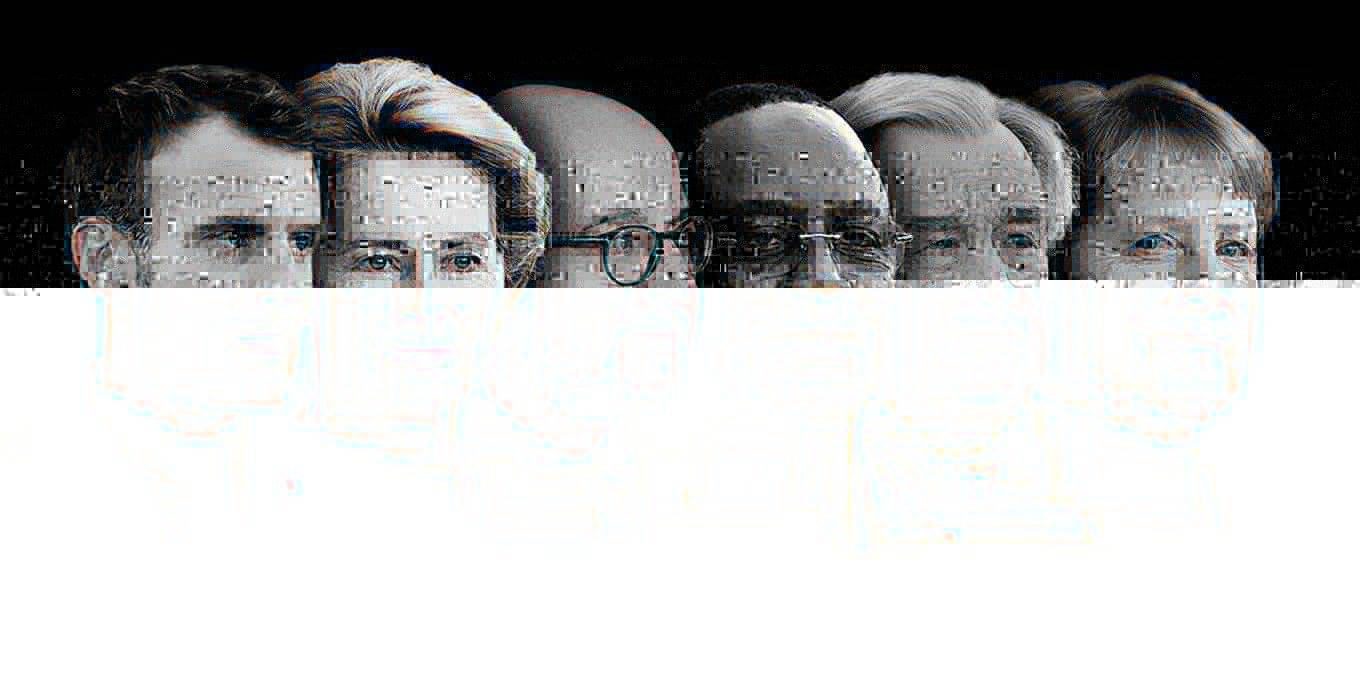
Emmanuel Macron, Angela Merkel, Macky Sall, António Guterres, Charles Michel, and Ursula Von Der Leyen in Project Syndicate:
 Our world has experienced diverging trends, leading to increased prosperity globally, while inequalities remain or increase. Democracies have expanded at the same time that nationalism and protectionism have seen a resurgence. Over the past decades, two major crises have disrupted our societies and weakened our common policy frameworks, casting doubt on our capacity to overcome shocks, address their root causes, and secure a better future for generations to come. They have also reminded us of how interdependent we are.
The most serious crises call for the most ambitious decisions to shape the future. We believe that this one can be an opportunity to rebuild consensus for an international order based on multilateralism and the rule of law through efficient cooperation, solidarity, and coordination. In this spirit, we are determined to work together, with and within the United Nations, regional organizations, international fora such as the G7 and G20, and ad hoc coalitions to tackle the global challenges we face now and in the future.
Health is the first emergency.
More here.
David Hockney’s Secret Knowledge
These Precious Days
Ann Patchett at Harper’s Magazine:
 I can tell you where it all started because I remember the moment exactly. It was late and I’d just finished the novel I’d been reading. A few more pages would send me off to sleep, so I went in search of a short story. They aren’t hard to come by around here; my office is made up of piles of books, mostly advance-reader copies that have been sent to me in hopes I’ll write a quote for the jacket. They arrive daily in padded mailers—novels, memoirs, essays, histories—things I never requested and in most cases will never get to. On this summer night in 2017, I picked up a collection called Uncommon Type, by Tom Hanks. It had been languishing in a pile by the dresser for a while, and I’d left it there because of an unarticulated belief that actors should stick to acting. Now for no particular reason I changed my mind. Why shouldn’t Tom Hanks write short stories? Why shouldn’t I read one? Off we went to bed, the book and I, and in doing so put the chain of events into motion. The story has started without my realizing it. The first door opened and I walked through.
But any story that starts will also end. This is the way novelists think: beginning, middle, and end.
In case you haven’t read it, Uncommon Type is a very good book. It would have to be for this story to continue. Had it been a bad book or just a good-enough book, I would have put it down, but page after page it surprised me.
more here.