
Category: Recommended Reading
Woke Me When It’s Over
Bret Stephens in the New York Times:
 In 2015, Bon Appétit ran an article by the food writer Dawn Perry about hamantaschen, the triangular cookies that are a tradition during the Jewish festival of Purim. It was headlined — brace yourself for outrage — “How to Make Actually Good Hamantaschen.”
Six years later, a woman named Abigail Koffler found the article while researching hamantaschen fillings. She was not amused.
Perry, Koffler wrote on Twitter, isn’t Jewish. Perry’s husband, Koffler added, had been forced out of his job at Condé Nast last year based on accusations of racial bias. Above all, Koffler objected, “Traditional foods do not automatically need to be updated, especially by someone who does not come from that tradition.”
More here.
Martin Heidegger Interview With A Monk
https://www.youtube.com/watch?v=XcsBtl1SwuY&ab_channel=PhilosophyOverdose
Josh Cohen On Literature And Psychoanalysis
Leo Robson at The New Statesman:
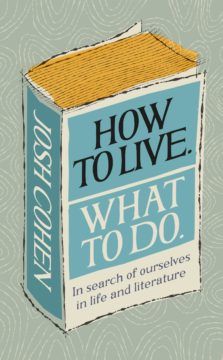 Much of Cohen’s work is driven by his aversion to a type of spatial metaphor that minimises the value and variety of familiar experience. His first book, Spectacular Allegories (1998), a study of modern American fiction and journalism that emerged from his PhD, questions the postmodern idea that spectacle somehow floats “outside” history and “above” material reality. It was written before Cohen was a practitioner, or even employed Freudian theory. He told me that his “obsessional preoccupation – and I’m pointedly using the singular – has been what is concealed in what is right in front of us, in what is present”. He isn’t only talking about unconscious blind-spots. The book’s title is “filched”, as he puts it, from the American poet Wallace Stevens, and Cohen expressed a particular fondness for Stevens’s idea of a “strange presence that irradiates through the world that his poems are always gesturing towards and trying to get us to see”.
more here.
Why Keats’s haunting reflections on tuberculosis resonate in the age of Covid-19
Michael Barrett in New Stateman:
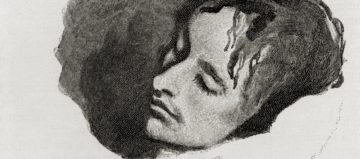 We knew that the persistent cough spelled his end. The fever had preceded it, just as it had in his mother, brother and dozens around him. The contagion that was devastating society had him in its throes. When he finally died, a postmortem showed his lungs had been decimated. He’d suffocated, drowning in his own inflammatory fluids. The young English poet John Keats died aged just 25 in Rome on 23 February 1821, having been diagnosed with tuberculosis, or consumption as it was then known, just over a year before. In 1819, inspired by his medical training and acute observation of his disease, Keats captured the essence of its impact on society.
“Ode to a Nightingale” (1819), written as his symptoms took hold, speaks of “the weariness, the fever and the fret” associated with his condition where “youth grows pale, and spectre-thin, and dies; where but to think is to be full of sorrow and leaden-eyed despairs”, and where the “the dull brain perplexes and retards”. He envies the nightingale, free from disease and able to fly through the woodland skies, while Keats wishes to alleviate his suffering through death: “for many a time I have been half in love with easeful Death, Call’d him soft names in many a mused rhyme, To take into the air my quiet breath; Now more than ever seems it rich to die, To cease upon the midnight with no pain, While thou art pouring forth thy soul abroad In such an ecstasy!”
More here.
Tuesday Poem
Nike
The young woman who settles beside me on the bench along the running track
wears a shirt labeled Nike over one sweat-stained breast.
She is probably oblivious to the goddess who personified victory.
It is very unlikely that she is also a daughter of the Titan Pallas and the goddess Styx.
But as her essence evaporates into my nostrils, I wonder –
Are those goddess pheromones
that are making me accidentally-on-purpose
move my arm closer until it touches her arm
and causing her to follicle fan me
when she pulls back her long hair
and rearranges it with a circle
of metal leaves that might be laurel?
When she stands, the Sun helmets her blonde head
I want to follow her
as she continues to fly around the field
rewarding the victors with glory and fame,
but my mortal rules won’t allow that.
by Lily Hayashi
from Poets Online
How a mass suicide by slaves caused the legend of the flying African to take off
From The Conversation:
 In May 1803 a group of enslaved Africans from present-day Nigeria, of Ebo or Igbo descent, leaped from a single-masted ship into Dunbar Creek off St. Simons Island in Georgia. A slave agent concluded that the Africans drowned and died in an apparent mass suicide. But oral traditions would go on to claim that the Eboes either flew or walked over water back to Africa.
For generations, island residents, known as the Gullah-Geechee people, passed down the tale. When folklorists arrived in the 1930s, Igbo Landing and the story of the flying African assumed a mythological place in African American culture. Though the site carries no bronze plaque and remains unmarked on tourist maps, it has become a symbol of the traumatizing legacy of trans-Atlantic slavery. Poets, artists, filmmakers, jazz musicians, griots, novelists such as Toni Morrison and pop stars like Beyoncé have all told versions of the tale. They’ll often switch up the story’s details to reflect different times and places. Yet the heart of the original tale, one of longing for freedom, beats through each of these retellings. The stories continue to resonate because those yearnings – whether they’re from the cargo hold of a sloop or the confines of a prison cell – remain just as intense today.
As an academic trained in literary history, I always look for the reasons behind a story’s origins, and how stories travel or change over time. Variations of the flying African myth have been recorded from Arkansas to Canada, Cuba and Brazil. Yet even as the many versions cut across the Black diaspora, the legend has coalesced around a single place: St. Simons. An entry in the Georgia Encyclopedia makes a direct correlation between the 1803 rebellion mass suicide and the later, literary folkloric tradition.
Why? One reason is geographic.
More here. (Throughout February, at least one post will be dedicated to honoring Black History Month. The theme this year is: The Family)
Sunday, February 21, 2021
What we can learn from Elizabeth Barrett Browning’s years in lockdown
Fiona Sampson in The Guardian:
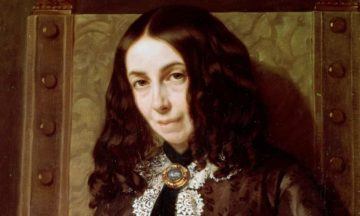 The expression of frustration could have been sent from any tier in travel-restricted Britain: “Where do you go in July? For me, I cant answer. I am longing to go to London, & hoping to the last. That is all. For the present, … certainly the window has been opened twice – an inch – but my physician shakes his head or changes the conversation (which is worse) whenever London is mentioned. But if it becomes possible, I shall go – will go! Putting it off to another summer is like a never.”
In fact, it was mailed from Torquay in June 1840, by someone who had already spent two years in virtual lockdown there. Its recipient was Richard Hengist Horne, a literary man about town. Horne has since fallen into obscurity, but the letter writer would go on to become world famous as Elizabeth Barrett Browning, author of many pioneering works, including one of the best-known poems ever written, “How do I love thee? Let me count the ways”.
For now, though, she was an emerging talent struggling to keep any sense of herself as a writer alive. The success of her The Seraphim and Other Poems two years earlier had been eclipsed by the onset of severe illness that prompted her medical evacuation from the polluted capital. As a result she was feeling isolated, and left behind.
More here.
A public health expert discusses centuries of fighting infectious disease, with a focus on early Boston
Dan Falk in Undark:
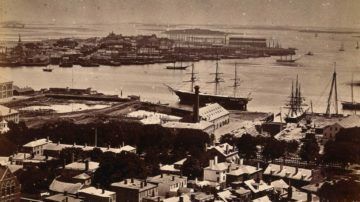 Boston is one of America’s oldest cities — and one that has arguably fought the lengthiest battles with infectious disease. It is, as Charles Vidich puts it, the “most quarantine tested city in America.”
For more than three and a half centuries, the city’s leaders have struggled to develop strategies for keeping citizens safe from communicable disease. Boston’s situation was unique, Vidich explains, because of its role as a major center of trade and commerce; because many of its quarantine strategies were copied by other cities; and because, thanks to the Massachusetts Bay Colony’s charter, it had a significant degree of independence in terms of setting policy.
Investigating this history has been a lifelong project for Vidich, a consultant on public health and bioterrorism issues. He’s also been a visiting scientist at the Harvard School of Public Health, where he spent a decade working on quarantine policy.
More here.
Congress Escalates Pressure on Tech Giants to Censor More, Threatening the First Amendment
Glenn Greenwald in his Substack Newsletter:
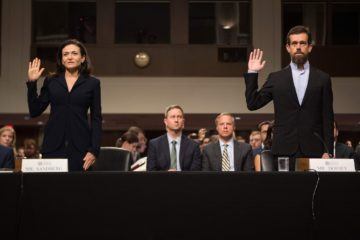 For the third time in less than five months, the U.S. Congress has summoned the CEOs of social media companies to appear before them, with the explicit intent to pressure and coerce them to censor more content from their platforms. On March 25, the House Energy and Commerce Committee will interrogate Twitter’s Jack Dorsey, Facebooks’s Mark Zuckerberg and Google’s Sundar Pichai at a hearing which the Committee announced will focus “on misinformation and disinformation plaguing online platforms.”
The Committee’s Chair, Rep. Frank Pallone, Jr. (D-NJ), and the two Chairs of the Subcommittees holding the hearings, Mike Doyle (D-PA) and Jan Schakowsky (D-IL), said in a joint statement that the impetus was “falsehoods about the COVID-19 vaccine” and “debunked claims of election fraud.” They argued that “these online platforms have allowed misinformation to spread, intensifying national crises with real-life, grim consequences for public health and safety,” adding: “This hearing will continue the Committee’s work of holding online platforms accountable for the growing rise of misinformation and disinformation.”
House Democrats have made no secret of their ultimate goal with this hearing: to exert control over the content on these online platforms.
More here.
India’s Farm Laws Are a Global Problem
Kaushik Basu in Project Syndicate:
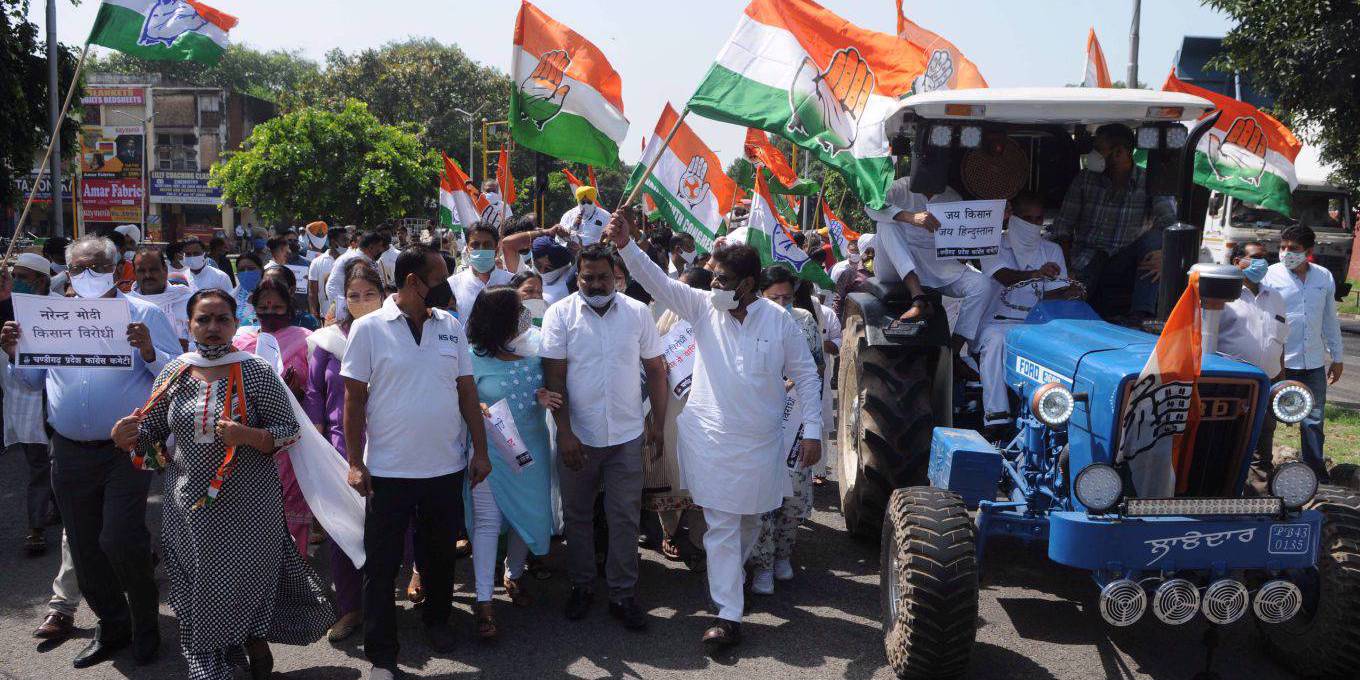
I had long felt that India’s existing farm laws needed changing, and that the country’s food grain market needed to be more open. The new laws, among other things, permit farmers to sell grain outside designated state-regulated areas called mandis in states where they previously were not allowed to do so. The government appears to be giving farmers more choice. Why should anyone object to that?
Then I read the fine print of the legislation. With their uncanny grassroots intuition, the farmers had realized something that many economists, including me, had missed.
If the government permitted farmers to sell their products outside the mandi, the farmers would surely benefit, even if the market outside the mandi was unregulated. With all else remaining constant, they would simply be gaining an additional option. But belief in the ceteris paribus condition – that all other conditions will remain unchanged – requires farmers to trust the government. They clearly don’t – and, on closer examination, with good reason.
More here.
Milford Graves (1941 – 2021)
U-Roy (1942 – 2021)
https://www.youtube.com/watch?v=LRb7mprbj54&ab_channel=nicolasBonnet
Prince Markie Dee (1968 – 2021)
Sunday Poem
Stag Boy
He enters the carriage with a roar –
he clatters in wildly and fills up the carriages with heat,
running through the train, staining the floor
with hooves dirty from the street;
tearing at the ceilings with his new-branched horns,
banging his rough sides against the seats and
the women, who try to look away: Gallant!
He sings hard from his throat,
his young belling tearing at his chest,
pushing at his boy-throat.
Stag-boy –
the train’s noise hums in his ears,
sharp and high like crickets pulsing
in the tall grass,
and he wounds it with his horns,
maddened like a stung bull,
pushing up his head,
pushing up his mouth for his mother’s teat:
Where is her beestings?
Where is the flowered mug she used to warm his milk in?
No good, no good now.
He’s smashing out of the train door,
he’s banging his hooves in the industrial air,
he’s galloping through the city squares,
and drinking from a vandalised spring –
And still his mother walks through the house, crying:
Stag-boy, oh stag-boy come home!
by Tara Bergin
from The Poetry Archive
Reading Here
Friends – how important are your pals?
Rachel Cooke in The Guardian:
 You may not have heard of Robin Dunbar. But you will, perhaps, know of his work. Dunbar, now emeritus professor of evolutionary psychology at Oxford University, is the man who first suggested that there may be a cognitive limit to the number of people with whom you can comfortably maintain stable social relationships – or, as Stephen Fry put it on the TV show QI, the number of people “you would not hesitate to go and sit with if you happened to see them at 3am in the departure lounge at Hong Kong airport”. Human beings, Dunbar found when he conducted his research in the 1990s, typically have 150 friends in general (people who know us on sight, and with whom we have a history), of whom just five can usually be described as intimate.
In his new book, Dunbar revisits and unpicks this number, by which he stands; and he brings together several decades of other research in the area of friendship, some of it his own, some that of anthropologists, geneticists and neuroscientists with whom he has worked. It can’t be definitive: the possibilities in this field are surely limitless. But for the reader, it sometimes feels like it is. Why do most women have a best friend? Why do many men struggle to share confidences? Why is it so painful when we fall out with our friends? Above all, what effect do friends (or a lack of them) have on our mental and physical health? Think of any question you might have and you’ll find some kind of an answer to it here. What you may feel in your gut, it will back with science. Its central message, however, may be summed up in a sentence. In essence, the number and quality of our friendships may have a bigger influence on our happiness, health and mortality risk than anything else in life save for giving up smoking.
More here.
Knowing the Past Opens the Door to the Future: The Continuing Importance of Black History Month
From NMAAHC:
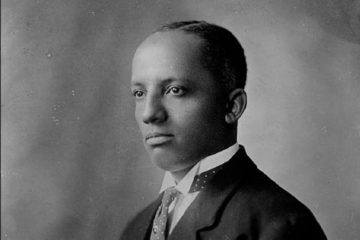 No one has played a greater role in helping all Americans know the black past than Carter G. Woodson, the individual who created Negro History Week in Washington, D.C., in February 1926. Woodson was the second black American to receive a PhD in history from Harvard—following W.E.B. Du Bois by a few years. To Woodson, the black experience was too important simply to be left to a small group of academics. Woodson believed that his role was to use black history and culture as a weapon in the struggle for racial uplift. By 1916, Woodson had moved to DC and established the “Association for the Study of Negro Life and Culture,” an organization whose goal was to make black history accessible to a wider audience. Woodson was a strange and driven man whose only passion was history, and he expected everyone to share his passion.
This impatience led Woodson to create Negro History Week in 1926, to ensure that school children be exposed to black history. Woodson chose the second week of February in order to celebrate the birthday of Lincoln and Frederick Douglass. It is important to realize that Negro History Week was not born in a vacuum. The 1920s saw the rise in interest in African American culture that was represented by the Harlem Renaissance where writers like Langston Hughes, Georgia Douglass Johnson, Claude McKay—wrote about the joys and sorrows of blackness, and musicians like Louie Armstrong, Duke Ellington, and Jimmy Lunceford captured the new rhythms of the cities created in part by the thousands of southern blacks who migrated to urban centers like Chicago. And artists like Aaron Douglass, Richard Barthe, and Lois Jones created images that celebrated blackness and provided more positive images of the African American experience.
Woodson hoped to build upon this creativity and further stimulate interest through Negro History Week. Woodson had two goals. One was to use history to prove to white America that blacks had played important roles in the creation of America and thereby deserve to be treated equally as citizens. In essence, Woodson—by celebrating heroic black figures—be they inventors, entertainers, or soldiers—hoped to prove our worth, and by proving our worth—he believed that equality would soon follow. His other goal was to increase the visibility of black life and history, at a time when few newspapers, books, and universities took notice of the black community, except to dwell upon the negative. Ultimately Woodson believed Negro History Week—which became Black History Month in 1976—would be a vehicle for racial transformation forever.
More here. (Throughout February, at least one post will be dedicated to honoring Black History Month. The theme this year is: The Family)
Saturday, February 20, 2021
Labor’s Capital: Why and How to Put Public Capital at the Service of Labor
 Robert Hockett over at the New Labor Forum:
Here in the United States, we have an economic system in which public capital—the publicly issued national money supply—is almost entirely consigned to private management in the interest of private sector capital investors, more or less irrespective of its effects on working people. It is generated and allocated with little, if any, public control and flows in ways that harm working people—both by widening wealth inequalities and by stimulating asset price bubbles that inevitably burst, leaving millions of working people indebted and out of work.
Although this system has been entrenched for over a century and a half, it is possible to repair it and end the harms it does to workers by managing public capital—what I’ll call “Labor’s Capital”—publicly and private capital privately. Existing law provides us with most of the structure required to do this. All that is needed is a re-appreciation of the original purposes of our institutions and an associated re-appropriation of those institutions’ original mandates.
Without acknowledging it, we have already begun this process in the form of financial support programs established by the Federal Reserve System (the Fed) in response to the present pandemic. These programs have grown the Fed balance sheet to $9 trillion in only six months. In what follows, I show how we can accelerate economic reform to benefit working people. But first, it is necessary to review some fundamental economic principles as well as the history that has brought us to the current juncture.
More here.
Brand India
 Ravinder Kaur in Aeon:
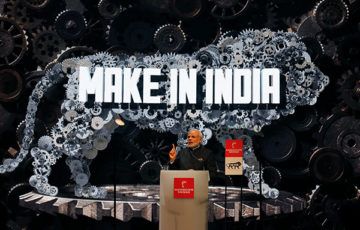
The early 1990s was a moment of fragile hope and anxiety in India. The nation had just ‘opened up’ its economy to join the world of free markets, a post-Cold War ‘end of history’ global world. The seductive formula held out the promise of foreign investments, high economic growth, and of unleashing the caged spirit of Indian enterprise. It also promised more consumer choices to Indian citizens, dreams of a better life and, most of all, a chance to set the nation’s course to resplendent 21st-century futures. The forward march to market liberalisation also entailed breaking away from India’s legacy of economic nationalism: the anticolonial economics of swadeshi (literally, ‘of one’s own nation’) or self-reliance. Swadeshi had dominated Indian economic policy and thinking since national independence, and it prioritised autonomy over the nation’s resources. The boycott of foreign-made goods was the most popular expression of swadeshi politics.
New Indian economic policy in the 1990s threw open the consumer market to foreign goods. Swadeshi-school economic thinkers termed it the ‘coca-colonisation of India’. In this dramatic transition to free-market capitalism, Coca-Cola became both a sign of the worldly pleasures now available to Indian consumers, and of the treachery of ‘selling out’ to foreign corporations. In 1977, Coca-Cola had been banned by the Indian state. The company was subsequently turned into a nationalist venture that sold an Indian brand of soft drinks called Thums Up. By the 1990s, Coca-Cola was not only back in the newly liberalised India, it bought the Indian brand to expand its operations in the market. The corporate sale of Thums Up to Coca-Cola illustrated how liberalisation and globalisation had displaced the principles of swadeshi economic nationalism. The free-market lobby, it was ruefully remarked, had ‘sold out to big business’ and turned its back on India’s anticolonial dream of economic Independence.
More here.
A Forgotten Black Founding Father
 Danielle Allen in The Atlantic:
Massachusetts abolished enslavement before the Treaty of Paris brought an end to the American Revolution, in 1783. The state constitution, adopted in 1780 and drafted by John Adams, follows the Declaration of Independence in proclaiming that all “men are born free and equal.” In this statement Adams followed not only the Declaration but also a 1764 pamphlet by the Boston lawyer James Otis, who theorized about and popularized the familiar idea of “no taxation without representation” and also unequivocally asserted human equality. “The Colonists,” he wrote, “are by the law of nature free born, as indeed all men are, white or black.” In 1783, on the basis of the “free and equal” clause in the 1780 Massachusetts Constitution, the state’s chief justice, William Cushing, ruled enslavement unconstitutional in a case that one Quock Walker had brought against his enslaver, Nathaniel Jennison.
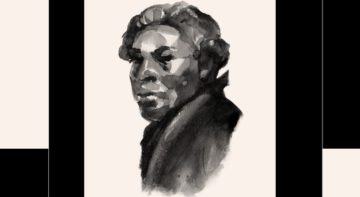
Many of us who live in Massachusetts know the basic outlines of this story and the early role the state played in standing against enslavement. But told in this traditional way, the story leaves out another transformative figure: Prince Hall, a free African American and a contemporary of John Adams. From his formal acquisition of freedom, in 1770, until his death, in 1807, Hall helped forge an activist Black community in Boston while elevating the cause of abolition to new prominence. Hall was the first American to publicly use the language of the Declaration of Independence for a political purpose other than justifying war against Britain.
More here.