
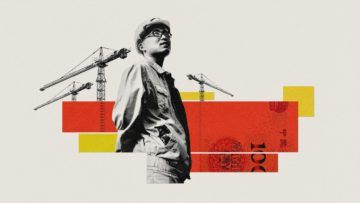
 Deborah Brautigam and Meg Rithmire in The Atlantic:
China, we are told, inveigles poorer countries into taking out loan after loan to build expensive infrastructure that they can’t afford and that will yield few benefits, all with the end goal of Beijing eventually taking control of these assets from its struggling borrowers. As states around the world pile on debt to combat the coronavirus pandemic and bolster flagging economies, fears of such possible seizures have only amplified.
Seen this way, China’s internationalization—as laid out in programs such as the Belt and Road Initiative—is not simply a pursuit of geopolitical influence but also, in some tellings, a weapon. Once a country is weighed down by Chinese loans, like a hapless gambler who borrows from the Mafia, it is Beijing’s puppet and in danger of losing a limb.
The prime example of this is the Sri Lankan port of Hambantota. As the story goes, Beijing pushed Sri Lanka into borrowing money from Chinese banks to pay for the project, which had no prospect of commercial success. Onerous terms and feeble revenues eventually pushed Sri Lanka into default, at which point Beijing demanded the port as collateral, forcing the Sri Lankan government to surrender control to a Chinese firm.
More here.
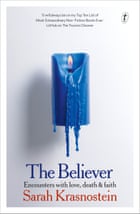 The Believer is the highly anticipated second book from Sarah Krasnostein, author of multi-award-winning
  To wander through 125 years of book reviews is to endure assault by adjective. All the fatuous books, the frequently brilliant, the disappointing, the essential. The adjectives one only ever encounters in a review (indelible, risible), the archaic descriptors (sumptuous). So many masterpieces, so many duds — now enjoying quiet anonymity.
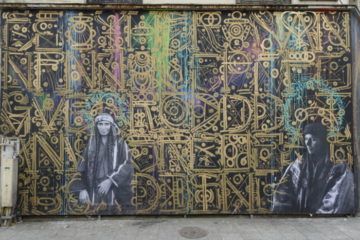 I HAVE NEVER FELT WELCOME
 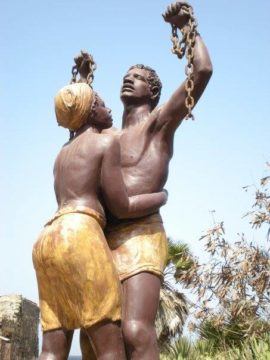 In an effort to honor this expansive and growing history, Black History Month was established by way of a weekly celebration in February known as “Negro History Week” by historian Carter G. Woodson. But just as Black history is more than a month, so too are the numerous events and figures that are often overlooked during it. What follows is a list of some of those “lesser known” moments and facts in Black history.
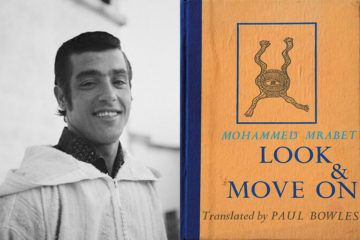 Like many readers, I suspect, I first came across the name Mohammed Mrabet in relation to Paul Bowles. Throughout the sixties, seventies, and eighties, everyone from Life magazine to Rolling Stone sent writers and photographers to Tangier—where Bowles had been living since 1947—to interview the famous American expat, author of the cult classic The Sheltering Sky. “If Paul Bowles, now seventy-four, were Japanese, he would probably be designated a Living National Treasure; if he were French, he would no doubt be besieged by television crews from the literary talk show Apostrophes,” wrote Jay McInerney in one such piece for Vanity Fair in 1985. “Given that he is American, we might expect him to be a part of the university curriculum, but his name rarely appears in a course syllabus. Perhaps because he is not representative of a particular period or school of writing, he remains something of a trade secret among writers.” This wasn’t to say that Bowles was reclusive. In fact, he kept open house for one and all, whether they be curious tourists, his famous friends—Tennessee Williams, William S. Burroughs, and Allen Ginsberg among them—or the crowd of Moroccan storytellers and artists he’d befriended over the years. And of these, one man in particular stands out: Mohammed Mrabet.
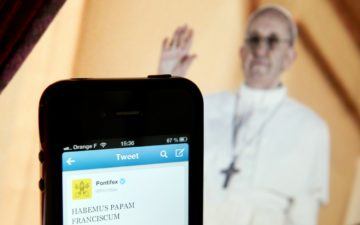 When the New York Times Magazine ran
  In 2007, some of the leading thinkers behind deep neural networks organized an unofficial “satellite” meeting at the margins of a prestigious annual conference on artificial intelligence. The conference had rejected their request for an official workshop; deep neural nets were still a few years away from taking over AI. The bootleg meeting’s final speaker was
 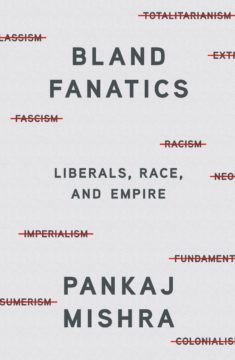 For nearly three decades, Mishra has skewered the pieties of politicians and intellectuals in the Anglophone world (including India, which boasts more English speakers than the United Kingdom), while also bringing his spirited attention to the histories and imaginations of people outside circles of wealth and power. The scales first fell from his eyes during his travels and reporting in Kashmir in the late 1990s and early 2000s. In the disputed Indian-administered territory, he saw firsthand the collision between India’s pluralist liberal democracy—its avowed commitment to democratic norms, individual rights, and multiculturalism—and the reality of military occupation. Indian apologia for abuses in Kashmir, he writes, “prepared me for the spectacle of a liberal intelligentsia cheerleading the war for ‘human rights’ in Iraq, with the kind of humanitarian rhetoric about freedom, democracy and progress that was originally heard from European imperialists in the nineteenth century.” The remit of Mishra’s work has grown steadily wider over the decades, from an early focus on the dreams and catastrophes of small-town India, to a thoughtful exploration of colonial-era Asian intellectual history in the excellent
 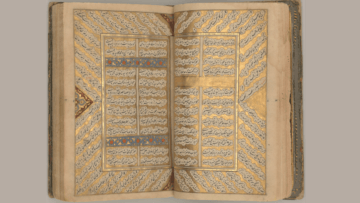 I wouldn’t wish being Iranian on my worst enemy,” my friend Marjan posted on Instagram in mid-January.
 Black Americans have played a crucial role in helping to advance America’s business, political and cultural landscape into what it is today. And
 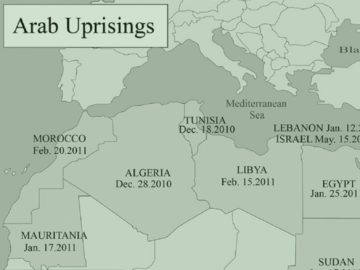 It is in the middle of winter that the “Arab Spring” comes unexpectedly. On December 17, 2010, in Sidi Bouzid, an agricultural village in central Tunisia, Mohamed Bouazizi, a young unemployed peddler, sets himself on fire after his merchandise is confiscated by police officers. The day after the tragedy, the anger spreads to other cities in the country. President Zine el-Abidine Ben Ali, who has been in power for twenty-three years, denounces “terrorist acts” perpetrated by “hooded thugs.” The deaths will soon be counted by the dozens during clashes with the forces of law and order. “Irhal!” (“leave”) becomes the revolution’s byword. Ben Ali is accused not only of having established a police regime, but also of pillaging Tunisia. On January 14, 2011, overwhelmed by the events, he flees with his family to Saudi Arabia.
 It is possible that John Pringle’s neighbors viewed him with some distaste. Formerly physician-general to the British forces in the Low Countries, in 1749 Pringle had settled down in a rather swanky part of London, where he began investigating the processes behind putrefaction. He would place pieces of beef in a lamp furnace, sometimes combining them with another substance — and then wait for putrefaction to commence, or not. Falsifying an earlier hypothesis, Pringle showed that not only acids but alkalis, like baker’s ammonia, could retard the progress of decay. Even more impressively, some substances, like Peruvian bark (source of the malarial prophylactic, quinine) could outright reverse putrefaction, rendering tainted meat seemingly edible again.