
 Branko Milanovic in Foreign Affairs:
China’s model of political capitalism has produced staggering growth and lifted millions from poverty—but not without widening the gap between the country’s rich and poor. Inequality has become the Chinese system’s Achilles’ heel, belying the government’s nominally socialist tenets and undermining the implicit contract between the rulers and the ruled. Inequality erodes the trust that Confucius thought even more essential for good government than food (or, in today’s terms, material prosperity).
Addressing this problem requires understanding its sources and its reach. In China, the task is not always a simple one. China’s inequality looks at first glance like the predictable product of rapid growth and urbanization. But aspects of the country’s distribution of wealth and income are more particular. They rise from the nexus of economic and political power within the Chinese system, and they suggest that the country’s leadership faces a difficult choice as to how, and whether, to restrain the growing power of a new elite.
More here.
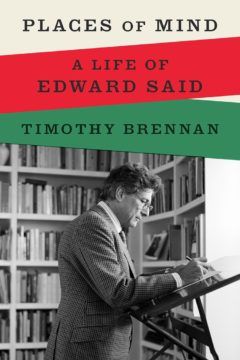 Jane Hu in Bookforum:
 Joanna Wuest in Psyche:
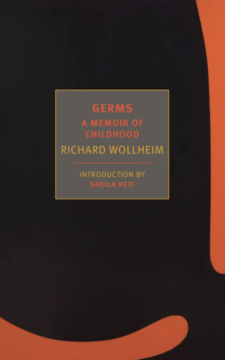 AMONG THE MANY ENTRIES in Edwin Frank’s increasingly encyclopedic New York Review Books Classics series is a genre of postwar European memoir: informed by psychoanalysis, ironic in tone or form, and of subject matter that’s both bourgeois and aristocratic—or at the intersections where upwardly moving middle classes and downwardly mobile inherited scions most resemble each other. Gregor von Rezzori’s Memoirs of an Anti-Semite, J. R. Ackerley’s My Father and Myself, Jessica Mitford’s Hons and Rebels: these books record their authors’ efforts to collect the pieces and resolve mysteries of their childhoods and adolescence—a task often complicated by the shattering impact of the Second World War—and have also become documents in their own right, testaments not only to a bygone world but to a bygone way of reckoning with privilege, secrets, desire, belonging, and money. Richard Wollheim’s Germs, first published posthumously in 2004, hits all these notes: his parents’ somewhat open marriage, his lower-class granny, his immersion in a milieu of genuine artists, appreciators, and pompous hucksters and hustlers, sometimes united in the same person. Wollheim was still fine-tuning the manuscript when he died in 2003, at eighty, and what we have is mostly organized around the childhood and adolescent years before he arrived at Oxford, though with occasional associative leaps forward and backward in time.
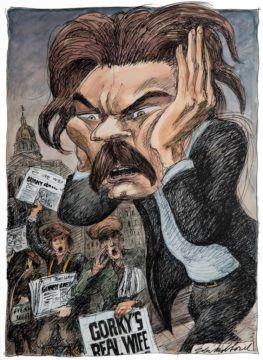 In April 1906, Czar Nicholas caved in to protests from around the world, and released Maxim Gorky from the prison into which he had thrown him. Mark Twain and other writers, hearing that the celebrated author of “The Lower Depths” had been freed, invited him to New York City, and Gorky, still harassed by the secret police, accepted. With him on the voyage was the actress Maria Andreyeva.
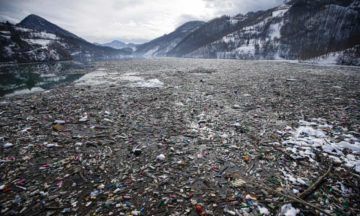 Elizabeth Kolbert’s favourite movie is the end-of-the-world comedy
  I’d read “Lolita” in college, and I was too lazy to bother to read it again when preparing for my part in “The Bookshop.” I was already a huge fan of Nabokov’s — I had bought copies of his memoir, “Speak, Memory,” in bulk to hand out to my friends at college, and I had worn thin his “Lectures on Russian Literature,” which are as withering as they are brilliant. (I’ll never forget my shocked delight at his excoriation of Dostoyevsky as “a mediocre writer with wastelands of literary platitudes.”)
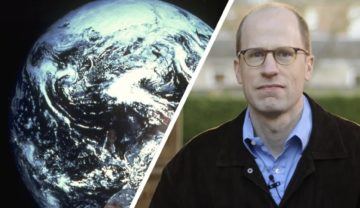 Does history have a goal? Is it possible that all the human societies that existed are ultimately a prelude to establishing a system where one entity will govern everything the world over? The Oxford University philosopher
  Why did prescription opioids bring so much misery to the small towns of postindustrial America?
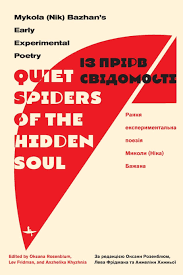 Despite his stature as a giant of Soviet Ukrainian literature, Bazhan remains all but unknown outside Ukraine. His work is formally sophisticated, his language rich, his subject matter multilayered. Translating him is, thus, no mean feat. But on top of that, for much of the 20th century, Bazhan’s pre-Party existence, and thus much of his best work, was unknown or inaccessible to potential translators. It is fitting, then, that the editors of this new volume of Bazhan’s work, Oksana Rosenblum, Lev Fridman, and Anzhelika Khyzhnia, have turned to the poet’s earlier poetry. The volume takes us through selections from Bazhan’s first three books, published in the giddy experimental atmosphere of the 1920s, before tackling some longer and more formally, thematically, and politically complex works from the early 1930s. Indeed, one of the most fascinating aspects of this book is the way it reveals the tension between Bazhan’s mercurial, untrammeled poetic genius and the creeping ideological strictures of Stalinism.
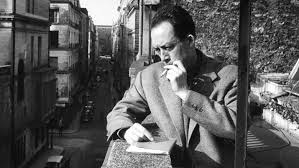 It’s a little-known fact that Camus worked briefly as a meteorologist. For almost a year, from 1937-38, he wore a lab coat at the Algiers Geophysics Institute and catalogued measurements of atmospheric pressure from hundreds of weather stations across North Africa. The data had been piling up, and despite the arrogance of their imperial ambitions, the men who ran the Institute couldn’t attract enough funding. They didn’t have the money to hire a scientist trained for this “exacting and, in effect, stupefying task.”
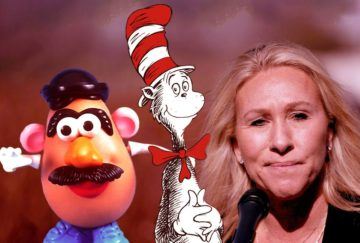 It’s early, but Republicans have already seized on their strategy for winning the 2022 and 2024 elections. Of course, it does not depend on mundane tactics like “running on their record” or “making robust arguments about how their policies are better than their opponents.” The GOP is instead returning to the well that has, time and again, paid off handsomely: feigning umbrage over culture war flashpoints, usually ones wholly invented by the right or propped up with lies, to distract from substantive policy debates that actually impact American lives.
 A new study asks the question: Do conversations end when people want them to? The short answer, it turns out, is no. The study, published this week in the journal the
  How can we summarise the Covid year from a broad historical perspective? Many people believe that the terrible toll coronavirus has taken demonstrates humanity’s helplessness in the face of nature’s might. In fact, 2020 has shown that humanity is far from helpless. Epidemics are no longer uncontrollable forces of nature. Science has turned them into a manageable challenge.
 The search for AI has always been about trying to build