Manjeet S Pardesi and Amitav Acharya in Aeon:
The liberal international order or Pax Americana, the world order built by the United States after the Second World War, is coming to an end. Not surprisingly, this has led to fears of disorder and chaos and, even worse, impending Chinese hegemony or Pax Sinica. Importantly, this mode of thinking that envisages the necessity of a dominant or hegemonic power underwriting global stability was developed by 20th-century US scholars of international relations, and is known as the hegemonic stability theory (HST).
In particular, hegemonic stability theory developed out of the work of the American economist Charles P Kindleberger. In his acclaimed book The World in Depression 1929-1939 (1973), Kindleberger argued that: ‘The world economic system was unstable unless some country stabilised it,’ and that, in 1929, ‘the British couldn’t and the United States wouldn’t.’ While Kindleberger was mainly concerned with economic order, his view was transformed by international relations scholars to associate hegemony with all sorts of things. In particular, a hegemonic power is generally expected to perform one or all of three main roles: first, as the dominant military power that ensures peace and stability; second, as the central economic actor within the global system; and third, as a cultural and ideational leader – either actively disseminating its political ideas across the system or serving as a model that others seek to emulate.
HST extends to all aspects of Pax Americana, and US naval power is seen as a ‘public good’ provided by the hegemon that secures the world’s maritime commons. However, many thinkers now see China’s growing power, especially naval power, as a consequential challenge to the US-led liberal international order, and fear that this assault on US hegemony portends disorder. The return of the US president Donald Trump to the White House has of course accentuated these liberal fears, especially in the US but also among America’s allies, particularly its Western partners. The premise of HST, crafted by Americans at the height of the American century, however, is wrong. History shows us that there are other pathways to international order, and that stability does not require hegemony.
More here.
Enjoying the content on 3QD? Help keep us going by donating now.

 In Some Notes on Mediated Time – one of three completely new essays in the collection – Smith recalls how the “dreamy, slo-mo world” of her 1980s childhood gave way, within a generation, to the “anxious, permanent now” of social media. If you lived through that transition, you don’t have to be very old to feel ancient. When this estrangement is compounded by the ordinary anxieties of ageing, cultural commentary becomes inflected with self-pity. Smith’s identification with the protagonist of Todd Field’s Tár, a once revered conductor who finds herself shunned by the younger cohort, takes on existential proportions: “Our backs hurt, the kids don’t like Bach any more – and the seas are rising!”
 ‘J
‘J In 1990, when Julia Ioffe was 7 years old, her family left a collapsing Soviet Union for suburban Maryland. Her new classmates never let her forget that she was the “weird Russian girl,” but the disdain, she makes clear, was mutual. Growing up, she looked down on American kids who bragged about seeing a Broadway musical or vacationing in Florida. Ioffe’s idea of a good time was going to the opera and reading Pushkin.
 In talks leading up to the cease-fire deal between Hamas and Israel, President Trump
  When it comes to fat loss, most of us need all the help we can get. With the modern American lifestyle being largely sedentary and characterized by easy access to highly palatable, energy-dense foods, it can be very difficult to maintain the calorie deficit necessary to lose fat and keep it off. Whether or not a calorie deficit is achieved is determined by the difference between total energy in and total energy out. Assessing the “energy in” side of the equation is straightforward—add up the energy content of all food consumed. However, the “energy out” side is more complicated and much more difficult to accurately measure, as it varies by body composition, activity level, age, sex, and various other factors.
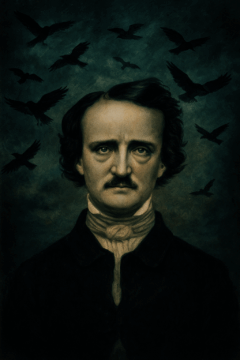 Next to an abiding interest in biology, I also have a penchant for the gothic, and a version of the collected works of Edgar Allan Poe naturally can be found in my library. But beyond the author of The Raven, who was Poe? One man who can tell me is Richard Kopley, a Distinguished Professor of English, Emeritus, at the Penn State DuBois campus of Pennsylvania State University. When this biography was published back in March, I made a mental note to revisit it for Halloween. Though my background is in biology, Kopley fortunately wants to provide for a broad readership, including “the general reader, the aficionado, and the scholar”, the goal being to “get as close to Poe as I can for as many readers as I can” (p. 4). Thus, for the last 21 days, I have immersed myself in this detailed and deeply researched biography to read of a life that was both captivating and tragic.
 Have you ever asked an AI model what’s on its mind? Or to explain how it came up with its responses? Models will sometimes answer questions like these, but it’s hard to know what to make of their answers. Can AI systems really introspect—that is, can they consider their own thoughts? Or do they just make up plausible-sounding answers when they’re asked to do so?
 As Benjamin wrote in 1928, in his sprawling and unfinished magnum opus
 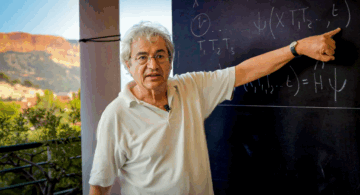 Sitting outside a Catholic church on the French Riviera, Carlo Rovelli jutted his head forward and backward, imitating a pigeon trotting by. Pigeons bob their heads, he told me, not only to stabilize their vision but also to
  G
G