
Amartya Sen at the Nobel website:
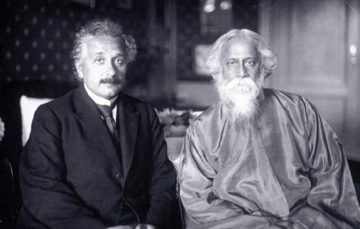 Rabindranath Tagore, who died in 1941 at the age of eighty, is a towering figure in the millennium-old literature of Bengal. Anyone who becomes familiar with this large and flourishing tradition will be impressed by the power of Tagore’s presence in Bangladesh and in India. His poetry as well as his novels, short stories, and essays are very widely read, and the songs he composed reverberate around the eastern part of India and throughout Bangladesh.
In contrast, in the rest of the world, especially in Europe and America, the excitement that Tagore’s writings created in the early years of the twentieth century has largely vanished. The enthusiasm with which his work was once greeted was quite remarkable. Gitanjali, a selection of his poetry for which he was awarded the Nobel Prize in Literature in 1913, was published in English translation in London in March of that year, and had been reprinted ten times by November, when the award was announced. But he is not much read now in the West, and already by 1937, Graham Greene was able to say: “As for Rabindranath Tagore, I cannot believe that anyone but Mr. Yeats can still take his poems very seriously.”
More here.
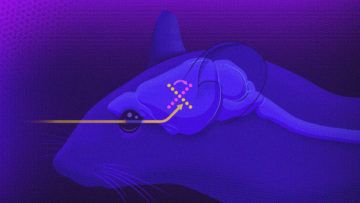 During every waking moment, we humans and other animals have to balance on the edge of our awareness of past and present. We must absorb new sensory information about the world around us while holding on to short-term memories of earlier observations or events. Our ability to make sense of our surroundings, to learn, to act and to think all depend on constant, nimble interactions between perception and memory.
 The British spy agency GCHQ is so aggressive, extreme and unconstrained by law or ethics that the NSA — not exactly world renowned for its restraint — often farms out spying activities too scandalous or illegal for the NSA to their eager British counterparts. There is, as the Snowden
 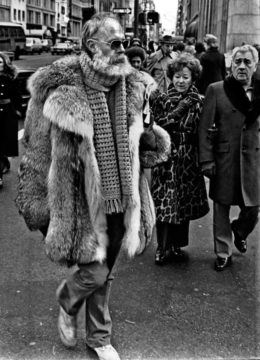 Gorey favored huge fur coats paired with jeans, sweaters, sneakers, and ever-present small gold hoops in each ear. His constantly-donned coats earned him a 1978 write-up in the New York Times titled “
 One of the most vacuous idioms we use about our moral and social debates is the idea of being “on the side of history”. The plain meaning of this is that “history” – the record of human actions – has an inevitable trajectory, and we had better get on board with it or suffer the consequences.
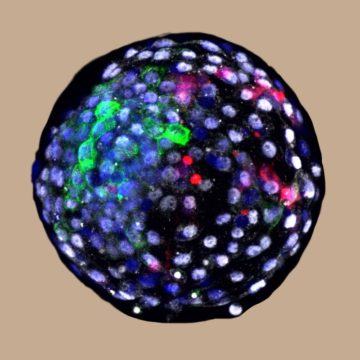 Scientists have successfully grown monkey embryos containing human cells for the first time — the latest milestone in a rapidly advancing field that has drawn ethical questions.
 I
I Long before the advent of non-fungible tokens, some advocates of digital art argued that there is no meaningful distinction between a “virtual” object and a “physical” one. Such a division, they believed, partakes of the fallacy of “digital dualism,” the imprecise belief that a file is somehow less “real” than a painting on canvas, when in fact both are products of mind and time accreted to the permanence of matter. Less arty or newfangled is the old law of property. A contract is a ghost story for adults: It turns vaporous whatevers—labor time, carbon, pixel—into a coin struck by the handshake of exchange and the creep of law. Ownership was always a song and a dance and a fusillade.
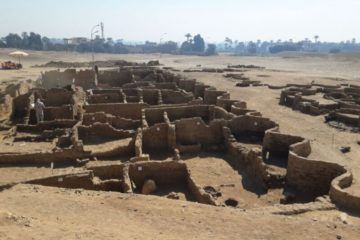 A team of Egyptian archaeologists
  Think of the American Civil Liberties Union during the last two decades of the 20th century, and a certain type of person invariably comes to mind: shrewd, thick-skinned, and possessed of an unwavering—some might say irritating—commitment to principle. The men and women of the ACLU were liberals in the most honorable, but increasingly obsolescent, meaning of the term. They understood that the measure of democracy lies in the impartial application of its laws, and were prepared to defend anyone whose constitutional rights were trampled upon, irrespective of their political views or the repercussions that mounting such a defense might entail.
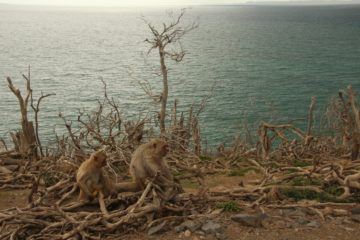 In September 2017, when Hurricane Maria hit Puerto Rico, the storm first made landfall on a small island off the main island’s eastern coast called Cayo Santiago. At the time, the fate of Cayo Santiago and its inhabitants was barely a footnote in the dramatic story of Maria, which became Puerto Rico’s worst natural disaster, killing 3,000 people and disrupting normal life for months.
 JERUSALEM — The annual Israel Prize ceremony is supposed to be an august and unifying event, a beloved highlight of the Independence Day celebrations that fall on Thursday this year. This being Israel, it is rarely without controversy. The latest ruckus goes to the heart of the political divides and culture wars rocking the country’s liberal democratic foundations even as it remains lodged in a two-year
 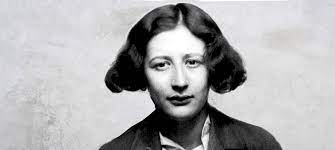 It’s hard if not impossible to imagine a figure of Weil’s stature in the intellectual and political culture of today’s left, the only region of the political spectrum where she might possibly fit. And not just because of her religiosity, which would of course instantly ghettoize her. It’s also because she’s so hard to pin down with any neat, easy label—or rather, because the labels are too many and apparently conflicting. (She’d be eaten alive on Twitter from all sides—or, worse, simply shunned and ignored.) “An anarchist who espoused conservative ideals,” Zaretsky writes in his opening pages, “a pacifist who fought in the Spanish Civil War, a saint who refused baptism, a mystic who was a labor militant, a French Jew who was buried in the Catholic section of an English cemetery, a teacher who dismissed the importance of solving a problem, the most willful of individuals who advocated the extinction of the self: here are but a few of the paradoxes Weil embodied.”
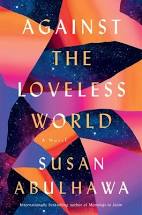 Beyond erasing this diversity, casting Palestinian radicalism as innately Islamic severs resistance from the essential question of land and geography. The novel reflects this: Nahr’s status as the daughter of Palestinian refugees in Kuwait certainly affects her life—she is pushed out of an official dance troupe, and her family’s allegiance is suspected after Saddam Hussein’s invasion. But being Palestinian doesn’t take hold as a political reality until she lives in her ancestral homeland. What fuels her fight isn’t a divine commandment about good and evil; it is the land itself. Nahr observes settlers encroaching on a Palestinian village, and wonders how Bilal and his mother have been able to keep them away from their land. She visits her mother’s childhood home, in Haifa, and picks figs from a tree her grandfather planted, before being chased off by a Jewish woman who now lives there. She helps to redirect water from a pipe meant for settlers to the olive groves. There is violence inflicted upon this land, but Abulhawa centers its beauty: “I was content to just sit there in the splendid silence of the hills, where the quiet amplified small sounds—the wind rustling trees; sheep chewing, roaming, bleating, breathing; the soft crackle of the fire; the purr of Bilal’s breathing,” Nahr reflects. “I realized how much I had come to love these hills; how profound was my link to this soil.”