
Mark Esposito, Landry Signé, and Nicholas Davis in Project Syndicate:
As massive online platforms have given rise to numerous virtual marketplaces, a gap has opened between the real and the digital economy. And by driving more people than ever online in search of goods, services, and employment, the coronavirus pandemic is widening it. The risk now is that a new digital industrial complex will hamper market efficiency by imposing rents on real-economy players whose daily operations depend on technology.
The premise of the Fourth Industrial Revolution (4IR) is that the tangible and intangible elements of today’s economy can coexist and create new productive synergies. The tangible side of the economy provides the infrastructure upon which automation, manufacturing, and complex trade networks rest, and intangibles – logistics, communication, and other software and Big Data applications – allow for these processes to achieve optimal efficiency.
More to the point, the tangible economy is a prerequisite for the intangible economy. Through digitalization, tangibles can become intangibles and then overcome traditional limitations on scale and value creation. While heavily transactional and capital-intensive, this process hitherto has been a positive mechanism for growth, providing some equity of opportunities for small and large countries alike.
But this standard account of the 4IR omits the recent decoupling of the digital and real sectors of the economy.
More here.
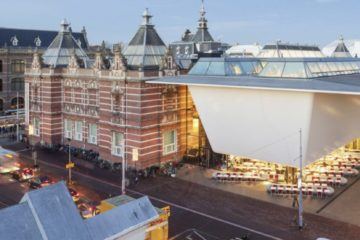 Buildings’ nicknames are the public’s attempt to make sense of the incomprehensible. Several odd-looking London skyscrapers have cheekily illustrative monikers: the Gherkin, the Cheesegrater, the Walkie-Talkie. Angelenos call the mammoth Pacific Design Center the Blue Whale. Beijingites offhandedly refer to the headquarters of China Central Television as Big Underpants. A Shanghai skyscraper with an aperture at the top is the Bottle Opener, and Bilbao has the Artichoke, Frank Gehry’s titanium Guggenheim museum. My favorite is the nickname of an addition to the Stedelijk Museum in Amsterdam—the Bathtub.
 Buy me a drink and I’ll break down for you my new obsession: the abuse documentary. It’s a new genre, it’s everywhere on streaming media, and I’ve watched them all.
 In February, the rover Perseverance arrived on Mars after an almost eight-month journey, tasked with looking for signs of ancient life. Though no firm evidence of life beyond Earth has yet been found, the English language is already full of words to talk about it. The search for life on other planets is part of the science of astrobiology. The prefix astro- is “star” in Latin and Greek and, predictably, appears in astronomy, the study of objects beyond the Earth’s atmosphere.
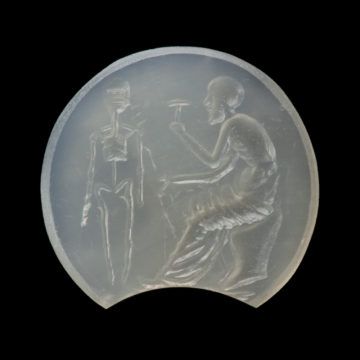 How long have we been imagining artificial life? A remarkable set of ancient Greek myths and art shows that more than 2,500 years ago, people envisioned how one might fabricate automatons and self-moving devices, long before the technology existed. Essentially some of the earliest-ever science fictions, these myths imagined making life through what could be called biotechne, from the Greek words for life (bio) and craft (techne). Stories about the bronze automaton Talos, the artificial woman Pandora, and other animated beings allowed people of antiquity to ponder what awesome results might be achieved if only one possessed divine craftsmanship. One of the most compelling examples of an ancient biotechne myth is Prometheus’ construction of the first humans.
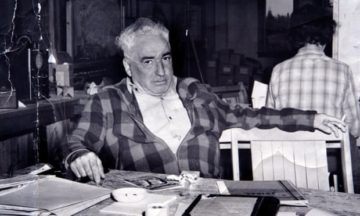 What Reich wanted to understand was the body itself: why you might want to escape or subdue it, why it remains a naked source of power. His wild life draws together aspects of bodily experience that remain intensely relevant now, from illness to sex, anti-fascist direct action to incarceration. The writer and civil rights activist
  The curtain rises on a dim, drab room. An alarm sounds, and a woman wakes. She tries to rouse her sleeping child and husband, calling out: “Get up!”
 Adam Tooze in the LRB:
 Robert Kuttner in the New York Review of Books:
 Carlos Sardina Galache in the NLR’s Sidecar:
 Dániel Oláh in Evonomics:
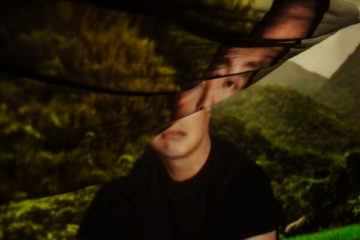 Growing up, I never saw my Korean-American parents touch each other. No hugs or kisses, or even pats on the back. It wasn’t the byproduct of a loveless marriage, just the consequences of a life centered on survival — that endless list of unsexy chores. I’ve lived 30 years without acknowledging such biographical details, accepting that the nuances of my life could never make it into mainstream culture.
 When we talk, we naturally gesture—we open our palms, we point, we chop the air for emphasis. Such movement may be more than superfluous hand flapping. It helps communicate ideas to listeners and even appears to help speakers think and learn. A growing field of psychological research is exploring the potential of having students or teachers gesture as pupils learn. Studies have shown that people remember material better when they make spontaneous gestures, watch a teacher’s movements or use their hands and arms to imitate the instructor. More recent work suggests that telling learners to move in specific ways can help them learn—even when they are unaware of why they are making the motions.