
Enjoying the content on 3QD? Help keep us going by donating now.
Category: Recommended Reading
How Mayor Mamdani Can Write New York’s Next Chapter
Editorial Board in The New York Times:
 Mr. Mamdani, who campaigned on sweeping promises, can build a more positive legacy by focusing on tangible accomplishments. He should take notes from successful mayors, moderate and progressive alike, including Muriel Bowser of Washington, Mike Duggan of Detroit and Michelle Wu of Boston, who have delivered concrete solutions to specific problems. Mr. Mamdani cannot solve economic inequality, the problem that fueled his campaign. But he can make progress. He can build more housing. He can expand the availability of child care and good schools. He can improve bus and subway speeds.
If he succeeds, he will offer a model of Democratic Party governance at a time when many Americans are skeptical of the party and have departed Democratic-run states for Republican-run ones. Across U.S. history, political progressives have a proud record of using government to ameliorate extreme inequality and enabling more Americans to live well. Mr. Mamdani has an opportunity to write the next chapter in that story. In almost every area that featured prominently in the mayoral campaign, Mr. Mamdani can improve life in New York by marrying his admirable ambition to pragmatism and compromise.
More here.
Enjoying the content on 3QD? Help keep us going by donating now.
Joanna Walsh’s History Of Amateur Creativity On The Internet
Katie Kadue at Bookforum:
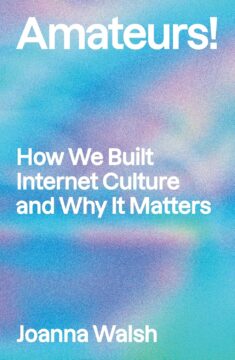 LONG BEFORE ELON “I am become meme” Musk sought to dismantle the federal government under the aegis of a dog meme, there were LOLcats. Founded by two software developers in 2007, icanhascheezburger.com hosted an array of image macros, foraged from forums like Something Awful or created with an in-site tool, that paired a cute cat with a caption in misspelled or ungrammatical English, as in the site’s URL. Like the countless memes that would follow and like the forgotten ones that came before, a LOLcat isn’t much on its own. Derivative and communal, it accrues meaning through use. The real memes are the shares, upvotes, and modifications we make along the way.
I Can Has Cheezburger, as the Dublin-based writer and multimedia artist Joanna Walsh reminds us, was an amateur project, an outlet for tech professionals who wanted an easier way to exchange cute cat pics after a hard day at work. In Amateurs!: How We Built Internet Culture and Why It Matters, Walsh documents how unpaid creative labor is the basis for almost everything that’s good (and much that’s bad) online, including the open-source code Linux, developed by Linus Torvalds when he was still in school (“just as a hobby, won’t be big and professional”), and even, in Walsh’s account, the World Wide Web itself.
Enjoying the content on 3QD? Help keep us going by donating now.
Wenesday Poem
Via Dolorosa
———————————-
Yes, these girls threading through cotton
are mourning boys whose names they’ll forget
in a few harvests. Do they know to watch out
for mice and snakes? No—they imagine
out here’s a life without danger.
They imagine they race to mystery.
———————————-
But it’s all science, really, learning how
the earth yields and heals itself. We step in
where we can with sweat, lost sleep, bruised thumbs.
But I’ll let them think it’s magic, that thorns
in their sweaters could somehow mend sorrow.
Sometimes I let myself believe the same.
Enjoying the content on 3QD? Help keep us going by donating now.
Tuesday, November 4, 2025
Michael Caine and Shirley MacLaine in “Gambit”
Leann Davis Alspaugh at Acroteria:
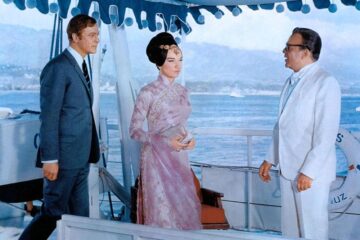 “Go ahead, tell the end, but please don’t tell the beginning!” begs the movie poster for the 1966 film Gambit. Why would the filmmakers prefer to blow the ending rather than beginning?
Today’s moviegoer is accustomed to film plots that mangle chronology, forcing us to reassemble the sequence of events without clear signposts from the director. Gambit doesn’t quite go that far but it does employ a number of devices to trick the viewer into thinking a certain narrative has taken place when it has not. I can’t proceed without a spoiler alert so if that’s too much for you, please stop reading.
Gambit is a heist caper starring Michael Caine as the mastermind Harry Dean, Shirley MacLaine as the bait Nicole Chang, and Herbert Lom as Ahmad Shahbandar, the millionaire mark. Shahbandar has a priceless antique bust, Dean wants it, and Nicole is brought in to distract the millionaire. The trick is that the bust, a portrait of the ancient Chinese empress Li Su resembles Shahbandar’s beloved dead wife as well as a certain Eurasian woman—Shirley MacLaine—that Harry has discovered dancing in a shabby Hong Kong club. Harry plans to ingratiate himself with Shahbandar and use Nicole to dazzle the old man while the thief executes his plan without a hitch.
More here. [Editor’s Note: My wife and I just watched this film and enjoyed it a lot.]
Enjoying the content on 3QD? Help keep us going by donating now.
The Last Breath of the Himalayas: Can We Stop the Collapse?
Kavita Bhardwaj at The Revelator:
 When forests are cleared, wetlands drained, and slopes destabilized, entire ecosystems lose their balance. Floods, landslides, and erosion then hit both communities and wildlife alike.
In August a catastrophic flow of mud and debris buried parts of Dharali village in Uttarkashi. Similar disasters this year brought chaos to regions like Himachal Pradesh, Uttarakhand, and Jammu and Kashmir. Some of these events brought worldwide headlines, if just for a few moments. Months later residents continue to struggle to recover and rebuild.
These disasters illustrate three converging factors: The mountains are fragile, the weather is getting extreme, and people are making it worse.
More here.
Enjoying the content on 3QD? Help keep us going by donating now.
Derek Muller explains “The Selfish Gene” and more
Enjoying the content on 3QD? Help keep us going by donating now.
Yascha Mounk: How social media destroyed the freedoms of city life
Yascha Mounk at his own Substack:
 You remember the scene: A camera at a Coldplay concert is showing audience members enjoying the show, with lead singer Chris Martin making a few friendly comments about each fan. The camera cuts to an attractive middle-aged couple in the midst of a cute embrace, with the man holding the woman from behind as they sway to the music. Then the couple spots the Jumbotron, and a perfectly choreographed series of panicked actions unfolds. The woman, shocked, covers her face, and turns away from the camera. The man dives to his left, out of the camera’s view. A younger woman, sitting behind them, and evidently in the know about what is happening, comes into view, the look on her face a poetic mix of horror and glee. “Oh, what?” Martin comments. “Either they’re having an affair or they’re just very shy.”
It didn’t take long for the internet to confirm Martin’s first hypothesis. The man was the CEO of a tech company, someone known in his milieu but far from famous. The woman was the company’s head of HR (or, to cite the correct corporate appellation, its Chief People Officer). Both were promptly tarred-and-feathered in the public sphere, and nearly as promptly resigned from their jobs.
More here.
Enjoying the content on 3QD? Help keep us going by donating now.
Thomas Pynchon’s Novel Of International Espionage And White-Cheddar Crime
Lisa Borst at The Baffler:
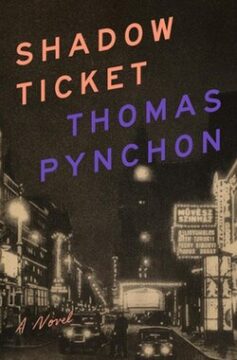 In a 1990 review of Thomas Pynchon’s Vineland, John Leonard described the book as “unbuttoned, as though the author-god had gone to a ballgame.” Vineland is maybe my personal favorite Pynchon, although choosing one feels like trying to pick the best lava lamp in a chandelier store, so volcanically exceptional is he to American letters, which can’t help but look square and patrician by comparison. I love all the unbuttoned Pynchons—the later, “easier” novels, the stuff that didn’t take decades to research or at least doesn’t make a show of it, the loosies. Vineland, Inherent Vice, Bleeding Edge, even Against the Day (a long book, but a fun and limber one): these are where Pynchon’s essential pleasures, the makeshift utopias and ludicrous jokes (some perilously low-hanging) that make him so miraculous, get the most room to roam.
Shadow Ticket, Pynchon’s tenth book and the third installment in his recent trio of detective novels, pushes the limits of “unbuttoned.” It’s a novel that’s barely wearing a shirt. By which I mean it’s both stylistically stripped-down—sparse on the stuff that literature usually comes dressed in, like description and interiority—and horny, in a polite, pre-Code sort of way.
more here.
Enjoying the content on 3QD? Help keep us going by donating now.
The Dangerous Dead in Society
John Blair at LitHub:
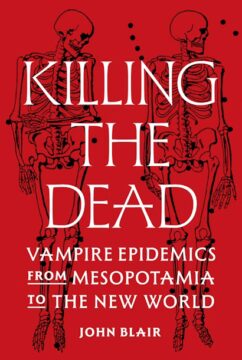 How can whole societies come to believe that the dead walk among them? Understanding that requires moving beyond theoretical approaches and engaging with tangible human communities and their world-views. We will first visit two very different societies in which the veil between life and death has been thin. The dead have been close: sometimes to be revered, sometimes to be feared, but regularly to be interacted with, if not unambiguously in a bodily form. Both case-studies manifest an endemic layer of anxiety, capable of intensifying under stress into something more concentrated and physical.
The Sora of the Indian East Coast
The Sora are an indigenous, long-stable society. They are slash-and-burn farmers, with linguistic and cultural affinities looking outwards to South-East Asia. Their strong sense of sociability, mutual sharing, and interdependence crosses the life/death boundary. The engagement of the living with the dead is continuous and immensely complex, to the point of influencing large areas of social and ethical practice.
more here.
Enjoying the content on 3QD? Help keep us going by donating now.
We need Freud’s forgotten concept to understand our political crisis
From iai:
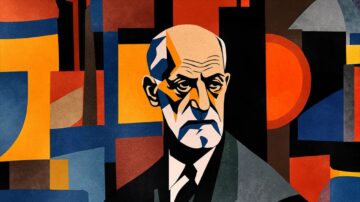 We associate Freud with the repression of thoughts and feelings. But he also described a subtler defense: recognizing an uncomfortable truth, yet acting as if it didn’t matter—a phenomenon he called disavowal. In this interview, philosopher Alenka Zupančič, a close collaborator of Slavoj Žižek, argues that disavowal is the key to understanding our political paralysis. From climate change to populism to the performative outrage of social media, Zupančič says the problem isn’t that we deny reality—it’s that we acknowledge it endlessly and keep doing nothing.
Oliver Adelson: Your latest book spans politics, philosophy, psychology, and more, but there’s one concept that you think is essential for making sense of all these areas: disavowal. What is disavowal, and why is it so key for understanding our predicament?
Alenka Zupančič: It’s something that I started to think about really intensely a few years ago. So it’s not that it’s been with me the whole time, but I think it captures something essential—as you put it—about this time. And it’s a very interesting concept, because we are used to this other concept, which is simple denial. You know, denial of climate change, denial of this or that. But disavowal functions in a much more perverse way. Namely, by first fully acknowledging some fact—“I know very well that this is how things are”—but then going on as if this knowledge didn’t really matter or register. So in practice, you just go on as before. And I think this is even more prevalent in our response to different social predicaments than simple denial.
More here.
Enjoying the content on 3QD? Help keep us going by donating now.
The Mystery of Transformation in Nature
Elizabeth Sbovoda in Undark:
 Who isn’t obsessed with metamorphosis? From the children’s classic “The Very Hungry Caterpillar,” who gorges himself to fuel his dramatic shape-shift, to legless tadpoles that grow to hop over 20 times their body length, we’re transfixed by creatures that appear in one guise, then transform overnight into something else. It’s the closest thing to magic that hard-and-fast biology can conjure.
In “Metamorphosis: A Natural and Human History,” science historian Oren Harman indulges our collective obsession and expands its frontiers in startling ways. Inspired by the impending birth of his own third child, Harman explores the striking minutiae of biological change, mining his research to reflect more broadly on personal and social transformation. “Moons sliver, seeds sprout, empires rise and crumble,” he writes. “Everything in the world around us, including our bodies, is in flux.”
More here.
Enjoying the content on 3QD? Help keep us going by donating now.
CONSPIRACY | contrapoints
Enjoying the content on 3QD? Help keep us going by donating now.
Tuesday Poem
A Drink of Water
She came every morning to draw water
like an old bat staggering up the field:
The pump’s whooping cough, the bucket clatter
And slow diminuendo as it filled,
Announced her. I recall
Her grey apron, the pocked white enamel
of the brimming bucket, and the treble
Creak of her voice like the pump’s handle.
Nights when a full moon lifted past her gable
It fell back through her window and would lie
Into the water set out on the table.
Where I have dipped to drink again, to be
Faithful to the admonishment of her cup,
Remember the Giver fading off the lip.
by Seamus Heaney
from To Read a Poem
Holt Rinehart and Winston, 1992
Enjoying the content on 3QD? Help keep us going by donating now.
Monday, November 3, 2025
The Dogged, Irrational Persistence of Literary Fiction
Gerald Howard in the New York Times:
 I remember the vogue in the ’60s and ’70s for critical essays predicting the imminent “death of the novel.” In Wilfrid Sheed’s mordant portrait of the protagonist of “The Minor Novelist,” he writes, “He tries to keep away from Sunday supplements which discuss the death of the novel. He has a theory that it is bad luck to read more than three articles on this subject a week.” Legions of M.F.A. grads can relate.
And yet, that wounded beast, the literary novel, keeps on being written, being published, and, when the fickle gods smile upon it, even bought and read, as the publishers of Colson Whitehead, Sally Rooney and Percival Everett, to name just three large talents, can attest. If literary fiction is a corpse, it’s a wonderfully animated one.
What I am about to say on this matter may seem perverse, but I think a look back at the instances where great works of literature almost disappeared upon publication or came close to not being published can offer a useful perspective, and even a modicum of hope, that the game is far from over.
More here.
Enjoying the content on 3QD? Help keep us going by donating now.
Why the race to scale up AI pretraining is NOT over
Lynette Bye at Transformer:
 It’s not that the AI companies are growing their computing power slowly — surprise at the lack of compute put into new training reflects how aggressively they’ve scaled until now. Releasing a one hundred times larger model every two years would demand a tenfold increase in capacity each year, which, You says, is unrealistic. A new model every three years, he says, might be feasible, though that still requires an ambitious five-fold increase in compute every year.
Former OpenAI researcher Rohan Pandey recently claimed in a post on X that people were prematurely jumping to “pretraining is over” before seeing the results of the eye-catching investment in computing power. “Building projects like stargate and colossus2 to actually 100x gpt-4 compute takes time, let the labs cook,” he said.
More here.
Enjoying the content on 3QD? Help keep us going by donating now.
Stephen Asma on the Virtue Industrial Complex: License to Scold
Enjoying the content on 3QD? Help keep us going by donating now.
The China Tech Canon
Afra Wang at Asterisk:
 In 1987, Lei Jun 雷军 was a 21-year-old student in Wuhan University’s computer science program. The book that had set his imagination alight was Fire in the Valley 硅谷之火, which chronicles the evolution of 1970s homebrew hacker culture into global titans like Apple, Microsoft, and IBM. The heroes of that story, of course, were visionaries like Steve Jobs. Lei Jun’s trajectory — he founded Joyo.com (later acquired by Amazon), built Xiaomi into a smartphone colossus, then wagered billions on electric vehicles — would unfold directly from that initial act of reading. His nickname became “L-obs,” a portmanteau fusing “Lei Jun” with “Jobs.”
Last August, the writer Tanner Greer published an influential post on the “Silicon Valley canon.” Tech luminaries like Patrick Collison and Nils Gilman followed up with their own contributions. Lei Jun’s story compels me to ask: What is the Chinese tech canon? What intellectual works fuel Chinese entrepreneurs’ ambitions, running continuously in their cognitive background?
More here.
Enjoying the content on 3QD? Help keep us going by donating now.
Why Does Light Exist?
Enjoying the content on 3QD? Help keep us going by donating now.
The Visionary Company of Kathryn Davis
Alex Andriesse at the Paris Review:
 A few years after I first read The Thin Place, I found myself interviewing Davis for an issue of The Review of Contemporary Fiction, which I was editing at the time. We talked then, as we still talk now, about writing and animals and the city of Philadelphia, where part of my family is from, and where Davis was born on November 13, 1946. Her childhood in a semidetached house on Woodale Road, at the edge of the affluent suburb of Chestnut Hill, Pennsylvania, has found its way into many of her books. It’s there most directly in the haunted house in Hell (1998), the suburban street in Duplex, and the shared childhood memories of the mysterious “we” who narrate The Silk Road (2019). But once you have entered the labyrinth of Davis’s work, you begin to see it, or sense it, around every corner: an atmosphere of dread ruled by the rituals of parents and the patterns of convention—a place where the important things go unsaid or are spoken in code so that if the children overhear, they won’t understand. A place that anybody in their right mind would try to escape.
As a child, Davis escaped into fairy tales (especially those of Hans Christian Andersen), Lewis Carroll’s Alice books, and the fiction of Virginia Woolf. Later, she went away to the Pennsylvania Academy of Fine Arts, where she studied alongside her girlhood friend Peggy Reavey and Reavey’s future husband David Lynch.
more here.
Enjoying the content on 3QD? Help keep us going by donating now.