
Daron Acemoglu in the Boston Review:
 Artificial Intelligence (AI) is not likely to make humans redundant. Nor will it create superintelligence anytime soon. But like it or not, AI technologies and intelligent systems will make huge advances in the next two decades—revolutionizing medicine, entertainment, and transport; transforming jobs and markets; enabling many new products and tools; and vastly increasing the amount of information that governments and companies have about individuals. Should we cherish and look forward to these developments, or fear them?
There are reasons to be concerned. Current AI research is too narrowly focused on making advances in a limited set of domains and pays insufficient attention to its disruptive effects on the very fabric of society. If AI technology continues to develop along its current path, it is likely to create social upheaval for at least two reasons. For one, AI will affect the future of jobs. Our current trajectory automates work to an excessive degree while refusing to invest in human productivity; further advances will displace workers and fail to create new opportunities (and, in the process, miss out on AI’s full potential to enhance productivity). For another, AI may undermine democracy and individual freedoms.
More here.
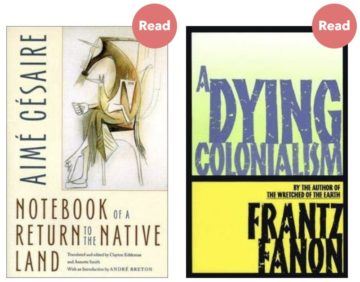 Postcolonial literature brings together writings from formerly colonised territories, allowing commonalities across disparate cultures to be identified and examined. Here, the University of Toronto academic Anjuli Fatima Raza Kolb recommends five key works that explore philosophical and political questions through allegory, personal reflection and powerful polemic.
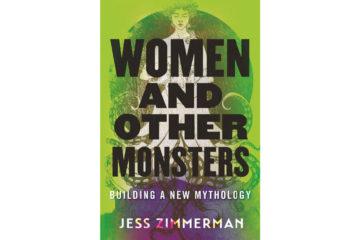 In high school, one of author Jess Zimmerman’s Internet usernames was Medusa. A self-described mythology nerd, her childhood copy of “D’Aulaires’ Book of Greek Myths” was well-worn. But as she recalls in her scorching collection of essays, “Women and Other Monsters: Building a New Mythology,” she particularly identified with the snake-haired creature whose power originated in ugliness: The mere sight of Medusa could turn a man to stone. As a teenager who was profoundly insecure about her looks, Zimmerman writes that calling herself Medusa was “an attempt to recuse myself from the game of human attraction before anyone pointed out that I’d already lost.”
 The pandemic is sweeping through India at a pace that has staggered scientists. Daily case numbers have exploded since early March: the government reported 273,810 new infections nationally on 18 April. High numbers in India have also helped drive global cases to a daily high of 854,855 in the past week, almost breaking a record set in January. Just months earlier, antibody data had suggested that many people in cities such as Delhi and Chennai had already been infected, leading some researchers to conclude that the worst of the pandemic
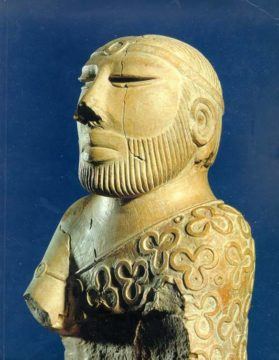 Adam S. Green in the Journal of Archaeological Research (h/t
 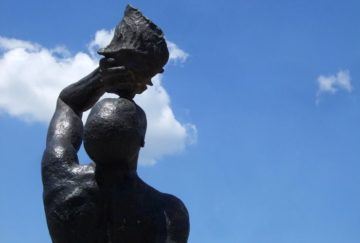 Steve Hahn in Boston Review:
 Dilip Hiro in The Nation:
 Philip Roth
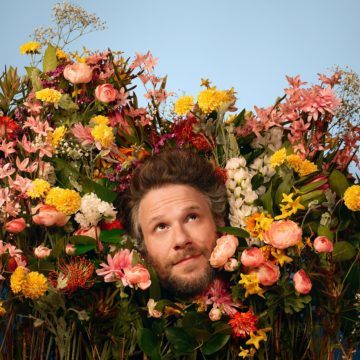 Seth Rogen’s home sits on several wooded acres in the hills above Los Angeles, under a canopy of live oak and eucalyptus trees strung with outdoor pendants that light up around dusk, when the frogs on the grounds start croaking. I pulled up at the front gate on a recent afternoon, and Rogen’s voice rumbled through the intercom. “Hellooo!” He met me at the bottom of his driveway, which is long and steep enough that he keeps a golf cart up top “for schlepping big things up the driveway that are too heavy to walk,” he said, adding, as if bashful about coming off like the kind of guy who owns a dedicated driveway golf cart, “It doesn’t get a ton of use.” Rogen wore a beard, chinos, a cardigan from the Japanese brand Needles and Birkenstocks with marled socks — laid-back Canyon chic. He led me to a switchback trail cut into a hillside, which we climbed to a vista point. Below us was Rogen’s office; the house he shares with his wife, Lauren, and their 11-year-old Cavalier King Charles Spaniel, Zelda; and the converted garage where they make pottery. I was one of the first people, it turns out, to see the place. “I haven’t had many people over,” Rogen said, “because we moved in during the pandemic.”
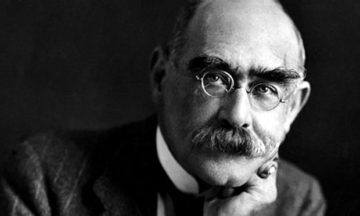 It is always tricky writing about Kipling. By the time of his death in 1936 his jingoism, with its babble about the “white man’s burden” in Africa, made many moderate souls feel queasy. Batchelor is too scrupulous a scholar to ignore what came after the Just So Stories – indeed he points out that within two years of the book’s publication the satirist Max Beerbohm was drawing Kipling as an imperial stooge, the diminutive bugle-blowing cockney lover of a blousy-looking Britannia.
 The evenhanded approach of
  I thought I was so clever. For a few days, anyway.
 The first numbers that come to mind when thinking about Tim Burton’s Alice in Wonderland might be how much money the movie is raking in at the box office.
 I would like to stage a fight between two different accounts of the current political landscape—what’s been called the “post-truth” era, the infodemic, the end of democracy, or perhaps most accurately, the total shitshow of the now.