
Doris Sommer in Harvard Magazine:
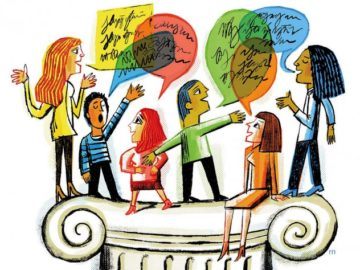 THE DAY BEFORE she cast two tiebreaker votes in the Senate in early February, Vice President Kamala Harris brought chocolates for senators on both sides of the aisle and then huddled with a few senior members around a fire in her office. The gestures were no doubt strategic, given her determination to support progressive decisions, but they also conjure references to another period of social gatherings hosted by elegant women. It was during the Enlightenment, when such gatherings in private salons outside the royal palaces softened the absolutist culture of European monarchies.
From the seventeenth century on, spirited conversation in salons became a favorite pastime for educated noblemen and a burgeoning class of professionals, sundry guests who could exercise the wit and curiosity that they acquired through humanistic education. In the welcoming atmosphere of private homes, where hostesses presided with social grace to stimulate lively but not contentious conversation, gentlemen got together with businessmen, military leaders, diplomats, poets, and philosophers to talk about a range of topics that often had no apparent practical or moral value. Disinterested sparring made social equality thinkable. Diverse guests recognized one another as worthy interlocutors. Conversation across class differences depended on talking about fascinating things that didn’t rely on privilege or expertise. They talked about beauty, for example, precisely because it has no established criteria and depends on personal, subjective, responses that people want to share in inter-subjective judgments, to take Immanuel Kant’s line of thinking. When conversations veered toward interests in politics and economics, an alert hostess would tactfully steer the speakers back to the safer space of exciting but uncontentious sparring about the arts.
Aesthetics is the name of this egalitarian activity, a social venture that follows from being surprised by something beautiful, or even something ugly. The surprise is visceral and stays subjective, but the experience—when we think and talk about it—is social. Extended engagement with beauty or the sublime has no practical purpose beyond the pleasure of engaging. This shared pause from pursuits is an obvious and available antidote to the crush of self-interested calculation and competition.
More here.
 GET BIG FAST was an early Amazon motto. The slogan sounds like a fratty refrain tossed around at the gym. Jeff Bezos had it printed on T-shirts. More than twenty-five years after leaving his position as a Wall Street hedge-fund executive to found Amazon, Bezos’s size anxiety is long gone. (At least as it pertains to his company; the CEO’s Washington, DC, house has eleven bedrooms and twenty-five bathrooms, a bedroom-to-bathroom ratio that raises both architectural and scatological questions.) Bezos is now worth $180 billion. Amazon, were it a country, would have a larger GDP than Australia.
 Zachary D. Carter in the New York Times:
 Gregory Kaebnick in Boston Review:
 Katie Kheriji-Watts in Hyperallergic:
 Jennifer Wilson in The Nation:
 Adam Shatz in the LRB:
 F
F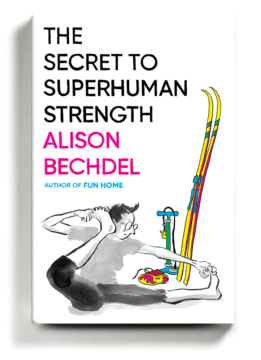 Early in her career, Alison Bechdel, then a cult cartoonist — “at the pinnacle of my bitterness,” she would later say — was invited to contribute to a special gay pride issue of Seattle’s alternative newspaper The Stranger. She fired off a comic strip titled “Oppressed Minority Cartoonist.” She drew herself at her desk, flanked by a bottle of Scotch, mid-tirade. Why had her work been pigeonholed? And why had she complied so willingly, chronicling only lesbians, her “oppressed minority group”? In the last panel, her rant is interrupted by a phone call inviting her to contribute to that very gay pride issue. “I’d be honored,” she capitulates.
 To get this out of the way: Destroying the coronavirus is, without question, paramount. Millions of people are dead, and tens of thousands more die every week. At the same time, the majority of the trillions of microbes that inhabit our skin and gut—collectively, our microbiome—are either
 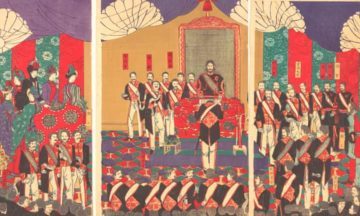 Few documents are venerated as much as the American constitution. Until recently, one million people a year filed past the original copy on display in the Rotunda for the Charters of Freedom in Washington DC. Yet, as Linda Colley’s brilliant new book shows, viewing constitutions as national tablets of stone tells us more about their contemporary charisma than the complex histories from which they were wrought. In this compelling study of constitutions produced around the world between the mid-18th century and the outbreak of the first world war, she upends the familiar version of history at every turn. Out goes the myth that constitutions were the product of democratic aspirations or revolution – rather they arose from the ashes of war or the threat of invasion. Nations may have been girded by constitutional documents, but these were borderless texts, available for adaptation across time and space. Above all, constitutions were “protean and volatile pieces of technology” that travelled far and wide, assisted by the expansion of print media and the speeding-up of long-distance travel and communication.
 Sometime in mid-2009
 An outbreak the size of India’s second wave, apparently fuelled by Covid-19 variants that appear to be more infectious than earlier strains, would have overwhelmed most public health systems – let alone one of the
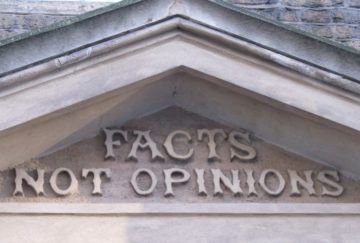
  TRUST THE SCIENCE, we’re told. Wear masks! Science says so! These injunctions are likely to induce a couple of reflex responses. On the one hand, saying that you are in favor of Science — I’ll keep it capitalized for now — is somewhat like saying that you are all for oxygen and cute puppies and pleasant strolls. It is so straightforward as to be anodyne. But then there is the counter-reflex, with the “pro-Science” mantra sounding like a liberal shibboleth, and the Republican Party (or its voters) cast as Those Who Don’t Trust Science. Recent