
Josephine Rowe at Lit Hub:
 The Bone House, published in 2005, is either a decade’s work or a lifetime’s, depending on how you look at it. It is the distillation of an expansive mind that seeks to delve and delve. Her tone is never didactic—rather, discursive, exploratory, delighted, unjaded, alive. To read more than a few pages at a stretch is to travel a long way from where you set out. Sometimes to travel so far as to lose the view of the mountain, only to be brought back via an unfamiliar face of it.
For a little more than a week, I read—I traveled through—very slowly. The book was there for mornings, the days drawing their shape and tone from as few as half a dozen pages. Or it was a place to come for refuge, panhandling at four am, unable to sleep, tilting the book towards the cheap lamp to ask, what lasts?
more here.
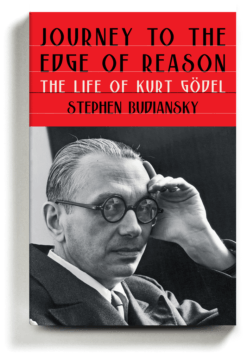 Gödel could go for long walks with his fellow institute scholar Einstein, who sponsored Gödel’s citizenship application and called him the greatest logician since Aristotle, but he was wracked by physical ailments and nervous conditions. A doctor told him he had a bleeding ulcer, which he strangely refused to believe, even though he was also a self-medicating hypochondriac. He subscribed to all sorts of conspiracy theories, insisting that “nothing happens without a reason,” and that the reason was almost always a hidden one. The unlimited freedom he had at the institute proved to be double-edged, Budiansky observes. In one sense, it saved Gödel’s life; but it also allowed his consciousness to wander into the darkest places, without the checks on his expansive anxieties that interactions with the ordinary world might have otherwise provided.
 W
W Just over five years ago, Inky the octopus became a folk hero because of his escape from a New Zealand aquarium. After squeezing through a narrow chink in his tank, he crawled across the floor and found an opening to a 164-foot-long drainpipe that led to the ocean. As much as I enjoyed the film based on Stephen King’s “The Shawshank Redemption”, which climaxes in Tim Robbin’s daring prison break, I only wish that a gifted animation team like the one that made “How to Train Your Dragon” could tell Inky’s story.
 In Delhi, Shahid also became aware of the city’s Mughal and colonial history, and was impressed by its architecture. In the early ’60s, the Mexican poet Octavio Paz had visited New Delhi and had been charmed by its architecture. He wrote numerous poems about the city and about all that he had witnessed here. He found Delhi’s “aesthetic equivalent” in “novels, not in architecture”, and to him, wandering the city was “like passing through the pages of Victor Hugo, Walter Scott, or Alexandre Dumas”.
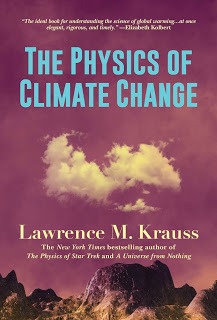 In the past years, media coverage of climate change has noticeably shifted. Many outlets have begun referring to it as “climate crisis” or “climate emergency”, a mostly symbolic move, in my eyes, because those who trust that their readers will tolerate this nomenclature are those whose readers don’t need to be reminded of the graveness of the situation. Even more marked has been the move to no longer mention climate change skeptics and, moreover, to proudly declare the intention to no longer acknowledge even the existence of the skeptics’ claims.
 To those who still harbor doubts about the justness of this war, who continue to question the scientific consensus on global warming and the ravages it promises, I ask only that you entertain, if there is a chance you are right, that there is also a chance you are wrong. Let us even say, for argument’s sake, that the virtual certainty of scientists were reduced to 50 percent confidence and the forecasted effects of climate violence were reduced in severity by 50 percent as well. That would still justify the most massive mobilization of human energy and resources the world has ever seen, because the likely outcome would still be far worse than any threat we have faced in the past.
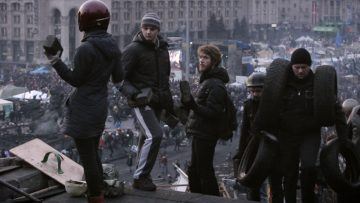 Ukrainian director Sergei Loznitsa once said that his films were about “the decay and disintegration of the former Russian Empire.” With 29 titles under his belt, ranging from fiction to observational and archival documentaries, Loznitsa demonstrates a keen interest in form, particularly in using fictional devices within documentary. He also opposes the recent tendency in Eastern Europe to frame histories with war and authoritarianism in heroic or rosy terms.
 In the 1980s, zoologists were thus astonished to discover that Salticidae, or jumping spiders, a family of the arachnids that contains more than five hundred genera and over five thousand separate species, had vision systems on par with cats, mammals famous for their acute eyesight. With around six hundred thousand neurons in its brain (roughly half that of a fly or a honeybee), a jumping spider can recognize images on a television screen and is the only invertebrate known to be capable of such a sophisticated feat of visual processing. “How does this speck of dust of a brain achieve such a complicated task?” asks Simon Pollard, curator of invertebrate zoology at the Canterbury Museum in Christchurch, New Zealand. “We need to look deep into these unblinking eyes.”
 T
T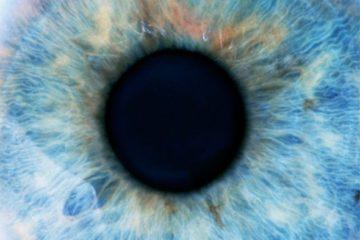 It has been said that “the eyes are the window to the soul,” but new research suggests that they may be a window to the brain as well.
 WHEN WRITERS BEGIN to learn our craft, we’re told to write for ourselves. As one becomes further embedded in the creative process, it can be difficult to work with this pure impulse in mind. Write for ourselves, yes, but if the work never finds readers, what does that say about us? Do stories that exist in a one-sided conversation with their authors have as much value as stories that take on a life of their own?
 The hydra is a simple creature. Less than half an inch long, its tubular body has a foot at one end and a mouth at the other. The foot clings to a surface underwater — a plant or a rock, perhaps — and the mouth, ringed with tentacles, ensnares passing water fleas. It does not have a brain, or even much of a nervous system.
 Israel’s attempt to justify its latest brutal assault on Gaza rings hollow to anybody familiar with events in Israel, where the government of Prime Minister Binyamin Netanyahu, backed by anti-Arab racists, has systematically, cruelly, and persistently violated the basic human rights of the Arab population. Human Rights Watch, a global NGO with many Jewish leaders, has recently condemned Israel for
  Few would dispute that, all things considered, some exposure to works of imaginative literature (novels, plays, poems) as part of a rounded education is better than no such exposure. Beyond that, disagreements are rife. Culture wars loom, with anxieties over curriculum choice, gender and racial bias, elitism, contested pedagogic methods, and a disconcerting vagueness about aims sought.