
From Phys.Org:
 The sclera of the eye is devoid of pigment, which is why humans can easily follow where counterparts are looking. Researchers have long believed this facilitates glance-based communication. A team of zoologists based at the University of Duisburg-Essen (UDE) and the Anthropological Institute in Zurich is now challenging this traditional view in a new study. The researchers looked at communicative behavior and eye color in apes and question the proposed connection between the two phenomena. The results have just been published in Scientific Reports.
“Part of this hypothesis is based on the idea that among primates, only humans have white sclerae,” says study leader Kai Caspar (UDE). “However, only few comparative data have been available to back up this claim. Therefore, we assessed scleral pigmentation and measured eye contrast values in photos of more than 380 hominoids from 15 species. These included humans, great apes such as chimpanzees and orangutans, and gibbons, the small apes.” Although all hominoids are closely related, they communicate by different means. UDE zoologist Caspar says, “Different from us humans, glances play only a subordinate role in great ape communication, and for the gibbons they seem to have no communicative significance at all. So if the traditional assumption were true, differences in pigmentation should comply to differences in communicative behavior: the lighter the sclera, the more are the eyes used to convey information.”
More here.
 John Betjeman’s life at Oxford was complicated. He wrote poems and made friends, he discovered beauty and rejoiced in it, but he struggled academically, in part because of an impossible relationship with his tutor, who thought him an “idle prig” and did nothing to disguise his hostility. The tutor complained about Betjeman’s silly aestheticism in his diary, but didn’t confine himself to private musings: He treated Betjeman with open contempt, and when Betjeman needed a supportive letter from him, he wrote a rather obviously unsupportive one––which was one reason among several that Betjeman never managed to graduate. What the tutor did not realize was that Betjeman’s frivolous manner was a kind of protective carapace, a way to shield himself from suffering and emotional upheaval.
 Alexander Polyakov
 Like many public intellectuals who are worth reading,
  In Akwaeke Emezi’s new book,
  O
O Marco D’Eramo in The New Left Review’s Sidecar:
 Frankie Thomas in The Paris Review:
 W-3, Bette Howland’s memoir of her stay in a psychiatric hospital following an overdose, was first published in 1974, and comes to us now following the reissue, last year, of her 1978 collection of stories,
 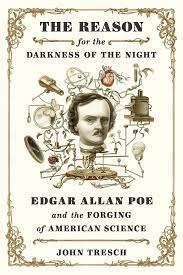 Is Poe really the most influential American writer? Note that I didn’t say “greatest,” for which there must be at least a dozen viable candidates. But consider his radiant originality. Before his death in 1849 at age 40, Poe largely created the modern short story, while also inventing or perfecting half the genres represented on the bestseller list, including the mystery (“The Murders in the Rue Morgue,” “The Gold-Bug”), science fiction (“The Facts in the Case of M. Valdemar,” “The Conversation of Eiros and Charmion”), psychological suspense (“The Tell-Tale Heart,” “The Cask of Amontillado”) and, of course, gothic horror (“The Fall of the House of Usher,” “The Masque of the Red Death,” the incomparable “Ligeia”).
 When I’m stuck—and I’m stuck all the time—I look at “