Adam Kirsch in The New Yorker:
 The Western tradition has never been more appealingly portrayed than in Rembrandt’s 1653 painting “Aristotle with a Bust of Homer.” Whether you stand in front of it at the Metropolitan Museum or look at it online, the painting turns you into a link in a chain that goes back three thousand years. Here you are in the twenty-first century, contemplating a painting made in Amsterdam in the seventeenth century, which portrays a philosopher who lived in Athens in the fourth century B.C., looking at a poet thought to have lived in the eighth century B.C. Tradition abolishes time, making us all contemporaries. Yet the painting hints that Homer doesn’t quite belong in the same dimension of reality occupied by you, Aristotle, and Rembrandt.
Aristotle is portrayed realistically in the dress of Rembrandt’s time—sumptuous white shirt, simple black apron, and broad-brimmed hat. (It wasn’t until the twentieth century that art historians determined that the figure was Aristotle; earlier identifications included a contemporary of Rembrandt’s, the writer Pieter Cornelisz Hooft.) In other words, Aristotle is a human being like us, albeit an extraordinary one. Homer, however, is a white marble bust—a work of art within a work of art.
It’s a reminder that, even for Aristotle, Homer was more a legend than a man. In his Poetics, the philosopher credits the poet with inventing epic, drama, and comedy. “It is Homer who has chiefly taught other poets the art of telling lies skillfully,” he writes with evident ambivalence. Herodotus, known as the first historian, saw Homer, along with the poet Hesiod, as having invented Greek mythology, calling them the first to “give the gods their epithets, to allot them their several offices and occupations, and describe their forms.” When it comes to things like when and where Homer lived, however, the earliest sources are already unreliable. According to tradition, the poet was blind and was born on the island of Chios, where a guild of rhapsodes—reciters of epic poetry—later became known as the Homeridae, “children of Homer,” and claimed to be his direct descendants. But there is no evidence for any of these assertions, and some ancient biographies of Homer are obviously fanciful.
Herodotus writes that Homer lived “four hundred years before my time,” which would put him in the ninth century B.C., but adds that this is “my own opinion,” with no real proof behind it.
More here.

 Tyree’s answer to our present dilemma is weirdness, “cultivated eccentricity as an antidote to a world gone mad.” He proposes a Pynchonian counterforce, a ragged band of outsiders and misfits to resist all the orthodoxies of the day. Despite the polarization of the moment, both the left and the right feverishly engage in what Tyree terms timewashing: “[O]ur era’s signature creation of fake pasts that purport to cleanse history of its deep stains and recurring nightmares with the scented spray of propaganda.” Our “incapacity to live with the past in all its troubling complexity” poses a grave danger, he argues, and better fiction could be our salvation. He’s right, of course, but he also knows the unlikelihood of his solution: “Is it naïve to assert that we badly need dreamers like Pynchon to help us imagine a different future by reading through a different lens on our past?” Tyree answers his own question just three sentences later: “Yeah, that’s probably naïve.”
 It’s often cancer’s spread, not the original tumor, that poses the disease’s most deadly risk. “And yet metastasis is one of the most poorly understood aspects of
 These squiggles have a meaning. So do spoken words, road signs, mathematical equations and signal flags. Meaning is something with which we’re intimately familiar – so familiar that, for the most part, we barely register or think about it at all. And yet, once we do begin to reflect on meaning, it can quickly begin to seem bizarre and even magical. How can a few marks on a sheet of paper reach out across time to refer to a person long dead? How can a mere sound in the air instantaneously pick out a galaxy light-years away? What gives words these extraordinary powers? The answer, of course, is that we do. But how?
 While the dramatic breach of the Edenville Dam captured national headlines, an Undark investigation has identified 81 other dams in 24 states, that, if they were to fail, could flood a major toxic waste site and potentially spread contaminated material into surrounding communities.
 A
A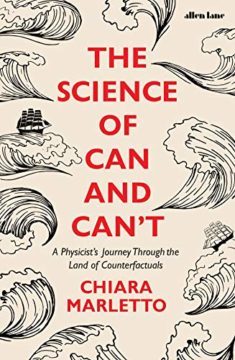 If you could soar high in the sky, as red kites often do in search of prey, and look down at the domain of all things known and yet to be known, you would see something very curious: a vast class of things that science has so far almost entirely neglected. These things are central to our understanding of physical reality, both at the everyday level and at the level of the most fundamental phenomena in physics—yet they have traditionally been regarded as impossible to incorporate into fundamental scientific explanations. They are facts not about what is—“the actual”—but about what could or could not be. In order to distinguish them from the actual, they are called counterfactuals.
 The inspiration for
  You observe a phenomenon, and come up with an explanation for it. That’s true for scientists, but also for literally every person. (Why won’t my car start? I bet it’s out of gas.) But there are literally an infinite number of
 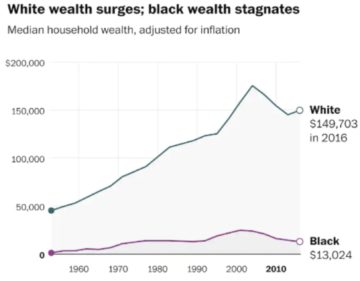 To mark 100 years since the Tulsa Massacre, President Biden
  H
H A research team from the University of Massachusetts Amherst has created an electronic microsystem that can intelligently respond to information inputs without any external energy input, much like a self-autonomous living organism. The microsystem is constructed from a novel type of electronics that can process ultralow electronic signals and incorporates a device that can generate electricity “out of thin air” from the ambient environment. The groundbreaking research was published June 7 in the journal Nature Communications.
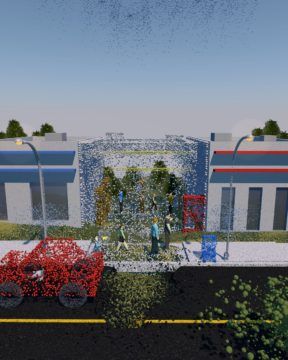 In 2013, a philosopher and ecologist named Timothy Morton proposed that humanity had entered a new phase. What had changed was our relationship to the nonhuman. For the first time, Morton wrote, we had become aware that “nonhuman beings” were “responsible for the next moment of human history and thinking.” The nonhuman beings Morton had in mind weren’t computers or