
Violeta Ruiz at Aeon Magazine:
On 25 November 1915, the American newspaper The Review published the extraordinary case of an 11-year-old boy with prodigious mathematical abilities. Perched on a hill close to a set of railroad tracks, he could memorise all the numbers of the train carriages that sped by at 30 mph, add them up, and provide the correct total sum. What was remarkable about the case was not just his ability to calculate large numbers (and read them on a moving vehicle), but the fact that he could barely eat unassisted or recognise the faces of people he met. The juxtaposition between his supposed arrested development and his numerical facility made his mathematical feats even more impressive. ‘How can you account for it?’ asked the article’s author. The answer took the form of a medical label: the boy was what 19th-century medicine termed an ‘idiot savant’. He possessed an exceptional talent, despite a profound impairment of the mental faculties that affected both his motor and social skills.
A century after The Review relayed the prodigious child’s mathematical abilities, trying to understand ‘how they do it’ still drives psychological research into savantism or ‘savant syndrome’ to this day. The SSM Health Treffert Centre in Wisconsin – named after Darold Treffert (1933-2020), one of the leading experts in the field – defines the savant phenomenon as ‘a rare condition in which persons with various developmental disorders, including autistic disorder, have an amazing ability and talent’.
more here.
Enjoying the content on 3QD? Help keep us going by donating now.
 In 2000 TIME’s editors sat down to
  We all have those family recipes that get passed down from generation to generation. From chocolate chip cookies to grandma’s secret spaghetti sauce, these recipes connect us to our past and our loved ones. But some of these family recipes are a little more unique than the rest — like the tradition of using ants to make yogurt.
 The finalists for this year’s National Book Awards have been announced. Among the 25 nominees are novelists
  Are AIs capable of murder?
 Matthew Egbert
 “E
“E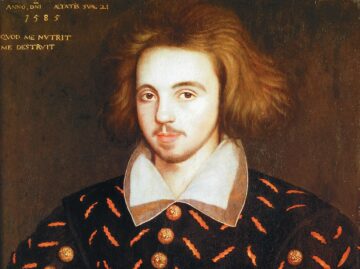 He was a radical,
 W
W Lehman the poet-journalist was now series editor of a popular anthology, a prestige role that bred more prestige roles: judging the National Book Award for poetry, editing The Oxford Anthology of American Poetry, and a 22-year position teaching creative writing at The New School. By handing over annual guest editorship of The Best American Poetry to prominent poets such as Ashbery, Yusef Komunyakaa, Edward Hirsch, and Louise Glück, Lehman aligned the anthology series with a broad spectrum of influential and prize-winning poets whose “ecumenical” taste—Lehman’s favored descriptor for his guest editors’ disposition—became aligned with his own.
 I had a visceral distaste for the country’s imperial hegemony and its support of oppressive regimes all over the world in the name of fighting the Cold War. The ongoing Vietnam War was an obvious irritant. At the same time, I knew that in the world of new ideas, entrepreneurial innovations and academic excellence, American pre-eminence was undeniable.
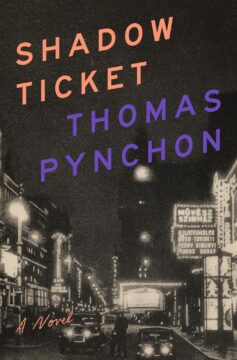 THE PATERNITY OF Hicks McTaggart—defender of dames, dodger of bombs, twirler of spaghetti, the amiable behemoth hero of Thomas Pynchon’s Shadow Ticket who prowls the streets of Depression-era Milwaukee—is a question his author leaves open. His mother, Grace, and her sister, Peony, “grew up in the Driftless Area, a patch of Wisconsin never visited by glaciers, so that its terrain tends to be a little less flat and ground down than the rest of the state, free of the rubble, known as drift, that glaciers leave behind.” (Despite its charming name, the Driftless Area is a real place, not a Pynchonian invention.) Once old enough to hitchhike (“Soon as they could figure out how to bring their thumbs out of their mouths and into the wind”), Grace and Peony started consorting with circus performers wintering in Baraboo, a town at the Driftless Area’s northeastern edge, before making their way to Milwaukee to take ordinary jobs and marry ordinary men. Grace’s marriage to Eddie McTaggart was interrupted by the discovery of her ongoing affair with Max, a German elephant trainer back in Baraboo. Eddie skipped town and headed west, never to be heard from again. Of Max we are told: “When other boys got sentimental they talked about all the children you were going to have, with Max it was more likely to be elephants.”