
Jeff Tollefson in Nature:
 US President Joe Biden’s administration wants to create a US$6.5-billion agency to accelerate innovations in health and medicine — and revealed new details about the unit last month1. Dubbed ARPA-Health (ARPA-H), it is the latest in a line of global science agencies now being modelled on the renowned US Defense Advanced Research Projects Agency (DARPA), whose work a generation ago laid the foundation for the modern Internet.
…The US Department of Defense established DARPA in 1958, one year after the Soviet Union launched the world’s first satellite, Sputnik 1. The goal was to avoid falling behind the Soviets, and to ensure that the United States remained a world leader in technology. DARPA was instrumental in early computing research, as well as in developing technologies such as GPS and unmanned aerial vehicles (See ‘Following in DARPA’s footsteps’).
DARPA functions differently from other major US science funding agencies, and has a leaner budget ($3.5 billion). Its roughly 100 programme managers, borrowed for stints of 3–5 years from academia or industry, have broad latitude in what they fund, and actively engage with their teams, enforcing aggressive deadlines and monitoring progress along the way. By comparison, projects funded by agencies such as the US National Institutes of Health (NIH) typically see little engagement between programme managers and the researchers they fund, beyond annual progress reports. Projects funded by these agencies also tend towards being those that are likely to succeed — and thus typically represent more incremental advances, says William Bonvillian, a policy researcher at the Massachusetts Institute of Technology in Cambridge who has studied DARPA.
More here.
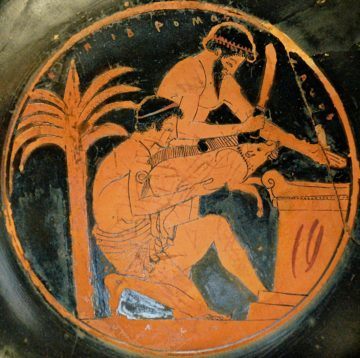 In her influential 1971 article, “A Defense of Abortion”,
 Quantum computers
 As a new parent of boy/girl twins (at least as they were assigned at birth), I puzzle about the cultural pressure to scrutinise my infant son’s burgeoning masculinity lest it emerge as ‘toxic’. I catch myself watching and wondering, resisting the urge to police his interactions with his sister: He took the toy she was playing with, is this aggression that will stifle her confidence? She seems unbothered and has quickly snatched it back – phew! Is it bullying or an early form of manspreading when, both of them vying for the same object, he moves into her space and pushes her aside?
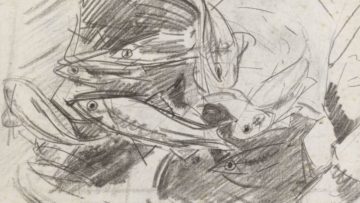 The saltwater aquarium in my new dentist’s office is its best feature. My favorite fish is a red fish with big eyes and a black stripe along its back. He has a generally grumpy demeanor, and I cannot help but feel a friendship form between us. I take photos of him and sometimes post them to Instagram. (“This red fish is my favorite fish, he is a total weirdo.”) He is popular among my friends.
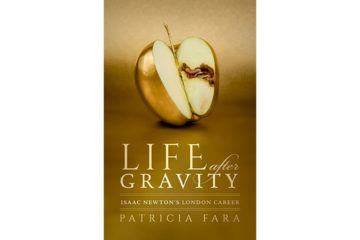 Many of us tend to like our geniuses as neatly lovable caricatures. And when it comes to Isaac Newton, we tend to envision a virtually disembodied intellect who was inspired by a falling apple to revolutionize physics from the quiet of his study at Trinity College. But even when Newton was performing his intellectual feats at Cambridge in the 1680s, he was eager to move on to a new life. Patricia Fara, historian of science at Cambridge University, seeks to chronicle that period in “Life after Gravity: Isaac Newton’s London Career.” In this book she presents Newton as “a metropolitan performer, a global actor who played various parts.”
 Elham Saeidinezhad over at his website:
 On the night of August 20, 1968, neighbors woke the Czech writer Bohumil Hrabal and his wife, Eliška Plevová, to tell them that the Soviet Union was invading. Already their occupiers, the Soviets were now coming to put an end to the reforms of the Prague Spring. By morning, planes were flying low overhead, and soldiers and tanks filled the streets. One tank pointed its cannon directly at the offices of the Union of Czechoslovak Writers in Wenceslas Square. Hrabal, however, was eager to fulfill his duties as the best man at the wedding of his friend, the graphic artist Vladimír Boudník, in nearby Český Krumlov. “I set out in my car,” Hrabal writes in The Gentle Barbarian, “but I couldn’t get out of Prague, either through the city centre, or by using back routes, because the fraternal armies had arrived to liquidate something that was not there.” So he returned home, tried to attend a gallery show on modern American art (sorry, closed), and later relayed his troubles to his and Boudník’s mutual friend, the writer and philosopher Egon Bondy. Bondy, who called Hrabal by his nickname, Doctor, explodes in a frenzy of jealousy and admiration for Boudník:
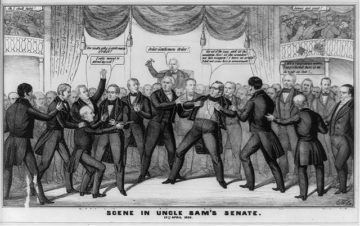 Gideon Jones in Strife:
 Robert Hockett in Forbes:
 T
T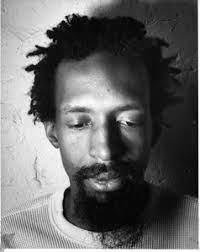 Eastman died in 1990, at the age of forty-nine. Ebullient and confrontational in equal measure, he attended the Curtis Institute of Music, joined the Creative Associates program at the University of Buffalo, and found a degree of renown in avant-garde circles. In his final years, struggling with addiction, he faded from view. As a Black gay man, he encountered resistance and incomprehension during his lifetime. He is now experiencing a dizzying posthumous renaissance, to the point where his Symphony No. II is scheduled for the New York Philharmonic’s 2021-22 season.
 The United States is not in the midst of a “culture war” over race and racism. The animating force of our current conflict is not our differing values, beliefs, moral codes, or practices. The American people aren’t divided. The American people are being divided. Republican operatives have