
Steve Lagerfeld in The Hedgehog Review:
 In the 1980s, I got to know a man who seemed to be the walking embodiment of privilege. He was an elderly but vigorous WASP, tall and lean, with ancestry in this country that reached back to the seventeenth century. A Princeton man, he had gone into finance and risen to become CEO and chairman of a major regional bank. He had one of those WASP names one can barely resist satirizing, but he had been known all his life by his childhood nickname, Curly.
This was just the first hint that this man was something of an anomaly. (Curly was also, inevitably, almost entirely bald.) Long retired by the time I met him, he had chalked up the expected array of civic and charitable activities during his career. But in retirement he was pursuing with characteristic energy an assortment of more hands-on volunteer jobs. One of them in particular struck me. He was a hospital orderly, pushing carts here and there, assisting patients’ families, and doing various tasks too small or tedious for the nursing staff. “A candy striper,” he joked. As far as I know, he was never asked to empty bedpans, but I’m pretty sure he would have done it.
Where, I have often wondered, does such a spirit of service come from? How could it be revived? Today’s elites are often generous givers of money, yet it’s hard to imagine, say, Bill Gates, a magnificently prolific philanthropist, pushing a cartful of sheets and towels down a hospital corridor.
More here.
 The
The  “No one who saw the photo thought I would survive,” said Mohammad Zubair, describing an image, taken by Siddiqui, which came to define last year’s anti-Muslim pogrom in New Delhi. Zubair was beaten by a mob of Hindu men, many wearing bike helmets. “It was like a war zone,” Siddiqui said, recounting how he had walked over the rubble of broken bricks and batons. He stood about a yard away from the group, his mask flecked with Zubair’s blood. He was spotted, and the attackers paused, looking right at his camera. Siddiqui fled just as Zubair lost consciousness. A group of young Muslim boys found Zubair and asked the neighborhood doctor to perform emergency stitches on his head wounds. Siddiqui looked for him later, relieved to find him alive in a local hospital. He made a portrait against the pale blue wall of the intensive treatment wing, Zubair’s head wrapped in gauze, eyes bruised and swollen. Siddiqui often said that he photographed “the human face of a breaking story.”
 It was embarrassingly obvious that
  D
D The first quarter of the twenty-first century has been an uneasy time of rupture and anxiety, filled with historic challenges and opportunities. In that close to twenty-five-year span, the United States witnessed the ominous opening shot of September 11, followed by the seemingly unending Afghanistan and Iraq wars, the effort to control HIV/AIDS, the 2008 recession, the election of the first African American president, the legalization of same-sex marriage, the contentious reign of Donald Trump, the stepped-up restriction of immigrants, the #MeToo movement, Black Lives Matter, and the coronavirus pandemic, just to name a few major events. Intriguingly, the essay has blossomed during this time, in what many would deem an exceptionally good period for literary nonfiction—if not a golden one, then at least a silver: I think we can agree that there has been a remarkable outpouring of new and older voices responding to this perplexing moment in a form uniquely amenable to the processing of uncertainty.
 CO2 concentrations now sit at 412 ppm, Earth’s temperature is a full 1.3 °C (2.3 °F) above pre-industrial levels, and still, no meaningful, sustained initiatives to reduce our global carbon emissions have been taken. In fact, they’re presently at an all-time high. The longer we delay meaningful climate action, the more severe the consequences will get not just for all of humanity today, but for generations and even millennia to come. Although our climate future intimately depends on how global emissions unfold in the coming years and decades, the latest IPCC report provides unprecedented clarity on a number of important issues. Here are the top six takeaways we should all accept and understand.
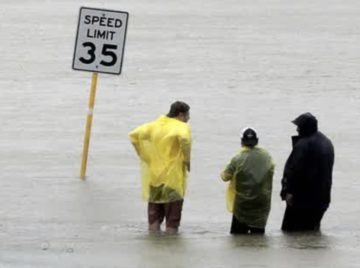 In June, an unprecedented heat wave in the Pacific Northwest killed hundreds of people and shattered records in Oregon, Washington and Idaho. Canada logged a new national record high when a town in British Columbia soared to 121.3 degrees Fahrenheit.
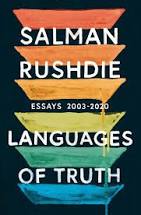 Rushdie’s opening essay, “Wonder Tales,” takes us back to first things: the ancient mythology, both Eastern and Western, that would provide a blueprint for the literature that followed, and the subsequent “wonder tales” that captured his childhood imagination. Treasured among his memories are trips to the university library of Aligarh, riding behind his grandfather on a bicycle (fictionalized as Dr. Aziz in Midnight’s Children, in those pages biking instead in Agra). Yet these were not moralizing gods. Zeus and the gang behaved as badly as their human subjects, as did their Hindu counterparts. But while the Western gods of Olympus and their stories are today relegated to the sidelines of daily life, no longer occupying center stage, the pantheon of Hindu deities are alive and well in India. When, in 2012, Jyoti Singh died of horrific wounds after being raped and thrown off a moving bus in New Delhi, sparking outrage worldwide, an Indian state minister said that she had crossed the Lakshman rekha line—the magical line in the epic poem Ramayana that the god Ram draws around his lover Sita to keep her safe while he is away.
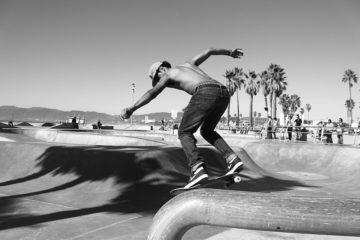 For a fairly simple activity, skateboarding’s internal code of competition is more nuanced and complex and fluid than any single contest could possibly model. Because the Illusion is a burner from Malibu, he speaks of this nuance in terms of the cosmos. This cosmic side has led to some ironies over the years, like a photo I keep pinned to my bulletin board of a Nike 6.0 hoodie that says “Jocks Suck” across the chest. It is usually pretty clear who to call the best skater at any given session, or among a group of friends. But what looks like victory among pack dogs and, I suppose, salespeople and law students and most other worlds premised on rankings, is among skaters almost wholly irrelevant.
 T
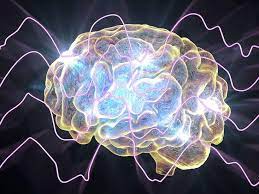
T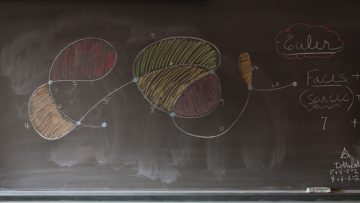 The disembodied brain in a vat is an amusing trope of science fiction. Without a vat, the brain needs a body to generate the nutrients to maintain itself and to furnish information about its environment. Sight, hearing, touch, taste, smell and proprioception help us to navigate, and find food or reproductive partners. Science fiction assumes that, with those basic needs taken care of by the vat, the brain can devote its full energies to developing genius intelligence.
 A few years before he died in exile from Nazism, the Austrian novelist Robert Musil delivered a lecture in Vienna, ‘On Stupidity’ (1937). At its heart was the idea that stupidity was not mere ‘dumbness’, not a brute lack of processing power. Dumbness, for Musil, was ‘straightforward’, indeed almost ‘honourable’. Stupidity was something very different and much more dangerous: dangerous precisely because some of the smartest people, the least dumb, were often the most stupid.
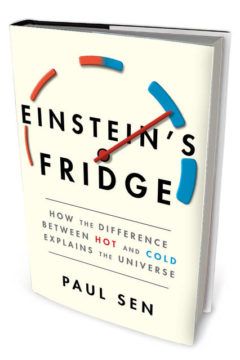 Like many science writers, I have often adopted the conceit that
 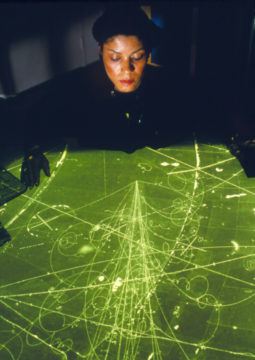 At every moment, subatomic particles stream in unfathomable numbers through your body. Each second, about 100 billion neutrinos from the sun pass through your thumbnail, and you’re bathed in a rain of muons, birthed in Earth’s atmosphere. Even humble bananas emit positrons, the electron’s antimatter counterpart. A whole universe of particles exists, and we are mostly oblivious, largely because these particles are invisible.
 Once a specialized school of thought developed in law schools, critical race theory (CRT) has become a favorite wedge issue for the Republican Party. During the final months of his presidency, Trump warned that CRT was infiltrating American schools and ordered a halt to what he claimed was CRT-inspired diversity training in federal agencies. Florida’s governor, Ron DeSantis, regularly refers to CRT as a Marxist plot to undermine the nation, and Christopher Rufo, director of the Center on Wealth and Poverty at the conservative Discovery Institute, terms it “a grave threat to the American way of life.”