
Category: Recommended Reading
On ‘A Demon-Haunted Land’ by Monica Black
Andrew Stuttaford at The New Criterion:
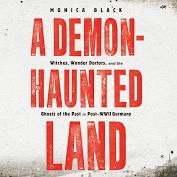 “The Middle Ages,” wrote Carl Jung in a 1958 book about ufos, “have not died out. . . . Mythology and magic flourish as ever in our midst.” I doubt if Monica Black, a professor of history at the University of Tennessee and the author of A Demon-Haunted Land,an intriguing, subtle, and occasionally startling examination of a wave of superstitious belief that swept across Germany in the immediate post-war years, would disagree. Certainly, Black recognizes the fascination that supernatural ideas and practices, from astrology to the occult, held for millions of Germans “across the modern period” as well as the persistence of a long-standing tradition of folk and magical healing.
But that is not inconsistent with her finding that there was “something quite particular about the kinds of mass [allegedly] supernatural events that took place in Germany after World War II, so many of which focused . . . on sin and guilt, healing and redemption.”
more here.
Thunder Moon
Nina MacLaughlin at The Paris Review:
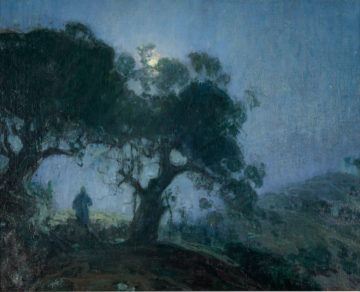 I do not want to be soft-minded or irrational, pursue Dark Aged–ignorance, be any sort of woo-woo New Age mush head. I do not know my moon sign. I own a Tarot deck but do not know how to read the cards. I don’t know much about prayer, though I have aimed begging attention at thunderstorms to come, please come, break this heat, rip it open. I believe, in some ferocious kid place, that there’s a lot on this earth and beyond it that we don’t understand. No correlation? Maybe, instead, the more honest: we don’t know, we have not figured a way to measure, or to say. “Do you not think that there are things which you cannot understand, and yet which are; that some people see things that others cannot?” Bram Stoker asks. “It is the fault of our science that it wants to explain all; and if it explain not, then it says there is nothing to explain.” Stephen Jay Gould had a name for this, when scientists interpret an absence of discernible change as no data, leaving significant signals from nature unseen, unreported, ignored.
more here.
The Heteronymous Identities of Fernando Pessoa
Richard Zenith in Literary Hub:
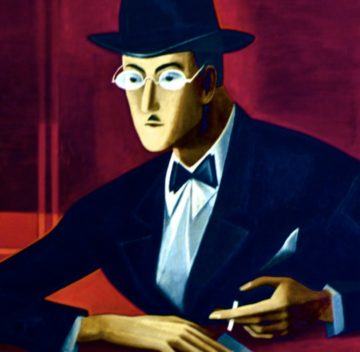 When the ever elusive Fernando Pessoa died in Lisbon, in the fall of 1935, few people in Portugal realized what a great writer they had lost. None of them had any idea what the world was going to gain: one of the richest and strangest bodies of literature produced in the twentieth century. Although Pessoa lived to write and aspired, like poets from Ovid to Walt Whitman, to literary immortality, he kept his ambitions in the closet, along with the larger part of his literary universe. He had published only one book of his Portuguese poetry, Mensagem (Message), with forty-four poems, in 1934. It won a dubious prize from António Salazar’s autocratic regime, for poetic works denoting “a lofty sense of nationalist exaltation,” and dominated his literary résumé at the time of his death.
Some of Pessoa’s admirers—other poets, mostly—were baffled by the publication of Message, whose mystical vision of Portugal’s history and destiny seemed to rise up out of nowhere. In periodicals he had published other, very different kinds of poems, over half of which were signed by one of three alter egos, all of whom came into being in 1914, shortly before the outbreak of World War I.
More here.
Steven Weinberg 20 years ago: Can Science Explain Everything? Anything?
Steven Weinberg in the New York Review of Books in 2001:
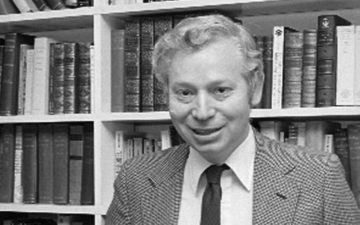
One evening a few years ago I was with some other faculty members at the University of Texas, telling a group of undergraduates about work in our respective disciplines. I outlined the great progress we physicists had made in explaining what was known experimentally about elementary particles and fields—how when I was a student I had to learn a large variety of miscellaneous facts about particles, forces, and symmetries; how in the decade from the mid-1960s to the mid-1970s all these odds and ends were explained in what is now called the Standard Model of elementary particles; how we learned that these miscellaneous facts about particles and forces could be deduced mathematically from a few fairly simple principles; and how a great collective Aha! then went out from the community of physicists.
After my remarks, a faculty colleague (a scientist, but not a particle physicist) commented, “Well, of course, you know science does not really explain things—it just describes them.” I had heard this remark before, but now it took me aback, because I had thought that we had been doing a pretty good job of explaining the observed properties of elementary particles and forces, not just describing them.
More here.
Graham Farmelo remembers Steven Weinberg
Graham Farmelo at his own website:
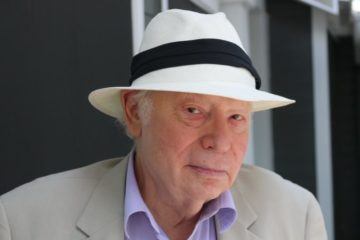 ‘The greatest living theoretical physicist’ – many commentators in the past few decades have described Steven Weinberg in such terms. When I rather cheekily asked him what he thought of that statement, he shot back: ‘It is quite ridiculous to rank scientists like that’, adding with a twinkle in his eye, ‘but it would be impolite to dispute the conclusion’. That reply was classic Weinberg: self-aware, intimidatingly direct but always ready to lighten the moment with humour.
After Weinberg died on 23 July 2021, at the age of 88, there was a great sense of loss among physicists. For more than half a century, he had been an outstandingly productive researcher and one of his subject’s most forceful and eloquent ambassadors. He loved physics with a passion and made no apology for regarding the physicist’s way of looking at the world as uniquely valuable.
It had been clear from his days at school in the Bronx that he was extremely bright, exceptionally diligent and destined to be a formidable physical scientist. He excelled at university as a physics student, but – as he often told me – he did not take quickly to research because of his mistaken view that a scientist has to know everything about a topic before making creative contributions to it. It was this attitude, he said, that prevented him from making the most of his stay in 1954-55 at the Institute of Theoretical Physics in Copenhagen, where he met quantum pioneer Niels Bohr (‘he was very kind, but I never got to know him’, Weinberg later told me). Fifteen years later, he was at the front rank of theorists, determined to make his name in ‘fundamental physics’, as he called it – the study of the most basic forces and the most basic entities of nature.
More here.
With over 6,500 missiles in the United States alone, the use of nuclear weapons is almost inevitable
Elaine Scarry and Rachel Ablow in the Boston Review:
 Elaine Scarry has been writing about the unique dangers and challenges of nuclear weapons in Boston Review for almost two decades. In the following interview with Rachel Ablow, which took place in 2018 and originally appeared in a longer form in the journal Representations, Scarry highlights a number of her more recent thoughts on the issue—thoughts that are especially relevant given rising tensions with both Iran and North Korea.
North Korea, Scarry points out, has fewer than 60 nuclear weapons. The United States, by contrast, has 6,500. The U.S. population is “sleeping” on the issue for a variety of reasons, ranging from the philosophical and psychological to the logistical. The architecture of nuclear weapons renders the citizenry powerless. It is time to wake up, Scarry argues, and she has some provocative proposals—including embracing the Second Amendment—for reclaiming democratic power.
More here.
Stephen Asma: The Apocalyptic Hydra and Linnaeus
Wednesday Poem
Cratershan ……… 15 August
When the mind is exhausted of images, it invents its own.
…… orange juice is what she asked for
………. bright chrome restaurant, 2 a.m.
…… the rest of us drinking coffee
…… but the man bought orange pop. haw!
late night, the eyes tired, the teapot empty, the tobacco damp.
Almost had it last night: no identity. One thinks, “I emerged
from some general, non-differentiated thing. I return to it.” One
has in reality never left it; there is no return.
………………………………. my language fades. … Images of erosion.
“That which includes all change never changes; without change
time is meaningless; without time, space is destroyed. Thus we
arrive at the void.”
………………………… ~~~~~~~
“If a Bodhisattva retains the thought of an ego, a person, a
being, or a soul, he is no more a Bodhisattva.”
…… You be Bosatsu,
…… I’ll be the taxi driver
…… Driving you home
The curious multi-stratified metamorphic rock. Blue and white,
clouds reaching out. To survive a winter here you learn to browse
and live in holes in the rocks under snow.
Sabi: One does not have a great deal to give. That which one
does give has been polished and perfected into a spontaneous
emptiness; sterility made creative, it has no pretensions, and
encompasses everything.
…………………………………………………………. Zen view, o.k. ?
by Gary Snyder
from Earth House Hold, Lookout’s Journal
New Directions Books, 1969
Isaac Newton’s forgotten years as a cosmopolitan Londoner
Steve Donoghue in The Christian Science Monitor:
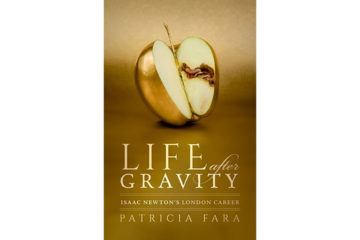 Many of us tend to like our geniuses as neatly lovable caricatures. And when it comes to Isaac Newton, we tend to envision a virtually disembodied intellect who was inspired by a falling apple to revolutionize physics from the quiet of his study at Trinity College.
But even when Newton was performing his intellectual feats at Cambridge in the 1680s, he was eager to move on to a new life. Patricia Fara, historian of science at Cambridge University, seeks to chronicle that period in “Life after Gravity: Isaac Newton’s London Career.” In this book she presents Newton as “a metropolitan performer, a global actor who played various parts.”
Here we have not the familiar – and almost inhuman – Newton who produced his great “Principia Mathematica” in 1687, but rather a worldly, cosmopolitan Newton: master of the Royal Mint, president of the Royal Society, member of parliament, speculator on the market, prominent man-about-town.
More here.
The Cancer Custodians
Lina Zeldovich in Nautilus:
 Part of Dennis Plenker’s daily job is growing cancer. And a variety of different ones, too.
Depending on the day and the project, different tumors may burgeon in the petri dishes stocked in the Cold Spring Harbor Laboratory where Plenker works as a research investigator. They might be aggressive breast cancers. They might be glioblastomas, one of the deadliest brain tumors that rob patients of their ability to speak or read as they crowd out normal cells. Or they might be pancreatic cancers, the fast and vicious slayers that can overtake a healthy person within weeks or even days.
These tiny tumor chunks are transparent and bland—they look like little droplets of hair gel that accidentally plopped into a plastic dish and took hold. But their unassuming appearance is deceptive. If they were still in the human bodies they came from, they would be sucking up nutrients, rapidly growing and dodging the immune system defenses. But in Plenker’s hands—or rather in the CSHL’s unique facility—these notorious killers don’t kill anyone. Instead, scientists let them grow to devise the most potent ways to kill them.
More here.
Tuesday, July 27, 2021
Are you a truth masochist?
Daniel Callcut in Psyche:
 Knowledge is so often assumed to be a good thing, particularly by philosophers, that we don’t think enough about when it makes sense to not want it. Perhaps you’re a parent and want to give your children space: you might be glad to not know all that they do when out of your sight. Perhaps you want to reconcile politically with a group that’s committed violence: it might be easier to move on if you deliberately spare yourself all the details of what they’ve done. There are, in fact, a variety of reasons why one might reasonably choose ignorance. One of the most obvious is to avoid needless pain.
Most of us care about other people and the world at large, and that makes us vulnerable to bad news. That’s life. Nonetheless, it’s good to be self-aware about when we’re self-punishingly seeking painful or depressing knowledge about ourselves or the world, and returning again and again to such knowledge. It’s easy to become what I shall call a truth masochist.
More here.
Sean Carroll’s Mindscape Podcast: Elizabeth Strychalski on Synthetic Cells and the Rules of Biology
Sean Carroll in Preposterous Universe:
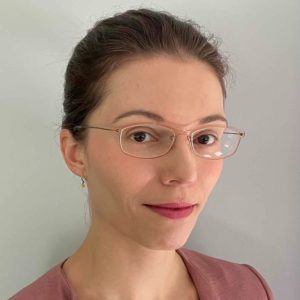 Natural selection has done a pretty good job at creating a wide variety of living species, but we humans can’t help but wonder whether we could do better. Using existing genomes as a starting point, biologists are getting increasingly skilled at designing organisms of our own imagination. But to do that, we need a better understanding of what different genes in our DNA actually do. Elizabeth Strychalski and collaborators recently announced the construction of a synthetic microbial organism that self-reproduces just like a normal unicellular creature. This work will help us understand the roles of genes in reproduction, one step on the road to making DNA molecules and artificial cells that will perform a variety of medical and biological tasks.
More here.
Yep, it’s bleak, says expert who tested 1970s end-of-the-world prediction
Edward Helmore in The Guardian:
 Herrington, a Dutch sustainability researcher and adviser to the Club of Rome, a Swiss thinktank, has made headlines in recent days after she authored a report that appeared to show a controversial 1970s study predicting the collapse of civilization was – apparently – right on time.
Coming amid a cascade of alarming environmental events, from western US and Siberian wildfires to German floods and a report that suggests the Amazon rainforest may no longer be able to perform as a carbon sink, Herrington’s work predicted the collapse could come around 2040 if current trends held.
Research by Herrington, a rising star in efforts to place data analysis at the center of efforts to curb climate breakdown, affirmed the bleaker scenarios put forward in a landmark 1972 MIT study, The Limits to Growth, that presented various outcomes for what could happen when the growth of industrial civilization collided with finite resources.
More here.
Iris Murdoch & Bryan Magee: Literature vs Philosophy
Bad Poems for the Death of Children
Perri Klass at The Hudson Review:
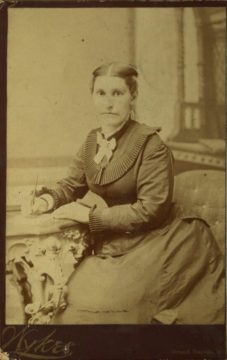 Julia Ann Moore (1847–1920), the “Sweet Singer of Michigan,” was one of the worst American poets of the nineteenth century, or perhaps of any century. Her ear for the clunky inverted phrase, or the just-miss rhyme, generated bad verse on patriotic themes and historical subjects, but what really inspired her was obituary poetry, a genre which thrived all through the nineteenth century, and which drew steadily on the talent—or lack of talent—of local amateur commemorative poets. And her specialty within a specialty was obituary poetry for those dying young: “Every time one of my darlings died, or any of the neighbor’s children were buried, I just wrote a poem on their death,” she told an interviewer from the Chicago Daily Inter Ocean in 1878. “That’s the way I got started.”
more here.
de Kooning and Soutine
Griffin Oleynick at Commonweal:
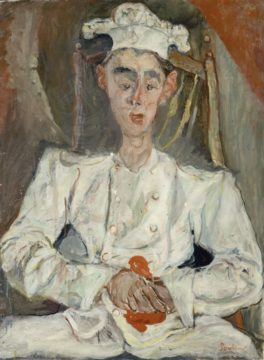 It’s not hard to see what first drew Barnes and de Kooning to Soutine. His arresting portraits from the 1910s and ’20s, the first works on view, reveal both a wry distrust of himself and a sure confidence in his capacity to observe and render the inner lives of other people. In his laconic 1918 Self-Portrait, he’s clothed in a rumpled blue smock and stares straight ahead at the viewer; another portrait (evidently by Soutine) covers his right shoulder and fills the left side of the frame. Soutine is clearly channeling similar works by artists like Velázquez and Rembrandt, which he regularly studied in his frequent trips to the Louvre. Yet his own Self-Portrait, geometrically and chromatically centered on his puffy, blood-red lips, also evokes the grotesque—so called because it traditionally portrayed subjects best kept out of sight. After Barnes helped make him famous, Soutine began to appear at Parisian salons in elegant clothes (indeed, Polish writer and painter Józef Czapski calls attention to his “expensive felt hats and gleaming leather boots”), yet he remained something of an outsider.
more here.
The Risks and Rewards of Stepping Back from the World
Cal Flyn at Literary Review:
 Time after time, Segnit meets the most skilled practitioners, the most enlightened minds on the planet, and time after time they fail to find the words. Early on we are introduced to Sister Nectaria, an elderly nun who has lived at a remote monastery on a Greek island since the age of eleven. She is, says Segnit, ‘a living, breathing, invocation of god’. But she finds his questions irritating, or invasive, or beside the point. Later, we meet Tenzin Palmo, a British woman formerly known as Diane Perry who spent twelve years meditating alone in a cave in the Himalayas. ‘I hardly remember any of it,’ she insists. ‘At the time it seemed very ordinary.’
In the Eastern Orthodox Church, God exists beyond knowledge and can only be described in terms of what He isn’t. This is apophasis, Segnit tells us, ‘the language of the unsayable’.
more here.
Tuesday Poem
The Lark. The Thrush. The Starling.
—……Poems From Issa
—
In the next life,
butterfly,
a thousand years from now,
we’ll sit like this
again
under the tree
in the dust,
hearing it, this
great thing.
~~~~
I sit in my room.
Outside, haze.
The whole world
is haze
and I can’t figure out
one room.
by C.K. Williams
from Selected Poems
Harper Collins, 1994
CRISPR injected into the blood treats a genetic disease for first time
Jocelyn Kaiser in Science:
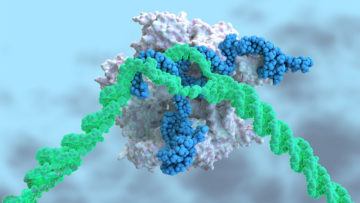
The gene editor CRISPR excels at fixing disease mutations in lab-grown cells. But using CRISPR to treat most people with genetic disorders requires clearing an enormous hurdle: getting the molecular scissors into the body and having it slice DNA in the tissues where it’s needed. Now, in a medical first, researchers have injected a CRISPR drug into the blood of people born with a disease that causes fatal nerve and heart disease and shown that in three of them it nearly shut off production of toxic protein by their livers.
Although it’s too soon to know whether the CRISPR treatment will ease the symptoms of the disease, known as transthyretin amyloidosis, the preliminary data reported today are generating excitement about what could be a one-time, lifelong treatment. “These are stunning results,” says gene editing researcher and cardiologist Kiran Musunuru of the University of Pennsylvania, who was not involved in the trial. “It exceeds all my expectations.”
The work also marks a milestone for the race to develop treatments based on messenger RNA (mRNA), the protein-building instructions naturally made by cells. Synthetic mRNAs power two COVID-19 vaccines being given to millions of people to fight the coronavirus pandemic, and many companies are working on other mRNA vaccines and drugs. The new treatment, which includes an mRNA encoding one of CRISPR’s two components, “begins the convergence of the fields of CRISPR and mRNA,” says cardiovascular researcher Kenneth Chien of the Karolinska Institute, a co-founder of Moderna, which makes one of the COVID-19 vaccines and is also developing mRNA drugs.
More here.