
Elementaries
Held at the proper angle, a lens will rip the sun’s flames from the sky.
Cast them down upon sidewalks, cremate full colonies of ants,
turn brown leaves to smoke and ash, and send mothers screaming
in shame for giving birth to a pyromaniac.
A Queen of Diamonds pulled from a fresh deck when clipped to a Schwinn
with a wooden clothespin will run its fingers the bike’s spokes
like a Hells Angel with a harp and roar like a Harley.
Casseroles are leftovers mixed in the same bowl
with Campbell’s Mushroom Soup to drown the truth.
Corn kernels covered with mashed potatoes disappear.
Peas go orbital upon a plate’s brown-gravy sky.
Mud slow dances with little boys’ soles, holds and hugs tight
the way thirteen-year-olds cuddle to the final tune at the first school dance.
The dirt has a mind of its own, prefers to disembark to the carpet, spread itself around.
Snow is hard water, pasted to hills. Cardboard boxes are the sleds of the poor.
Oak trees at the bottom of hills are acorns come of age, ready to do battle,
stand at attention, singing “We Shall Not Be Moved.”
The child who snuggles without prayers feels guilty,
climbs from bed to kneel, and places hands together, reciting
“Now I lay me….” then, absolved of omission, returns to sleep.
The day will come; he will fail to kneel.
The world will be much the same. No one cares; no one knows.
by Jim Gustafson
from Autumn Sky Poetry
 A
A Jinny: How do the topics of language and writing in the novel reinforce and strengthen Dagestani identity?
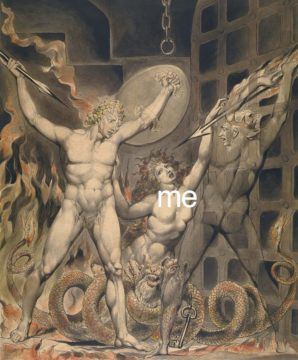 What makes Twitter so axiomatically hellish? It’s a place where even the most well-intentioned attempts at intellectually honest conversation inevitably devolve into misunderstanding and mutual contempt, like the fruit that crumbles into ash in the devils’ mouths in book 10 of Paradise Lost. It amplifies our simultaneous interdependency and alienation, the overtaking of meaningful political life by the triviality of the social. It is other people. But mostly Twitter is Hell because we—a “we” that, in Twitter’s universalizing idiom, outstretches optimistically or threateningly as if to envelop even those blessed souls who have never once logged on—make it so. It’s our own personal Hell, algorithmically articulated and given back to us, customized enough that I can complain to another very online friend about something that’s “all over Twitter” and he can reply, in confusion, “hmm, not my Twitter,” but shared enough that another friend can affirm, “on my Twitter too.” Pathetic fallacy subtends the most viral memes, either on the individual level (“it me”) or from the perspective of the willed collective of Twitter itself.
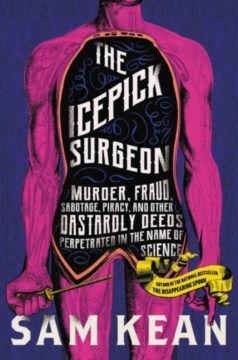 Walter Freeman was
 Part of the problem is that English spelling looks deceptively similar to other languages that use the same alphabet but in a much more consistent way. You can spend an afternoon familiarising yourself with the pronunciation rules of Italian, Spanish, German, Swedish, Hungarian, Lithuanian, Polish and many others, and credibly read out a text in that language, even if you don’t understand it. Your pronunciation might be terrible, and the pace, stress and rhythm would be completely off, and no one would mistake you for a native speaker – but you could do it. Even French, notorious for the spelling challenges it presents learners, is consistent enough to meet the bar. There are lots of silent letters, but they’re in predictable places. French has plenty of rules, and exceptions to those rules, but they can all be listed on a reasonable number of pages.
 In hindsight, it was only fitting that a story about surveillance and spyware in India should have begun with more than a touch of cloak and dagger.
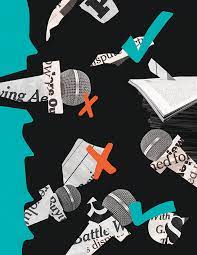 In a 1959 letter to her friend Mary McCarthy, Hannah Arendt paused to commiserate on a harrowing experience they had in common: having their writing fact-checked by The New Yorker. In her previous correspondence, McCarthy had mused that the magazine’s checking department was “invented by some personal Prosecutor of mine to shatter the morale,” and Arendt shared her frustration. Fact-checking, she replied, was a “kind of torture,” a “rigmarole,” and “one of the many forms in which the would-be writers persecute the writer.” Arendt’s opposition to the practice of fact-checking ran deeper than personal irritation. Throughout her work, she was critical of the infiltration of scientific terminology and methods into all aspects of human life. Couching an argument in language that sounded scientific, she thought, was a way of claiming the ability to know or predict things that could never be predicted or known. Fact-checking was a part of that larger trend: the practice, she wrote to McCarthy, was a form of “phony scientificality.”
 A
A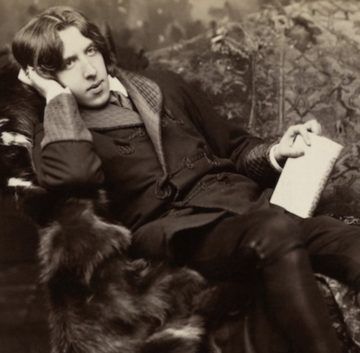 Oscar Wilde’s ship docked in New York Harbor on the evening of January 2, 1882, one week before he was scheduled to speak at Chickering Hall. During the crossing he had composed his first lecture, but the journalists who swarmed onto the ship as it lay at anchor off Staten Island were more interested in Wilde himself than in the theories he had come to expound. “His outer garment was a long ulster trimmed with two kinds of fur, which reached almost to his feet,” reported the New York World; “he wore patent-leather shoes, a smoking-cap or turban, and his shirt might be termed ultra-Byronic . . . His hair flowed over his shoulders in dark-brown waves, curling slightly upwards at the ends . . . His teeth were large and regular, disproving a pleasing story which has gone the rounds of the English press that he has three tusks or protuberants.” His face presented “an exaggerated oval of the Italian face carried into the English type of countenance,” the World reporter continued, while his “manner of talking” was “somewhat affected . . . his great peculiarity being a rhythmical chant in which every fourth syllable is accentuated.” “The dress of the poet was not less remarkable than his face,” declared the San Francisco Chronicle, “and consisted of a short velvet coat, rose-colored necktie and dark-brown trousers . . . cut with a sublime disregard of the latest fashion.”
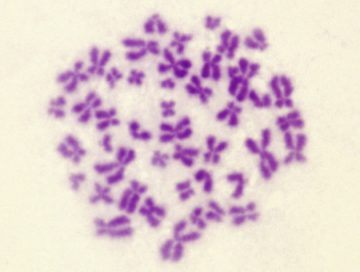 Two decades after the draft sequence of the human genome was
 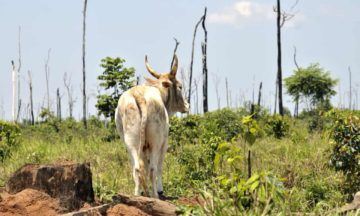 A new study tracking the planet’s vital signs has found that many of the key indicators of the global climate crisis are getting worse and either approaching, or exceeding, key tipping points as the earth heats up.
 Facebook has a save-the-world mission statement—“to give people the power to build community and bring the world closer together”—that sounds like a better fit for a church, and not some little wood-steepled, white-clapboarded, side-of-the-road number but a castle-in-a-parking-lot megachurch, a big-as-a-city-block cathedral, or, honestly, the Vatican.
  More than two decades ago, when Elizabeth Turner was still a graduate student studying fossilized microbial reefs, she hammered out hundreds of lemon-sized rocks from weathered cliff faces in Canada’s Northwest Territories. She hauled her rocks back to the lab, sawed them into 30-micron-thick slivers—about half the diameter of human hair—and scrutinized her handiwork under a microscope. Only in about five of the translucent slices, she found a sea of slender squiggles that looked nothing like the microbes she was after. “It just didn’t fit. The microstructure was too complicated,” says Turner. “And it looked to me kind of familiar.”