
Nicholas Pompella in Nationsl Review:
 This month, A Game of Thrones by acclaimed fantasy author George R. R. Martin turns 25. While Martin’s book series — collectively titled A Song of Ice and Fire — is inseparable from the more popular HBO adaptation, the books were what originally spurred a massive tonal shift in fantasy literature that the show simply imitated. While HBO created what may be modernity’s last instance of shared popular culture (nothing will reach Sopranos-like ratings ever again, as the later seasons of Game of Thrones managed), much of the show’s best stuff was lifted straight from the books. The characters lost within political labyrinths, often of their own making; the sense of mystery and impending doom that lingers over the Night King and his army of White Walkers; even the racy, sex-crazed parts of the show (artifacts from the last years in which Americans could be scandalized by media) — all are present in Martin’s original.
The character of Tyrion Lannister provides one of the most compelling examples of this “one-for-one” quality between the book and the show. Tyrion is a variant of the slacker-genius archetype, granted a perfect combination of wit and political instinct, along with Martin’s down-to-earth depiction of how such a troubled-yet-brilliant tactician might think and act. The character himself is not that revolutionary — someone with even basic cultural literacy in movies and books has seen many slacker-geniuses — but Martin’s uncanny prose style contains a detailed realism that brings Tyrion to life on the page.
More here.
 O
O The better machines become at transferring equivalent words and even almost correct syntax and grammatical structures from one language to another, the more the mechanics of translation matter less, and the more we are aware of inflections and innuendoes; what we don’t know what to call, we call beauty.
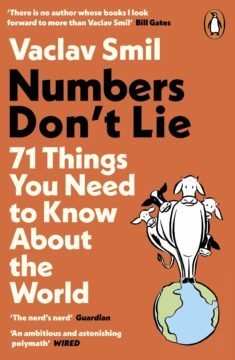 Vaclav Smil is my favorite author, but I sometimes hesitate to recommend his books to other people. His writing, while brilliant, is often too detailed or obscure for a general audience. (Deep dives on
  The shift in Washington is undeniable: the Middle East is no longer a top priority for the United States. The U.S. withdrawal from the broader region is evident in the departure of troops from Afghanistan and reductions in U.S. military commitments to Iraq, Jordan, Kuwait, and Saudi Arabia, alongside a heightened focus on China and Russia. There are good reasons for this shift in strategy, especially given the woeful recent history of U.S. involvement in the region, but it also brings risks of its own. The United States’ precipitous departure from Iraq in 2011, for example, paved the way for the rise of the Islamic State (also known as ISIS) and the expansion of Iran’s regional footprint. To avert similar damage this time, Washington must find a way to pair reductions in military commitments with gains in regional stability. One of the best opportunities for achieving those gains lies in emerging talks between the region’s two most consequential antagonists: Iran and Saudi Arabia.
 Pessoa has a telling line in his sequence of poems “Slanting Rain” that provides a good way of approaching this: “I don’t know who I dream I am.” Zenith doesn’t reference it, yet I’ve always thought the quotation succinctly gets at the impetus behind Pessoa’s use of heteronyms, among them his three principal and stylistically distinct poetry-writing pseudoselves: Alvaro de Campos (a naval engineer by trade with a lyrical bent), Alberto Caeiro (a rustic and believer in the essence of nature), and Ricardo Reis (a doctor who produced philosophical Horatian odes). And, true, in the poetry there is often the dreamlike element of being “the other,” a ghostly, untethered feeling marked by searingly honest searching.
 The economic machine is breaking down, retail businesses are almost bankrupt, and yet the city has been seized by a frenzy of activity since this morning, just like in the glory days of its suddenly vanished opulence. The gridlock is no worse than it was back then, even though the traffic lights are out because of the electricity shortages. And where the lights are actually working, police officers are controlling traffic and encouraging drivers to ignore them, directing everyone to move at the same time with grand, raging gestures, as if they were vengefully making a point of reminding us that order no longer reigns, so why should anyone even bother respecting these last damned surviving traffic lights. The drivers are astonished. Some, like me, resist, under the officers’ resentful eyes. They seem aware and ashamed that they have become representatives of the general chaos and the failure of the state, and are going above and beyond what’s actually necessary, as if they were furiously smashing a prized object to pieces to punish themselves for having carelessly chipped it. I talked to my wife about this when I got home, she didn’t seem to care about the feelings I was ascribing to the traffic officers. She doesn’t like them and even before the economic crisis she thought that they actually tend to be the cause of the gridlock rather than anything else, that they always complicate any situation they are in, that city traffic is like a natural process, it always ends up regulating itself, and that human intervention only disturbs it and makes it more complicated.
 Steven Weinberg
 It was tempting to dismiss the show unfolding inside the Dream City Church in Phoenix, Arizona, as an unintended comedy. One night in June, a few hundred people gathered for the première of “The Deep Rig,” a film financed by the multimillionaire founder of Overstock.com,
  Writing funny, especially in memoir, is a surprisingly recherché talent. Every spring semester at the University of Pennsylvania, where I teach memoir, the ratio of funny submissions to not-funny submissions is, on average, one: everything else. This semester our funny was the work of Jonathan, who had me choking on my chortles at 4 a.m., as I read lines like these:
 It looked like a tiny shrine on the forest floor: Bare ground clear of debris. Two walls of sticks, bending towards one another. Blue feathers and bottle caps arranged in a wide arc. And a small plastic doll, splayed in the center of the structure, eyes wide and mouth open in a plastic scream.
 A
A  ROBERT WALSER WAS A SWISS WRITER of the early twentieth century who wanted very much to be a German writer. He walked and walked more than he wrote and wrote, covering thousands of miles in his lifetime, albeit within limited territory. In the beginning his garb was clownish—“a wretched bright yellow midsummer suit, light dancing shoes, an intentionally vulgar, insolent, foolish hat”—near the end a motley of patched rags, and at the very end a shabby but proper suit and overcoat, his death duds when he collapsed in 1956 in the snow near the mental asylum where he had resided for twenty-three years, years in which he wrote nothing.
 In 2014, music fans and critics began paying close attention to a mysterious group of artists who’d started releasing tracks online. They were part of PC Music, a loose electronic-music collective that functioned more like a conceptual-art project. Led by a young, inventive producer from London named A. G. Cook, PC Music, and its affiliates, rejected a dark, murky strain of underground electronic music that was beloved at the time. Instead, they latched onto the most exuberant and absurd elements of pop, making cutesy, theatrical songs that sounded a bit like children’s music, but with an unsettling aftertaste. If mainstream pop is designed to make people feel as if they’re on common ground with all of humanity, this music made listeners feel like they were in on a very specific joke. In a Pitchfork article titled “PC Music’s Twisted Electronic Pop: A User’s Manual,” one critic wrote, “The shadowy operation and its bewildering brand of hyper-pop have been everywhere in the past few months . . . and its influence seems to be growing on a daily basis.”