Omri Boehm in Literary Hub:
 In the 25years that have passed since the assassination of Yitzhak Rabin, his two-state Oslo legacy has been driven into the ground. In 1993, when the agreement was first signed, approximately 110,000 settlers were living in the West Bank, and 146,000 were living in occupied territories surrounding Jerusalem. By now, the numbers have increased to approximately 400,000 settlers in the West Bank and 300,000 around Jerusalem. This situation will not be reversed. In 2021, roughly 10 percent of Israel’s Jewish population lives on occupied territory—subject to Israeli law, represented by Israel’s parliament—and enjoys the opportunities and prosperity of a flourishing first-world country, with public schools, factories, banks, a system of highways, and a research university at their disposal. Around them, however, are almost 3 million Palestinians who, for 53 years now, have lived under Israel’s aggressive military regime.
Even intransigent two-state supporters agree that not all of these settlers can be evacuated, but they insist that the challenge posed by their presence is exaggerated. On this view, whereas the West Bank’s map is stained by approximately 130 spots marking Israeli settlements, about 110 of them count populations of less than 5,000. Another 60 settlements, the argument goes, have populations of less than 1,000, and many of them are, in the first place, located next to the 1967 border: by introducing only minor corrections to the border, it is allegedly possible to leave most settlers within Israel’s proper territory, and to compensate the Palestinians with other pieces of land from other areas. Given this, it is claimed that the tendency to “grossly overstate” the obstacle that settlements pose to a future two-state solution is based not on a sober analysis of the situation, but on an ideological support of one-state politics.
Unfortunately, this optimism is itself highly ideological, and can only be preserved if one avoids a careful look at the map.
More here.

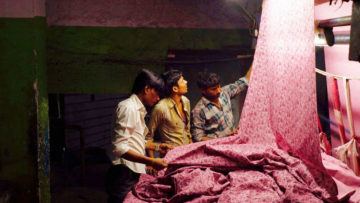 What is it like to work in an Indian factory? Three documentaries (all currently streaming for free) begin to answer this troubling question. Anjali Monteiro and KP Jayasankar’s Saacha: The Loom (2001) is an elegy for Mumbai’s shuttered cotton mills woven around the lives of two men, a poet and a painter. Rahul Roy’s The Factory (2015) chronicles a landmark 2012–15 strike at an automobile factory near New Delhi. Rahul Jain’s Machines (2016) unfolds amid the sordid interiors of a textile sweatshop in Gujarat. As with Chinese activist cinema, these are for the most part works of witness, recording struggles and injustices that politicians and the mainstream media ignores. Together, they offer a tracking shot of India’s landscape of labor. The picture that emerges is disquieting and frequently shocking.
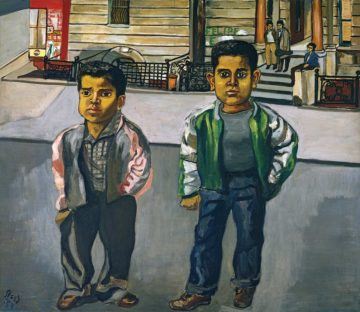 Neel took the call to realism to heart: She went out into the streets of Philadelphia to paint and attended a local sketch club where the models were ordinary people. (She was also part of the first generation of female art students allowed to study live male nudes.) The path of realism reflected how Neel understood her place in the world. “I had a conscience about going to art school,” she said. “Because when I’d go into the school, the scrub-women would be coming back from scrubbing office floors all night. It killed me that these old gray-headed women had to scrub floors, and I was going in there to draw Greek statues.”
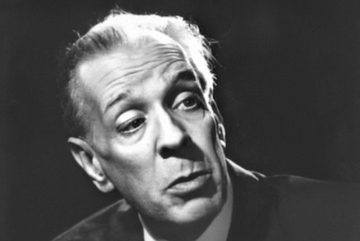 JORGE LUIS BORGES: I dream every night. I dream before I go to sleep, and I dream after waking up. When I begin to say meaningless words, I’m seeing impossible things.
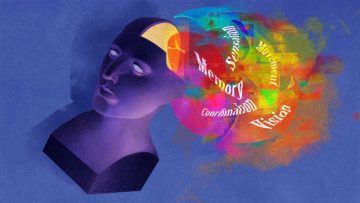 Not only do researchers often depict the brain and its functions much as mapmakers might draw nations on continents, but they do so “the way old-fashioned mapmakers” did, according to
  Those of us who argued against the war possessed no prophetic powers. I
  I
I Let’s say you’re at a big office party full of people, both coworkers and strangers, when someone walks up to you. You have a split second to determine if you know this person or not; you don’t want to make the faux pas of re-introducing yourself to your receptionist. Luckily, your brain is adept at what computer scientists call “novelty detection”—the ability to distinguish new information from details that have been encountered before. Most of the time we do it effortlessly. How exactly that skill works is a provocative scientific mystery, however.
 My father died at 2:15 pm last Sunday. I would like to say that he died in my arms, but the truth is that by the time I heard my sister scream and ran in from the next room, he had already moved on from this world.
 The question of subjectivity had been very much on my mind that summer. A few months earlier I’d been commissioned by a magazine to review several new books on consciousness. All of the authors were men, and I was surprised by how often they acknowledged the deeply personal motivations that led them to their preferred theories of mind. Two of them, in a bizarre parallel, listed among these motivations the desire to leave their wives. The first was Out of My Head, by Tim Parks, a novelist who had become an advocate for spread mind theory—a minority position that holds that consciousness exists not solely in the brain but also in the object of perception. Parks claimed that he first became interested in this theory around the time he left his wife for a younger woman, a decision that his friends chalked up to a midlife crisis. He believed the problem was his marriage—something in the objective world—while everyone else insisted that the problem was inside his head. “It seems to me that these various life events,” he wrote, “might have predisposed me to be interested in a theory of consciousness and perception that tends to give credit to the senses, or rather to experience.”
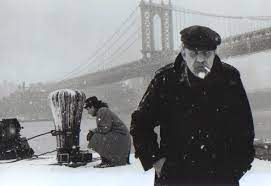 Every great urban filmmaker has a personal metaphysics of the city, a sense that the synergies and mysteries of urban life can find their ideal form in images. That’s what Pola Rapaport reveals in her first feature, “Broken Meat,” from 1991, which is showing, starting Wednesday, on
  We humans have a profound impact on the world around us. Bob Paine, the groundbreaking American ecologist, once described us as a “hyperkeystone” species: our actions affect the lives and habitats of other creatures more than any other species on Earth. So much so, some scientists have adopted the term
  In 1974, Stephen Hawking
 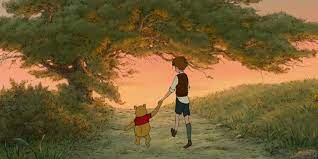 Still, where friendship operates as a code, it is still present as text. These stories are still “about” friendship, after all, and so friendship steadily accrues these myths along with whatever it’s meant to insinuate. And because friendship begins to seem like an off road into an alternate adulthood—or no adulthood at all—the friendship plot’s most congenial home is children’s literature, followed by books that concern themselves with childhood. Read through the lens of the friendship plot, many books that either are childhood classics or focus on childhood reveal themselves as stories that portray the end of childhood and initiation into adulthood as the death or abandonment of a beloved friend.
 I
I